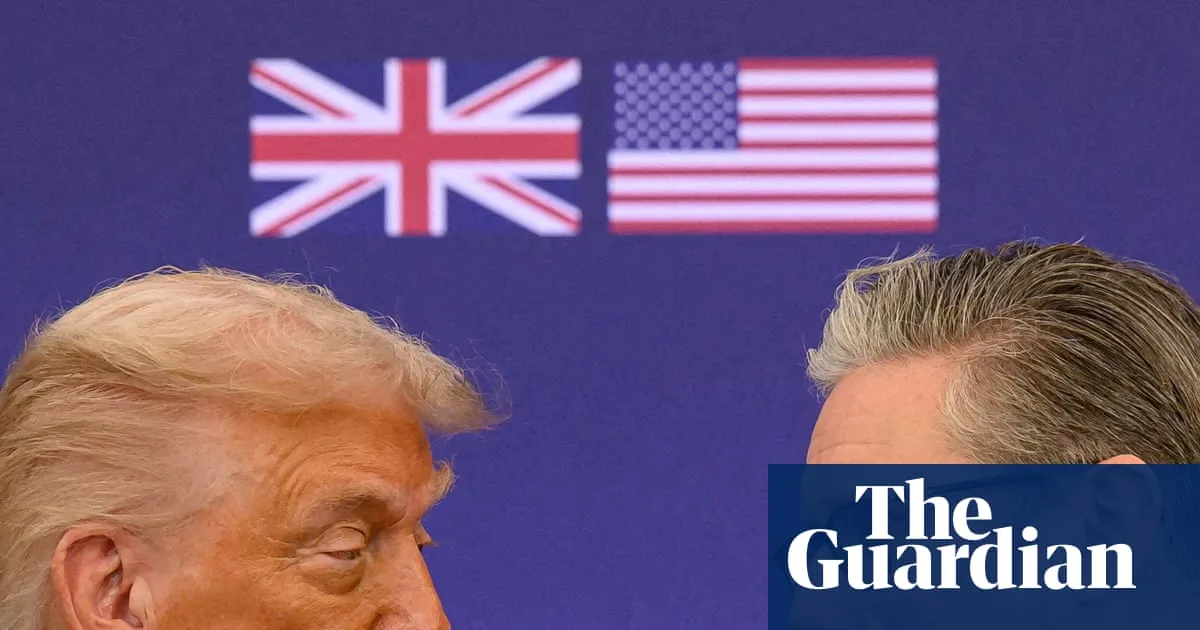
Special Relationship Ends: Starmer's 'Trump Whisperer' Status Collapses Over Iran
Starmer-Trump Relationship Ends Over Iran Dispute

The End of the 'Trump Whisperer' Era: Starmer's Special Relationship Collapses

Sir Keir Starmer's celebrated role as a "Trump whisperer" on the international stage has come to a definitive end, following Donald Trump's public criticism of the UK prime minister's refusal to support military strikes against Iran. The breakdown marks a significant diplomatic rupture between the two leaders, with profound implications for British trade and global influence.

Public Criticism Signals Irreparable Damage

In interviews given to the Daily Telegraph and The Sun over the last 48 hours, President Trump expressed clear disappointment with Sir Keir's decision to prohibit attacks on Iran from being launched from RAF bases and the UK's refusal to participate in joint raids. The president's wistful observation that the relationship was "not what it was" suggests this damage may be permanent.

Trump's unusually regretful tone, using words like "disappointing" and "far too late," contrasts sharply with his typically bombastic style, indicating the seriousness of this diplomatic breach. Sir Keir now joins the growing list of world leaders who regularly face the ire of the current Oval Office occupant.

Multiple Factors Behind the Diplomatic Collapse

The deterioration of this once-positive relationship stems from several contentious issues that have accumulated over time:

  • Iran Policy Disagreement: The UK's refusal to support US-Israel strikes on Iran represents the most symbolic break, demonstrating that Starmer's restraining influence on Trump has completely evaporated.
  • Chagos Islands Controversy: Trump has told allies he was "lied to" about the deal to hand over the Chagos Islands to Mauritius, which he now views as a threat to US security interests.
  • Trade Tariffs: The carefully negotiated UK-US trade deal appears increasingly worthless as Britain seems unlikely to escape Trump's reworked global tariffs.
  • Greenland Dispute: Starmer's refusal to support Trump's territorial claims on Greenland further poisoned the relationship.

Personnel and Political Complications

The appointment of Peter Mandelson as ambassador to the United States against the Trump White House's wishes created ongoing tension, particularly given Mandelson's perceived connections to both Jeffrey Epstein and China. This personnel decision has not been well-received in Washington.

Domestically, Sir Keir's declining popularity and authority have weakened his position. The Trump administration, which initially set aside its support for Nigel Farage, now recognizes that Starmer's days as prime minister appear numbered, reducing his value as a diplomatic partner.

Free Speech Controversies Add Strain

Growing tensions around free speech issues have further corroded the relationship. Last month's welcoming of far-right activist Tommy Robinson to the State Department as a "freedom fighter" illustrates a troubling trend. Trump allies in Britain have reportedly provided the administration with names of individuals to deny visas to and sanction as alleged "enemies of free speech."

The Consequences for British Influence

The collapse of this special relationship represents a significant loss for the United Kingdom. President Trump had previously been willing to overlook ideological differences with Starmer, partly due to respect for him as a politician but largely because of his affection for Britain as his Scottish mother's birthplace and his admiration for the royal family.

Early diplomatic achievements were possible because of Trump's desire to ensure his state visit would be successful and form part of his legacy. The strategy had involved using King Charles's planned visit to the United States for the 250th anniversary of the Declaration of Independence to encourage Trump to be more reasonable on various issues, including Ukraine, the Middle East, and trade tariffs.

Limited Options Moving Forward

Without his unique ability to manage this particular president, Sir Keir loses the primary achievement that had defined his premiership's success. He is no longer the crucial bridge between Trump and other Western allies but rather another struggling international leader on the White House's unofficial "naughty list."

The one remaining hope for reconciliation rests with King Charles's scheduled visit on July 4th, which might still provide a healing moment. However, by that time, a different prime minister might be attempting to rebuild relations with the American president. Unless Sir Keir is willing to become as accommodating to Trump's whims as Nigel Farage has been, there appears to be no viable path to restoring this fractured relationship.




