Starmer Stands Firm on Trump's Initial Chagos Deal Support Amid White House Rethink
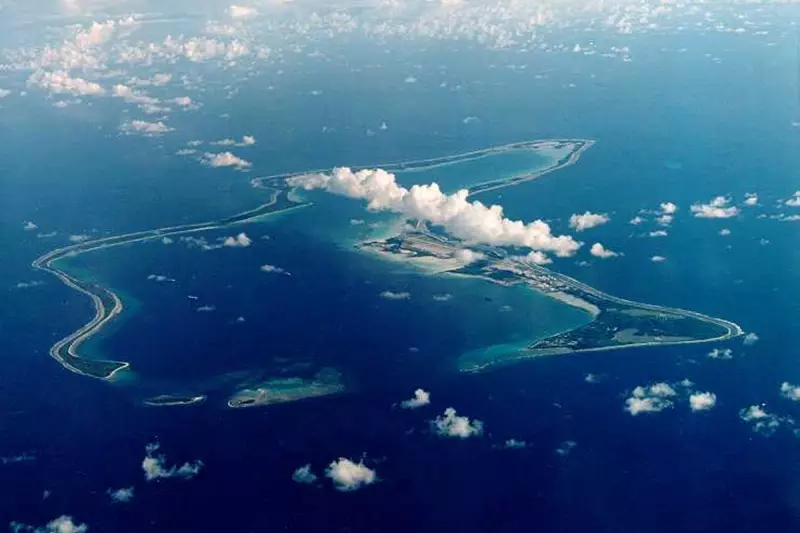
Prime Minister Keir Starmer has reiterated his assertion that US President Donald Trump originally backed the controversial Chagos Islands sovereignty agreement, even as White House officials engage with opponents and speculation mounts about a potential presidential veto. The diplomatic tension centres on plans to transfer the archipelago, which hosts the crucial UK-US Diego Garcia airbase, to Mauritius following an International Court of Justice ruling.
White House Meetings Fuel Veto Speculation
Campaigners representing the Chagossian government in exile and other treaty opponents held meetings on Wednesday with senior Republican senators, State Department officials, and White House staff. These discussions have intensified concerns that President Trump may block the deal, despite Prime Minister Starmer's insistence that the US leader "signed off on the plan" after American intelligence agencies completed their review.
The prime minister emphasised that the Trump administration conducted a detailed agency-level examination of the proposals during their first months in office, ultimately concluding they wanted to support what they termed a "monumental achievement" that would secure the long-term future of the Diego Garcia military installation.

Diplomatic Tensions and Changing Positions
President Trump's apparent change of heart emerged last week when he described the Chagos arrangement as "an act of great stupidity" - a stark contrast to his administration's previous expressions of support. Sources indicate the shift occurred after Starmer opposed Trump's ambitions regarding Greenland, prompting the president to request a fresh State Department review of the Chagos agreement.
When presented with the subsequent report, Trump reportedly stated: "I was lied to." This diplomatic friction has created uncertainty about whether the deal can proceed without US approval, given a 1966 treaty between the two nations that asserts UK sovereignty over the archipelago.
Parliamentary Hurdles and Campaigner Proposals
The legislative process faces additional complications in the House of Lords, where peers previously rejected the deal and the government cancelled a scheduled vote this week. Conservative peers have tabled an amendment calling for a pause to ensure compliance with the 1966 UK-US treaty, while Labour attributes the delay to what they term a "wrecking amendment" from Tory members.
In a strategic move to influence the outcome, Chagossian campaigners have reportedly offered to name the archipelago's main island after President Trump if he vetoes Starmer's deal and permits their return to the islands as a British protectorate. This proposal adds another layer to the complex geopolitical negotiations surrounding the territory's future status.
Starmer's Persistent Defence of the Agreement
While travelling to China, the prime minister maintained that Trump had initially endorsed the handover "in very clear terms" following proper agency review. He pointed to public statements from US Secretary of Defence Pete Hegseth, who in May 2025 said the deal secured "key US national security interests in the region," and Secretary of State Marco Rubio, who confirmed Trump's support following his White House meeting with Starmer.
The Labour leader declined to speculate about whether President Trump fully understood the agreement's details, instead emphasising that "it was an agency review that was conducted in the US before they then concluded that it was a deal they wanted to support, did support and did so in very clear terms." He confirmed discussing Chagos with Trump on multiple occasions, including during their recent Saturday call.

Intelligence Community Review and Base Security
According to reports, the US State Department, National Security Agency, and Central Intelligence Agency all participated in what sources describe as "the most rigorous inter-agency approval process imaginable" regarding the draft agreement. These agencies reportedly raised no objections provided the United States could maintain uninterrupted access to the Diego Garcia facility, which serves as a critical strategic asset for both nations' military operations in the region.
Prime Minister Starmer has consistently argued that transferring sovereignty to Mauritius with a leaseback arrangement for the airbase represents the only viable method to protect the installation's long-term operational future, while also addressing the International Court of Justice ruling regarding the islands' legal status.
The government has not yet confirmed when the Chagos bill will return to the House of Lords for further debate, leaving the diplomatic and legislative fate of this contentious sovereignty transfer hanging in the balance as transatlantic relations face renewed strain over this and other geopolitical issues.