
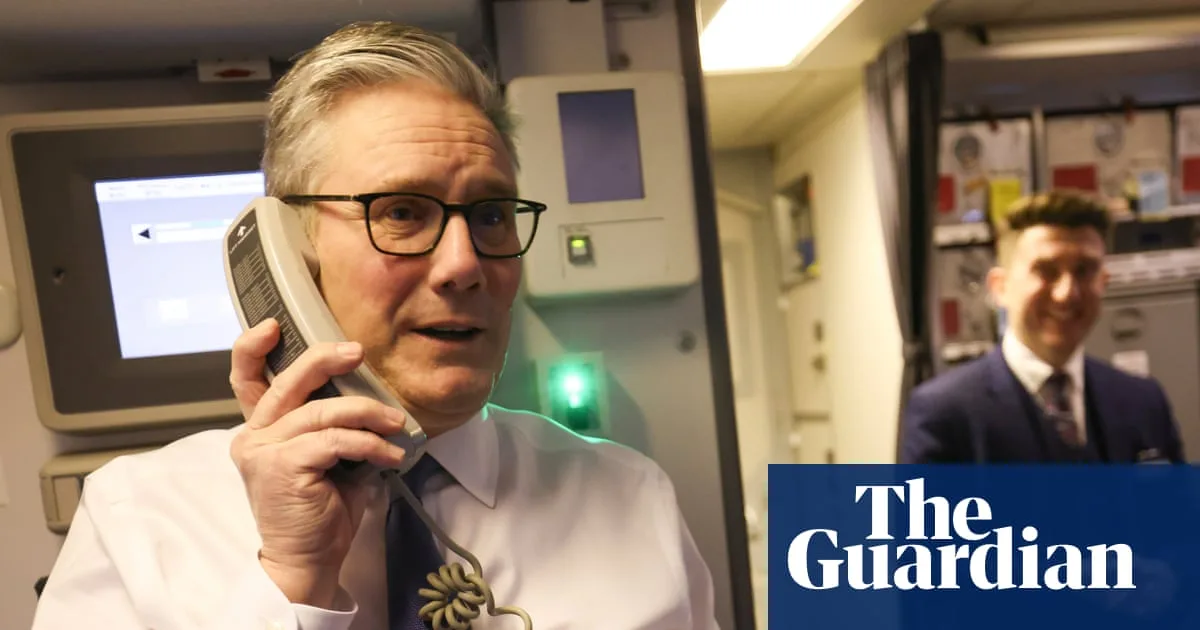
Sir Keir Starmer's team has been issued with burner phones and fresh SIM cards, and is using temporary email addresses, during his visit to China to prevent devices being loaded with spyware or UK government servers being hacked. The precautions, while dramatic-sounding, are standard for visits to China and have been for at least a decade, given the expectation that Beijing will eavesdrop and monitor.
Such tactics are not new. When Theresa May was prime minister, she was warned ahead of her 2018 trip to Beijing to get dressed under the duvet to ensure spy cameras could not film her undressed. The advice was passed on generally to all those travelling on the trip eight years ago.
Concerns about surveillance are particularly relevant to those staying in hotels. A former senior British intelligence official said there was a well-worn routine in places like Shenzhen where foreigners from the west would be assigned the same rooms so they would not have to move the equipment. Some would try to find concealed bugging devices for fun.
Past incidents have reinforced the need for caution. When Gordon Brown visited China in 2008, an aide was victim of a honey trap after meeting a Chinese woman at a hotel disco in Shanghai. He reported his BlackBerry missing the next day, though No 10 said there had been no security compromise. Standard guidance now warns middle-aged men that if an attractive young Chinese woman appears interested, she probably is not.
David Cameron's 2013 visit saw China insist on supplying a personal protection officer over six-and-a-half-foot tall to follow the British team. At the end of the trip, the officer said goodbye in perfect English, a reminder they were being watched. General guidance, according to one British official, is that everything is bugged, and the only secure area for sensitive conversations is the secure compartment in the British embassy.
Similar considerations apply at international summits. When James Cleverly was foreign secretary, his team refused to take mobiles into the Chinese consulate during the UN general assembly, storing them in a lead-lined bag. One consequence of such caution is that ministers are out of ordinary contact, meaning families must communicate via a private secretary.




