Prime Minister Sir Keir Starmer is attempting to steady the ship as a major diplomatic rift with the United States over Greenland threatens to erupt into a full-scale trade war. The crisis comes as US President Donald Trump marks one year in office for his second term.
Tariff Threats and Calls for Calm
The immediate flashpoint occurred on Monday evening, when President Trump declared he was "100% committed" to imposing tariffs on the UK and European allies. This drastic economic measure is a direct response to their opposition to his controversial plan to annex Greenland, a mineral-rich, semi-autonomous territory within the Kingdom of Denmark.
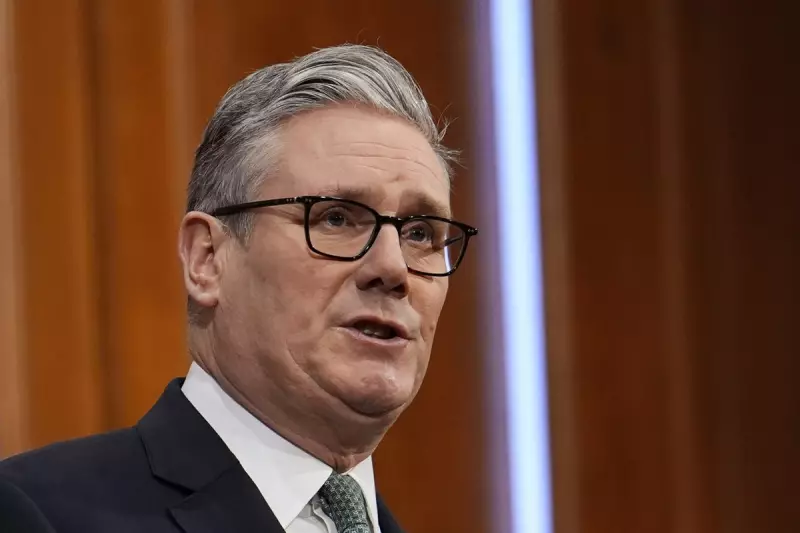
In an emergency press conference at Downing Street on Monday morning, Sir Keir Starmer called for calm. He firmly stated that the future sovereignty of Greenland was a matter solely for its people and Denmark. "The use of tariffs against allies is completely wrong," the Prime Minister asserted. "It is not the right way to resolve differences within an alliance."

A Test for Transatlantic Relations
The Greenland dispute presents an unprecedented challenge to Sir Keir's strategy of avoiding public disagreements with the Trump administration, despite strained US-Europe relations. The President has consistently argued that NATO allies should increase their financial contributions to the military bloc, and has a history of imposing import taxes.
Just hours after Sir Keir's appeal for peaceful resolution, President Trump refused to rule out military action. When asked by NBC News if he would use force to seize Greenland, he replied: "No comment." He detailed his tariff plan, stating a 10% charge on all UK goods entering the US from February 1, rising to 25% from June 1, until a deal is struck for Washington to purchase Greenland. The same measures would apply to Denmark, Norway, Sweden, France, Germany, the Netherlands, and Finland.
Political Unity and Forthcoming Talks
The threat has sparked rare cross-party condemnation in Westminster. Foreign Secretary Yvette Cooper faced intense questioning in the Commons, while Shadow Defence Secretary James Cartlidge called the threats "totally unacceptable." Liberal Democrat leader Sir Ed Davey branded the move "economic thuggery" and called for a coordinated European tariff response.
Trade Secretary Peter Kyle revealed the government is having "frank" talks with US officials, including Commerce Secretary Howard Lutnick, and acknowledged the UK-US relationship had been "tested." Key figures are set to converge at the World Economic Forum in Davos this week, where Chancellor Rachel Reeves will appear on a panel with Lutnick. Reform UK leader Nigel Farage also confirmed he would raise the issue with the American administration in Switzerland.
The coming days will be critical as the UK and its European allies navigate their most serious diplomatic and economic confrontation with the Trump administration to date.