Prime Minister Sir Keir Starmer has concluded his significant diplomatic mission to China and arrived in Tokyo today, following a productive visit that yielded substantial trade agreements and investment commitments for the United Kingdom.
Transition from Beijing to Tokyo
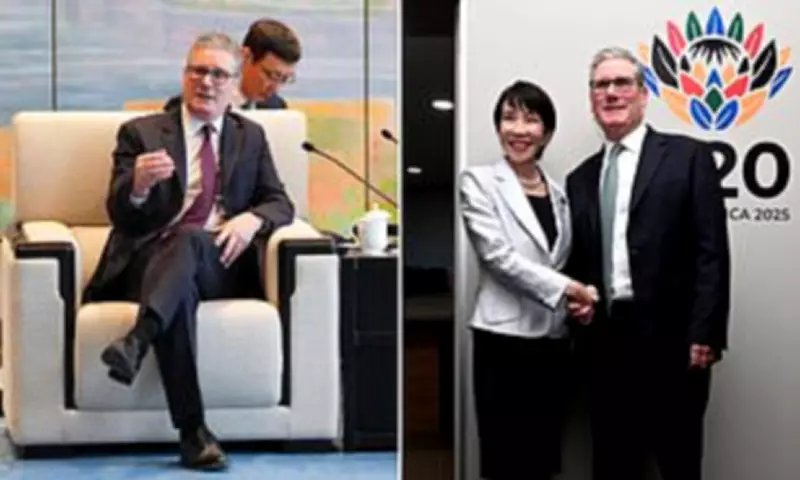
Sir Keir touched down in the Japanese capital on Saturday, immediately preparing for a high-level meeting with Prime Minister Sanae Takaichi. This engagement marks the final leg of his Asian tour before returning to London. Speaking to journalists aboard his flight from Shanghai, the British leader emphasised the critical importance of the bilateral relationship with Japan.
'It's a really important visit,' Starmer stated. 'We are close allies, both members of the G7 and G20. Outside of Europe and the United States, Japan stands as the largest investor in our economy, with approximately 1,000 Japanese businesses supporting around 150,000 jobs across the UK. There is a great deal for us to discuss.'

Defence Cooperation and the 'Coalition of the Willing'
The Prime Minister highlighted that discussions would encompass both defence and security matters, alongside trade and economic cooperation. He praised Ms Takaichi's swift decision to join the 'coalition of the willing,' a peacekeeping initiative for Ukraine led by Britain and France, following her ascent to power in October last year.
'The Prime Minister was very quick to join the coalition of the willing and is a very strong supporter of the work we are doing,' Sir Keir remarked. 'So, defence and security will be key topics, in addition to trade and the economy.' The leaders are scheduled to convene at the Kantei, the Japanese Prime Minister's office, for a working dinner later today.
Substantial Outcomes from the China Visit
Sir Keir's journey to Japan concludes a four-day visit to China, part of his government's stated effort to 'reset' the UK's relationship with Beijing. Accompanied by a delegation of over fifty business and cultural leaders, the trip focused heavily on securing tangible economic benefits.
According to Downing Street, the visit secured £2.2 billion in immediate export deals and unlocked market access projected to be worth an additional £2.3 billion over the next five years. Furthermore, Chinese companies committed hundreds of millions of pounds in new investments within the UK.
Key Commercial Agreements Announced
Notable deals include:
- A commitment from toy manufacturer Pop Mart, creator of the popular Labubu figurines, to open seven UK stores, including a flagship location on London's Oxford Street, with Birmingham and Cardiff also earmarked for outlets.
- An announcement by carmaker Chery to establish its European headquarters in Liverpool, a city already hosting a major Jaguar Land Rover plant.
- A new agreement with the World Snooker Tour to host events in two Chinese cities, expected to generate up to £15 million for the UK.
On the policy front, Beijing agreed to halve its tariffs on Scotch whisky—a move anticipated to benefit the UK economy by approximately £250 million over five years—and to introduce a visa-free travel scheme for British citizens visiting China. Details of the visa arrangement are pending final confirmation.
Political and Diplomatic Nuances
Beyond commerce, the visit yielded a political concession, with Chinese President Xi Jinping agreeing to lift sanctions imposed on six British parliamentarians. Sir Keir framed this as evidence that direct engagement allows difficult issues to be raised effectively.
However, the trip was not without its awkward moments and criticism. The Prime Minister's tour of Beijing's Forbidden City, conducted with a single guide while the site remained open to the public, was contrasted with the private tour afforded to a visiting US president a decade prior. Critics suggested the visit yielded only marginal deals despite significant diplomatic effort.
Furthermore, Sir Keir faced domestic pressure to address human rights concerns more robustly, including the detention of British national Jimmy Lai. The previously sanctioned MPs issued a statement expressing that they took 'no comfort' in the lifting of restrictions while broader issues persisted.

International reaction also surfaced, with former US President Donald Trump labelling engagement with Beijing as 'dangerous.' Sir Keir dismissed this critique, noting the enduring strength of the UK-US alliance.
As he departed Shanghai, the Prime Minister reiterated his government's approach: 'We are bringing stability, clarity, and a long-term strategy to how we engage with China, so we can bring home the benefits for businesses and for working people. Engaging with China is how we secure growth for British businesses, support good jobs at home, and protect our national security.'
His discussions in Tokyo with Prime Minister Takaichi—a leader known for her unconventional background, including past involvement in a heavy-metal band—will now focus on reinforcing the UK's strategic and economic partnerships in the Indo-Pacific region.