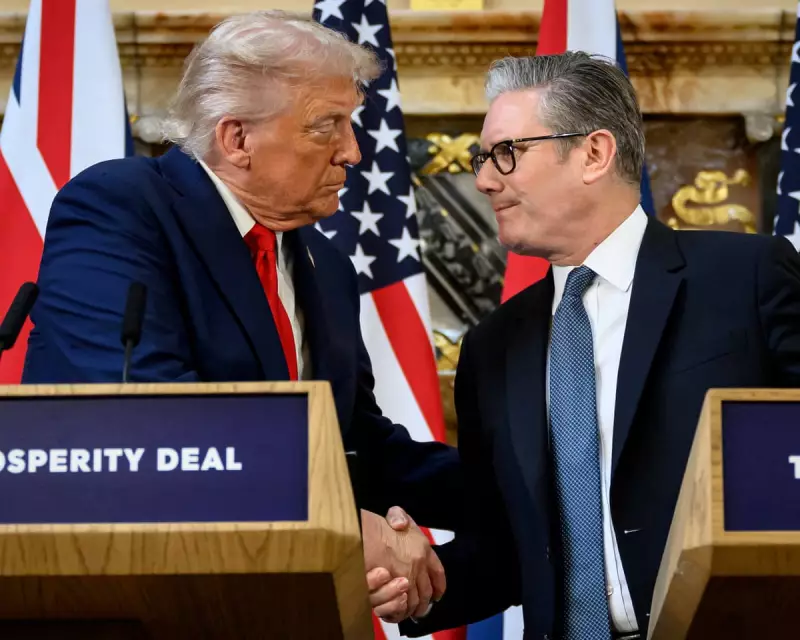
Prime Minister Keir Starmer has broken a year-long silence to directly criticise former US President Donald Trump, branding his threat to impose tariffs on NATO allies as "completely wrong". The sharp rebuke follows Trump's controversial proposal to annex Greenland, a move deemed illegal under international law.
A Diplomatic Rupture Over Greenland
The crisis erupted after Trump threatened to levy punitive tariffs on NATO member states which have objected to his plan for Greenland. This prompted Starmer to take the unusual step of speaking out against the former president during a call between the two leaders yesterday. The Prime Minister's intervention marks a stark departure from the UK government's previous cautious approach towards Trump.
The tension comes less than two weeks after Foreign Secretary David Lammy was in the United States celebrating the 250th anniversary of the American Declaration of Independence. At that event, a time capsule was buried containing a letter from Lammy proclaiming that "the relationship between our two nations has never been stronger". The capsule is not due to be opened until 2276.

Starmer's Calculated Response
Starmer is scheduled to hold a press conference in Downing Street to detail the UK's official response. However, according to overnight briefings, the Prime Minister is not planning a dramatic confrontation. A senior British official told Politico that "now it is time to lower the temperature and for cooler heads to promote diplomatic off-ramps", indicating the UK's focus will be on de-escalation this week.
The official confirmed Starmer would not emulate the aggressive retaliation style of French leaders, nor would he treat the diplomatic rupture as permanent. This measured strategy has drawn criticism from some quarters of UK politics, where figures are urging the Prime Minister to adopt a more robust stance against what many see as the biggest foreign policy crisis of the year, if not the decade.
Political Fallout and Parliamentary Scrutiny
The political agenda for the day reflects the gravity of the situation. Following Starmer's press conference at 9.15am, Chancellor Rachel Reeves will be on a visit in the City of London. Later, Education Secretary Bridget Phillipson will face questions in the House of Commons at 2.30pm.
MPs are likely to push for an urgent question or ministerial statement on the Trump tariff threats after 3.30pm, though this has not yet been formally confirmed. The developments underscore the profound challenges facing the UK's diplomatic relationship with the United States as it navigates this unprecedented dispute over NATO solidarity and Arctic sovereignty.