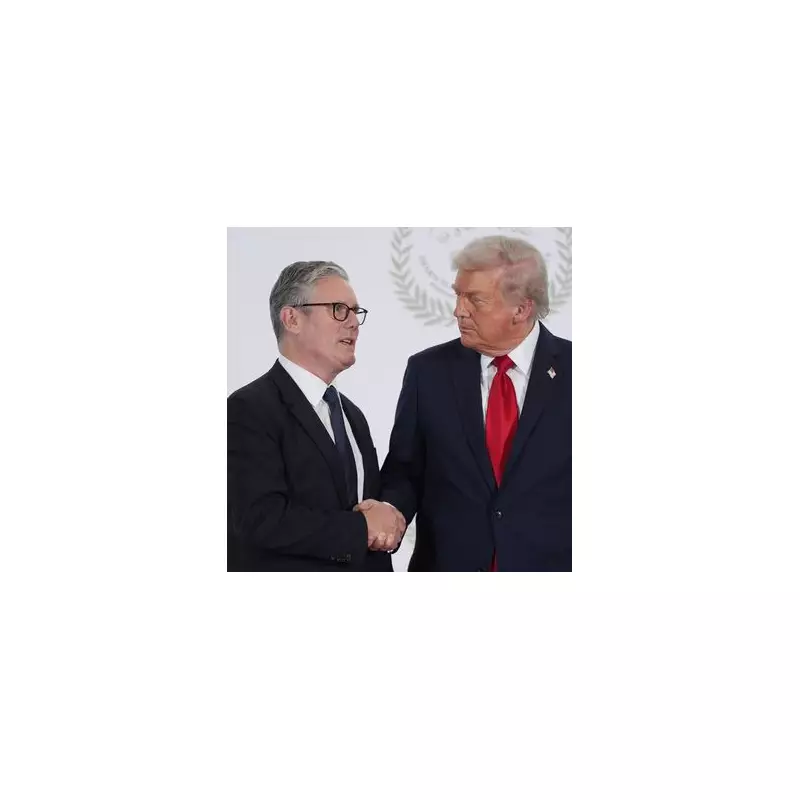
Prime Minister Keir Starmer has stepped into a mounting international crisis, acting as an intermediary in high-stakes discussions concerning Donald Trump's renewed ambitions for Greenland. The flurry of diplomatic activity on Wednesday aimed to steer the US President away from threats of annexation and towards a peaceful, diplomatic resolution with Denmark.
Starmer's Diplomatic Shuttle in High Gear
The UK leader engaged in a series of critical phone calls within a 24-hour window, speaking twice with President Trump himself. The first conversation occurred on Wednesday evening, followed by discussions with Danish Prime Minister Mette Frederiksen and Nato Secretary General Mark Rutte. A second call with President Trump took place on Wednesday afternoon, underscoring the urgency of the situation.
Downing Street confirmed that during these talks, Mr Starmer consistently "reiterated his position" on Greenland, asserting that its future is solely a matter for the territory and the Kingdom of Denmark. A spokeswoman stated the Prime Minister "set out his position on Greenland" clearly during the call with the US President.

A Unified Front Against Aggression
The discussions extended beyond the immediate Greenland issue to address broader Euro-Atlantic security concerns. Both Starmer and Frederiksen agreed that the Nato alliance must "step up" its presence in the High North to counter Russian aggression. This point was also emphasised in the Prime Minister's conversation with Nato's Mark Rutte.
"The leaders discussed Euro-Atlantic security and agreed on the need to deter an increasingly aggressive Russia in the High North," a Downing Street spokeswoman said. "European Allies had stepped up in recent months to defend Euro-Atlantic interests, but more could be done to protect the area, the Prime Minister said."
Parallel Talks and Allied Concerns
The diplomatic offensive was not confined to Number 10. Deputy Prime Minister David Lammy, who is in the United States for events marking the 250th anniversary of American independence, was scheduled to meet with US Vice President JD Vance. The situation regarding Greenland, along with Venezuela, was expected to be high on their agenda.
The crisis has exposed fissures among Western allies. French President Emmanuel Macron warned that the US under Trump was "breaking free from international rules" and "gradually turning away" from some allies. In contrast, UK Cabinet Minister Pat McFadden sought to project unity, insisting the US remains a "reliable ally" despite the President's behaviour.
The UK government's concerted effort appears focused on de-escalation, urging President Trump to pursue any interests in the strategically significant Arctic territory through established diplomatic channels, rather than through force or threats.