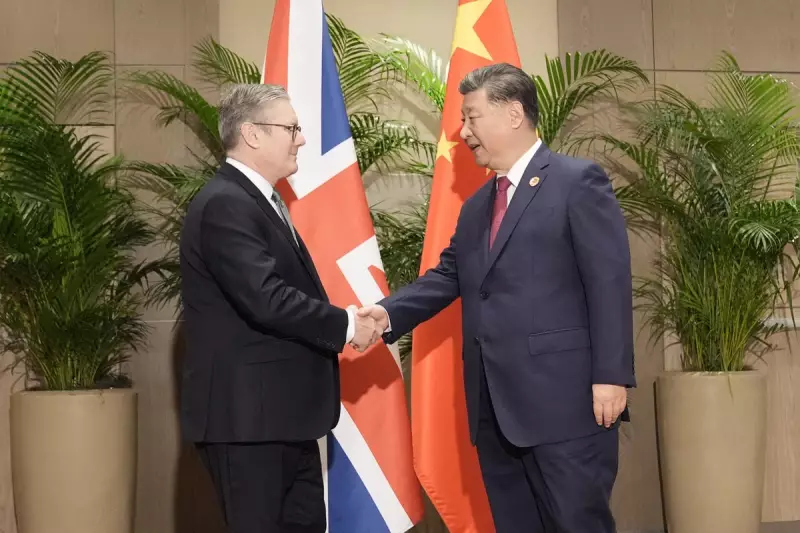
Prime Minister Sir Keir Starmer is embarking on a significant diplomatic mission to China, marking the first visit by a British premier in eight years. The trip, commencing on Wednesday, aims to forge warmer relations and secure enhanced trade access with one of the world's largest economies.
A Major Delegation for a Critical Mission
Sir Keir will be accompanied by a substantial delegation comprising over fifty representatives from British business, sports, and cultural sectors. This high-profile group includes executives from major corporations such as Jaguar Land Rover, Barclays, and AstraZeneca, alongside institutions like the Science Museum and the National Theatre. The Business Secretary, Peter Kyle, and the City minister, Lucy Rigby, will also join the Prime Minister, underscoring the visit's economic and financial importance.
Balancing Trade Opportunities with National Security
Downing Street has emphasised that the Government will not compromise national security for economic gain, a stance reflecting ongoing concerns about Chinese espionage activities within the UK. The Prime Minister's official spokesman articulated a pragmatic approach, stating that engagement is essential for progress. "Without meaningful dialogue, we make no progress at all," the spokesman remarked. "Sticking our heads in the sand and refusing to engage would be a staggering dereliction of duty. It would make the British people less safe, cut us off from opportunities and weaken our ability to manage global challenges in areas like climate and health."

Sir Keir himself framed the visit as a necessary step for national interest. "Like it or not, China matters for the UK," he said ahead of the trip. "As one of the world's biggest economic players, a strategic and consistent relationship with them is firmly in our national interest. That does not mean turning a blind eye to the challenges they pose – but engaging even where we disagree."
Navigating a Complex Diplomatic Landscape
This visit represents a deliberate shift from the Conservative government's approach, which Sir Keir has criticised as "dogged by inconsistency." Relations between London and Beijing have been notably cool since Theresa May's 2018 visit, exacerbated by events such as the crackdown on pro-democracy activists in Hong Kong and the UK's ban on Huawei from its 5G network over security fears.
The Labour government has actively pursued a thaw, highlighted by recent visits from senior ministers like Chancellor Rachel Reeves and the approval of a new Chinese embassy in London. However, the Prime Minister faces domestic pressure from parliamentarians and China hawks urging caution, particularly regarding human rights issues. Notably, former Hong Kong governor Lord Chris Patten has called on Sir Keir to raise the case of imprisoned British national and pro-democracy activist Jimmy Lai at the outset of his meetings, warning that failure to do so would be "pathetic."
International Context and Strategic Positioning
The UK's engagement comes as other Western leaders have maintained more consistent dialogue with Beijing. French and German leaders have visited China multiple times since 2018, a period during which no British prime minister travelled there. Furthermore, US President Donald Trump is anticipated to visit China in April, adding another layer to the geopolitical dynamic.
Sir Keir has explicitly rejected the notion of choosing sides between the US and China. "I'm often invited to simply choose between countries. I don't do that," he told Bloomberg. This balanced stance is crucial, given the risk that closer UK-China ties could provoke a negative reaction from President Trump, who has previously threatened tariffs over other nations' dealings with Beijing.
The Prime Minister framed his strategy as aligning with allied practices. "This is what our allies do, and what I will do: delivering for the public, putting more money in their pockets and keeping them safe through pragmatic, consistent co-operation abroad," he stated.
As Sir Keir Starmer arrives in Beijing, his mission encapsulates the delicate act of pursuing vital trade links and diplomatic warmth with China, while steadfastly addressing security imperatives and human rights concerns that define this complex bilateral relationship.