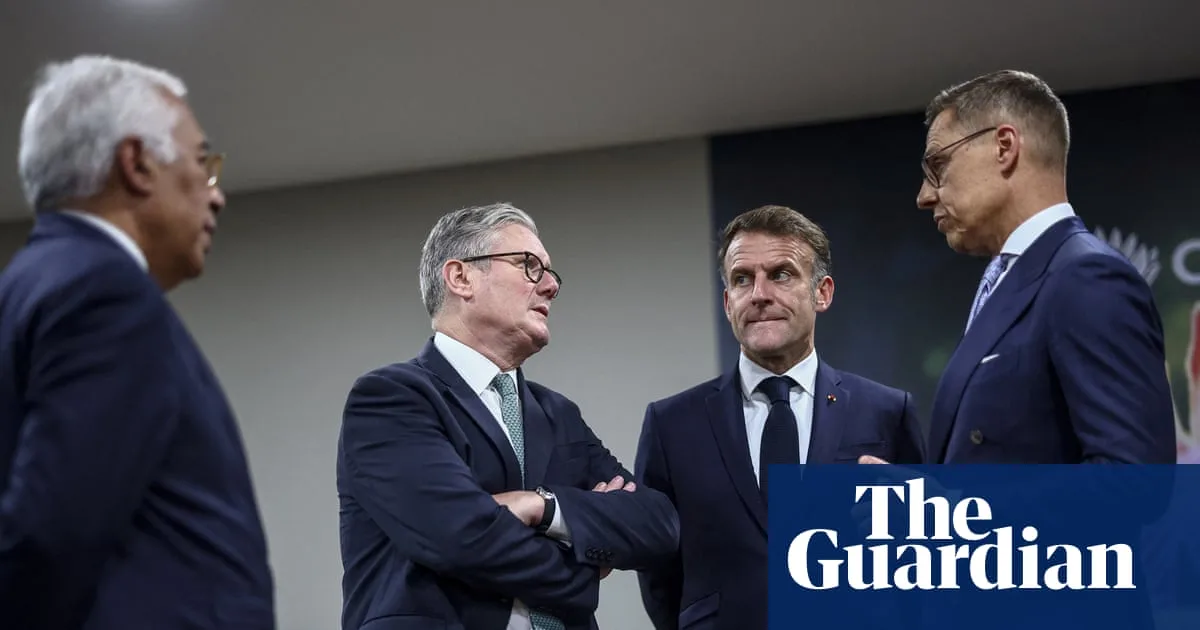
Prime Minister Keir Starmer is set to engage in direct discussions with US President Donald Trump regarding his contentious blueprint for ending the conflict in Ukraine, following significant international pushback at the G20 summit in South Africa.
International Leaders Unite Against Trump's Proposal
The diplomatic showdown unfolded as world leaders gathered in Johannesburg for critical talks, notably without President Trump's participation. G7 nations, excluding the United States, issued a joint statement expressing serious concerns about the American president's 28-point peace plan.
Speaking to journalists in Johannesburg, Starmer confirmed he anticipates conversing with the US leader "in the coming days." The Prime Minister clarified that no Washington visit is planned, with attention instead focused on urgent negotiations scheduled in Geneva tomorrow.
The Controversial Peace Terms
President Trump has presented Ukraine with a strict deadline of November 27 - coinciding with Thanksgiving in the United States - to respond to his proposed settlement. The comprehensive blueprint has sparked alarm across European capitals and in Kyiv for several key reasons.
The proposed agreement would require Ukraine to surrender occupied territories to Russia, substantially reduce its military capacity, and abandon its ambition to join NATO. These conditions closely mirror Moscow's long-standing demands while offering Kyiv limited security guarantees in return.
Ukrainian President Volodymyr Zelenskyy faces an agonising decision between protecting his nation's sovereignty and maintaining crucial American support. The situation becomes increasingly pressing as late February will mark four years since Russia launched its full-scale invasion.
Coordinated International Response
In their collective statement, Starmer and twelve other international leaders from nations including France, Germany, Japan, Canada, Italy, and representatives from the EU Commission and Council, articulated their position clearly.
While acknowledging American efforts to pursue peace, the leaders emphasised that "borders must not be changed by force" and expressed specific concerns about proposed limitations on Ukraine's armed forces that could leave the nation vulnerable to future aggression.
The statement read: "We welcome the continued US efforts to bring peace to Ukraine. The initial draft of the 28-point plan includes important elements that will be essential for a just and lasting peace. We believe therefore that the draft is a basis which will require additional work."
Meanwhile, Russian President Vladimir Putin has cautiously endorsed the American proposal, suggesting it "could form the basis of a final peace settlement."
Immediate Next Steps
The diplomatic efforts continue at pace with urgent talks scheduled in Geneva involving US and Ukrainian officials. The American delegation will include President Trump's special envoy Steve Witkoff and Secretary of State Marco Rubio.
Britain's National Security Adviser Jonathan Powell has departed the G20 summit early to participate in the Swiss negotiations, alongside counterparts from France and Germany.
Former British Army commander Hamish de Bretton-Gordon offered stark criticism of the proposed settlement, describing it as "bonkers" and arguing that "it rewards Putin for all his aggression and, really, it doesn't help Ukraine in any way at all."
As the late November deadline approaches, the international community watches closely to see how this diplomatic confrontation between Western allies will unfold and what compromise might emerge from the ongoing negotiations.




