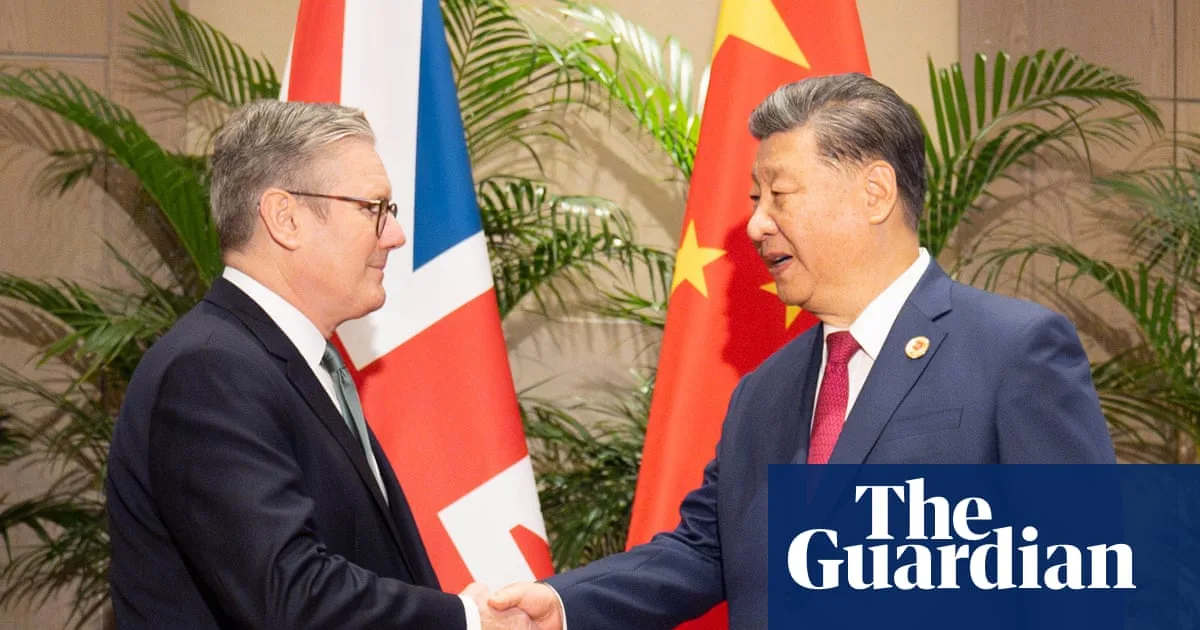
Prime Minister Keir Starmer has robustly defended his decision to engage in a historic handshake with Chinese President Xi Jinping, as political opponents and critics warn that such diplomatic overtures may be dangerously naive. Sir Keir's journey to Beijing marks the first visit by a British Prime Minister to China in eight years, with the meeting scheduled for the early hours of Thursday morning.
Security Measures and Diplomatic Tensions
The visit has been shrouded in extraordinary security precautions, reflecting deep-seated concerns about Chinese espionage activities. The Prime Minister and his official delegation have been issued with disposable 'burner' phones and laptops for the duration of their stay, following intelligence reports about state-sponsored hacking operations targeting previous UK administrations.
Former security minister Tom Tugendhat revealed that Sir Keir effectively travelled on a 'burner plane', chartering a commercial jet due to fears that the usual government aircraft could be compromised while on Chinese soil. Additional reports suggest officials brought a tent to be erected in the Prime Minister's room, allowing him to dress without surveillance concerns.
Economic Opportunities Versus Ethical Concerns
Speaking to a delegation of British business executives accompanying him, Sir Keir emphasised the significant economic potential of engaging with China, describing the visit as 'historic' and necessary for national interests. He highlighted that China represents the world's second-largest economy and, when combined with Hong Kong, serves as Britain's third-largest trading partner.
'There are huge opportunities to be had in lots of different sectors,' Sir Keir told business leaders, pointing to the diverse representation within the British delegation as evidence of commercial potential. However, this economic optimism faces substantial ethical challenges.
Human Rights and Political Criticism
Conservative leader Kemi Badenoch has questioned the timing and wisdom of the visit, suggesting Britain should instead strengthen alliances with countries 'worried about the threat China is posing to them'. She argued that the UK should focus on partners aligned with British interests rather than engaging with a nation accused of undermining Western economies.
The Prime Minister faces particular pressure regarding human rights issues, including the treatment of jailed Hong Kong democracy campaigner Jimmy Lai. Mr Lai's son, Sebastian, has made an emotional appeal for his father's release, warning that the 78-year-old could become a 'martyr' if he dies in prison and calling on Sir Keir to secure his freedom.
Diplomatic Gestures and Historical Context
In a symbolic gesture of diplomatic friendship, Arsenal supporter Sir Keir is expected to present Manchester United fan President Xi with a match ball from last Sunday's clash between the two football clubs. China marked the Prime Minister's arrival by flying the Union Jack at Beijing's Tiananmen Gate, creating a visual display of diplomatic courtesy.
However, this diplomatic theatre occurs against a backdrop of serious allegations. President Xi stands accused of overseeing a brutal crackdown in Hong Kong, breaching international agreements with Britain, and presiding over human rights abuses in Xinxiang province that some have labelled genocide.
Parliamentary Opposition and Government Defence
Liberal Democrat deputy leader Daisy Cooper has criticised the Prime Minister for going 'cap in hand' to Beijing while China holds British citizen Jimmy Lai captive and allegedly hunts pro-democracy protesters on British streets. Meanwhile, Sir Iain Duncan Smith, who faces Chinese sanctions for criticising human rights records, has expressed scepticism about the visit's security arrangements.
Deputy Prime Minister David Lammy has countered these criticisms, arguing that ignoring China would represent a 'dereliction of duty' given its substantial influence on global affairs. He maintains that diplomatic engagement remains essential despite the complexities and challenges involved.
The Future of UK-China Relations
Luke de Pulford, executive director of the Inter-Parliamentary Alliance on China, has dismissed what he calls 'golden era redux' aspirations, suggesting China shows limited interest in UK investment except in restricted critical national infrastructure sectors. He believes Britain is witnessing 'the dying gasps of that naivety in our posture towards Beijing'.
As Sir Keir prepares for crucial talks with President Xi, he faces the delicate balancing act of pursuing economic opportunities while addressing security concerns and human rights issues. The Prime Minister has committed to raising 'issues that need to be raised' during discussions, though he has notably avoided using the term 'genocide' to describe China's actions in Xinxiang, despite previously supporting a Commons motion on the matter.
This diplomatic mission represents a significant test for the new Prime Minister's foreign policy approach, as he attempts to navigate the complex terrain of international relations with one of the world's most powerful and controversial nations.




