
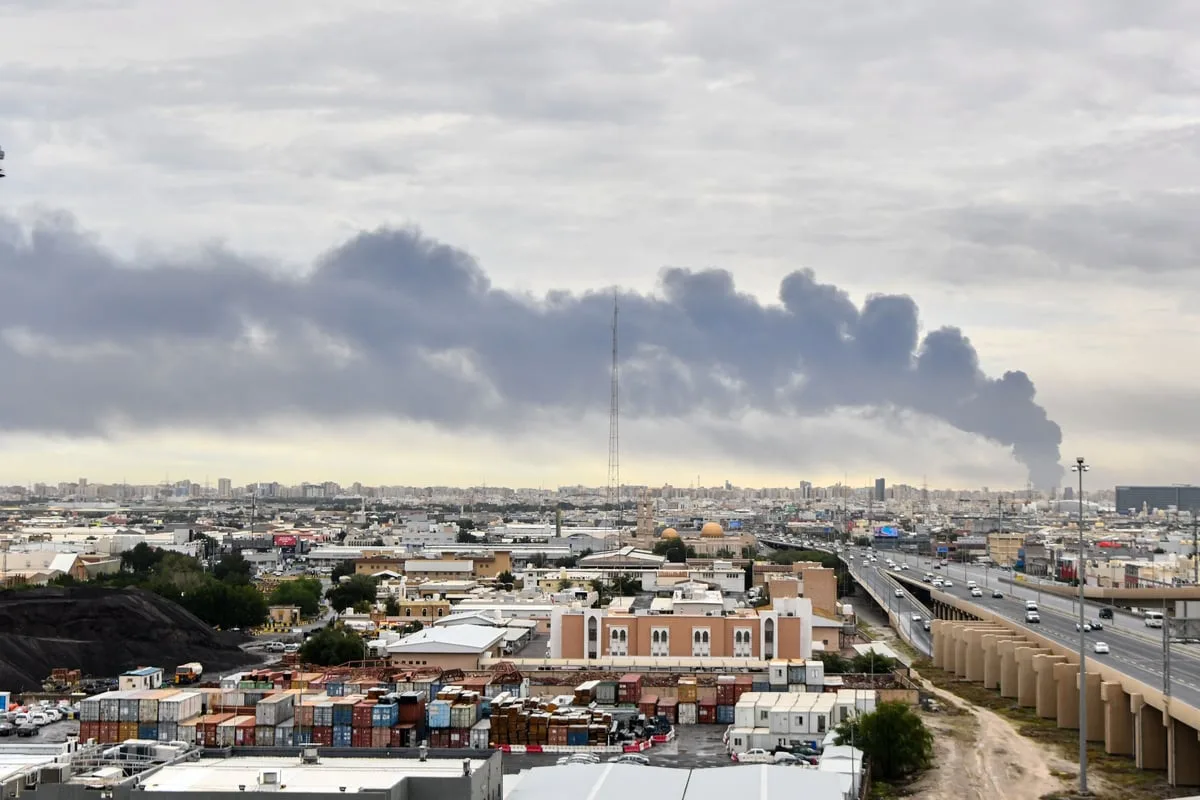
Sir Keir Starmer has condemned a 'reckless' Iranian attack on an oil refinery in Kuwait and confirmed the deployment of Britain's rapid sentry air defence system to the Gulf country. In a call with Kuwait's crown prince, the Prime Minister also discussed co-ordinated efforts to reopen the vital Strait of Hormuz oil and gas shipping lane blockaded by Iran in retaliation for the US-Israeli campaign against it.
Tehran fired drones and missiles at targets across the Middle East overnight and on Friday, setting a refinery on fire and damaging a desalination plant in Kuwait. Meanwhile, the US launched a search for a fighter jet downed in Iran, according to reports, in the first such incident since the start of the conflict. One crew member has been rescued, US officials told CBS News.
Donald Trump threatened to hit Iran's bridges and electric power plants, saying the US military 'hasn't even started destroying what's left in Iran.' His comments came after a deadly US air strike on a major suspension bridge near Tehran, which the UN's humanitarian relief chief Tom Fletcher said constituted a breach of international law. Former British diplomat Mr Fletcher told the BBC: 'You don't hit civilian infrastructure. That includes hospitals. You don't hit schools, you don't hit energy sources, you don't hit bridges. Those are war crimes.'
A Downing Street spokesperson said on Friday: 'The Prime Minister spoke to his highness the Crown Prince of Kuwait Sheikh Sabah Al-Khaled Al-Hamad Al-Mubarak Al-Sabah this morning. The Prime Minister began by condemning the reckless overnight drone attack on a Kuwaiti oil refinery. He reiterated that the UK stands with Kuwait and all our allies in the Gulf. They discussed the deployment of the UK's Rapid Sentry air defence system to Kuwait, which will protect Kuwaiti and British personnel and interests in the region, while avoiding escalation into wider conflict.'
Regarding ongoing disruption to global shipping through the Strait of Hormuz, the Prime Minister and crown prince welcomed the meeting convened by the Foreign Secretary yesterday on a viable plan to reopen the Strait. They agreed to continue to work together on this and stay in close contact over the coming weeks. Defence Secretary John Healey, on a trip to the region earlier this week, announced that Rapid Sentry, a ground-based short-range missile launching weapon, had arrived in Kuwait, where the RAF's counter-drone orcus system is also helping soldiers detect Iranian drones early.




