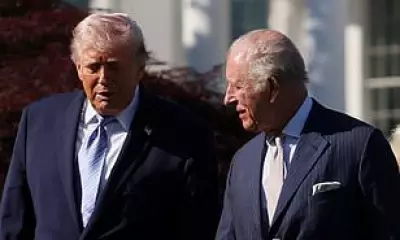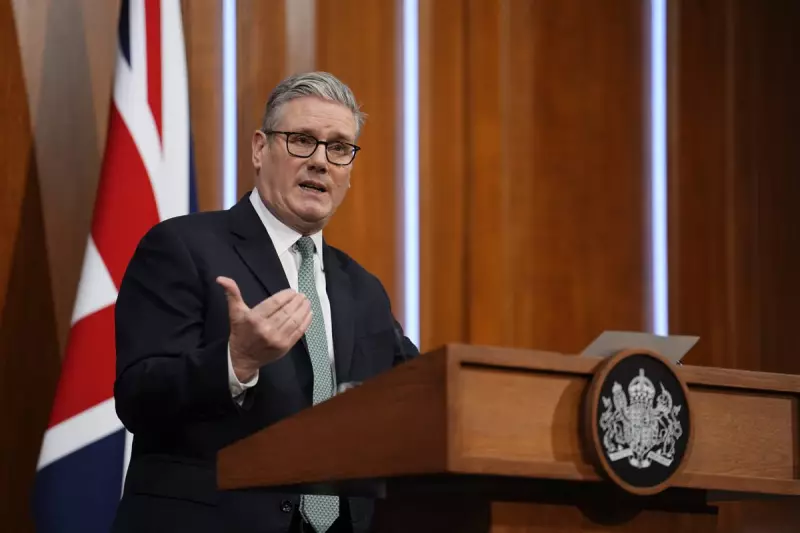
Prime Minister Sir Keir Starmer has appealed for calm and dialogue in the face of escalating threats from the United States over Greenland, firmly dismissing the prospect of a military invasion of the Arctic territory.
Downing Street Calls for Diplomatic Resolution
In an emergency address from Number 10 on Monday, Sir Keir described the situation as a "moment for the whole country to pull together". He insisted the only proper way to resolve the dispute was through "calm discussion between allies", rejecting both military action and a trade war as viable solutions.
The crisis was triggered by US President Donald Trump's demand for Washington to purchase Greenland from Denmark. To force the issue, Mr Trump has threatened to impose punishing tariffs on several NATO allies, including the UK.

The US Tariff Threat and UK Response
President Trump declared he would levy a 10% tariff on all goods sent to the US from Britain starting 1 February, rising sharply to 25% from 1 June. This would continue until a deal for Greenland is secured. The same measures were threatened against Denmark, Norway, Sweden, France, Germany, the Netherlands, and Finland.
When questioned by reporters, Sir Keir stated he did not believe the US president was "genuinely prepared to invade the island". He condemned the use of tariffs, stating: "It is not the right way to resolve differences within an alliance." The Prime Minister reiterated that Greenland's future sovereignty is a matter solely for its people and the Danish government.
The gravity of the situation was underscored by the presence of Chancellor Rachel Reeves at the PM's announcement, having cancelled a scheduled event at the London Stock Exchange.
Diplomatic Flurry and Cross-Party Condemnation
Sir Keir engaged in a diplomatic push over the weekend, telling President Trump directly in a phone call that his threats were "completely wrong". Foreign Secretary Yvette Cooper met with her Danish counterpart, Lars Lokke Rasmussen, in London on Monday afternoon, reinforcing the UK's stance against "tariffs and threats against allies".
Mr Rasmussen thanked the UK for its support and urged allies to unite in support of international principles, notably against Russia.
Condemnation of President Trump's actions was widespread across the UK political spectrum:
- Shadow Defence Secretary James Cartlidge labelled the threats "totally unacceptable".
- Liberal Democrat leader Sir Ed Davey called the move "economic thuggery" and advocated for a coordinated European tariff response.
- Reform UK's Nigel Farage, while favouring negotiation, said the tariff threats were "wrong" and pledged to raise the issue with the US administration at the World Economic Forum in Davos.
In a related development, President Trump suggested in a letter to Norway's Prime Minister that being overlooked for the Nobel Peace Prize, awarded in Oslo, had influenced his stance, stating he no longer felt "an obligation to think purely of peace".
Sir Keir confirmed he would speak to President Trump again "in the coming days" in an effort to de-escalate the situation, though no meeting is currently planned for the upcoming Davos summit.