UK and EU Leaders Reject Trump's Ukraine Peace Plan as 'Betrayal'
Starmer and EU leaders reject Trump's Ukraine peace terms

European Leaders Clash With Trump Over Ukraine Peace Proposal

Sir Keir Starmer has joined forces with other European leaders in a dramatic rejection of US President Donald Trump's peace plan to end the war in Ukraine, setting the stage for a major diplomatic confrontation. The British Prime Minister and his counterparts from France and Germany have declared the proposals unacceptable in their current form, arguing they would leave Ukraine dangerously exposed to future Russian aggression.

The Controversial Peace Terms

The White House-Kremlin negotiated plan, which critics describe as heavily favouring Russia, would require Ukraine to surrender territory its military has successfully defended since the full-scale invasion began in February 2022. This includes the strategically important Donbas region in eastern Ukraine.

Under Mr Trump's 28-point proposal, Ukraine would face significant military restrictions, including cutting its armed forces by 25% to just 600,000 troops. The country would be prohibited from possessing long-range weapons capable of reaching Russian territory, and no NATO troops would be permitted to be stationed within its borders.

Foreign fighter jets would only be allowed to operate from bases in Poland, while all sanctions against Russia would be lifted, enabling what the plan describes as Vladimir Putin's 'reintegration into the global economy'.

European Backlash and Joint Statement

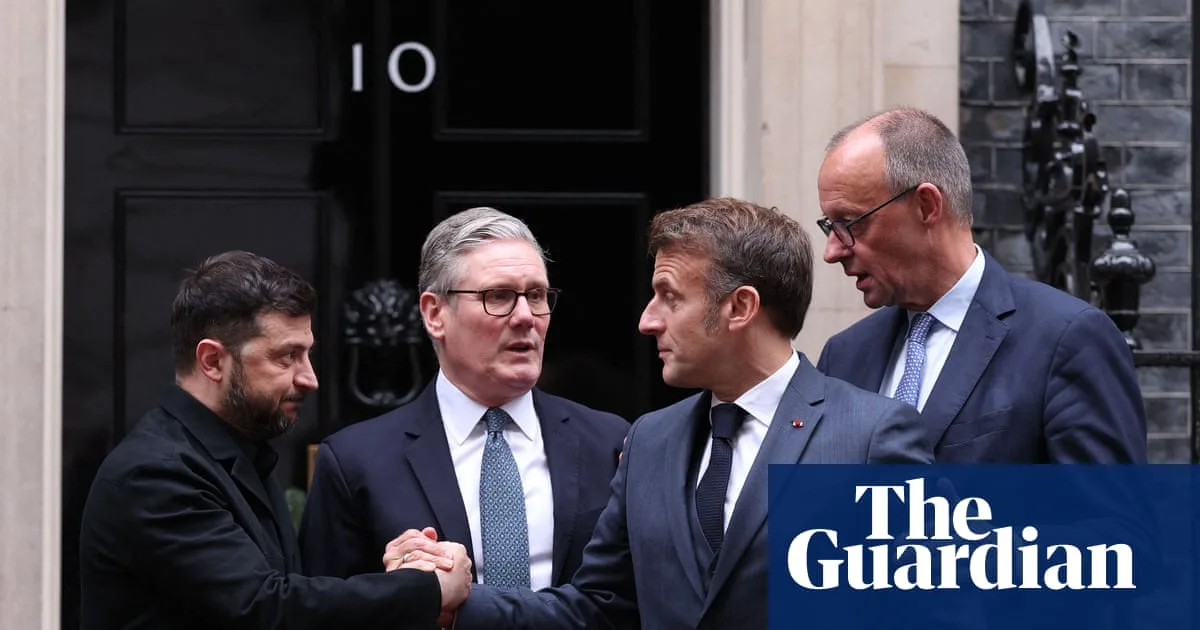
Sir Keir, French President Emmanuel Macron and German Chancellor Friedrich Merz issued a powerful joint statement during the G20 summit in South Africa, making clear that the US President cannot unilaterally make demands affecting NATO and European Union security interests without their agreement.

The leaders emphasised the fundamental principle that 'borders cannot be changed by force', directly challenging the territorial concessions demanded in the Trump administration's proposal.

Sir Keir expressed particular concern about the military limitations, telling reporters: 'We are concerned about that because it's fundamental that Ukraine has to be able to defend itself if there's a ceasefire.'

Strong Criticism From Military and Political Figures

The proposed peace terms have drawn fierce condemnation from various quarters. Former prime minister Boris Johnson described the 28-point plan as amounting to 'military castration' of Ukraine, while Shaun Pinner, a former Royal Anglian Regiment soldier who fought for Ukraine in Mariupol, called it 'surrender dressed up as diplomacy'.

Mr Pinner added emotionally: 'It's repugnant. I'm sick with anger.'

Despite the strong opposition, diplomatic efforts continue at pace. Sir Keir has spoken with both President Trump and Ukrainian President Volodymyr Zelensky, potentially positioning Britain as a bridge between European concerns and American ambitions for a settlement.

President Zelensky confirmed: 'We had a long conversation and covered many nuances of diplomatic work in planning the peace process. Co-ordination will continue, and I am grateful to the British society for their support.'

Pressure Mounts as Deadline Looms

The Trump administration has given President Zelensky until Thursday to make a decision on the proposal, with US officials reportedly warning that if he refuses, he could face much worse terms in future negotiations.

German Chancellor Friedrich Merz emphasised Europe's stake in the outcome during a phone call with President Trump, stating: 'If Ukraine loses this war and possibly collapses, it will have an impact on European politics as a whole, on the entire European continent - and that is why we are so committed to this issue.'

When questioned about whether the plan represented his final offer, President Trump responded: 'No, not my final offer. We'd like to get to peace. It should've happened a long time ago. One way or the other, we have to get it ended.'

US Army Secretary Dan Driscoll acknowledged the plan's imperfections but stressed urgency, saying: 'No deal is perfect, but it must be done sooner rather than later.'

Diplomatic Efforts Intensify

Delegates from Kyiv are scheduled to hold crucial talks with US Secretary of State Marco Rubio in Geneva today, with British and European officials also participating. President Zelensky has vowed to work continuously to find an acceptable path forward while insisting he will not betray his country.

Sir Keir indicated that attention is now focused on the Geneva discussions, noting: 'We need to see how far we get with that.'

Downing Street maintained Britain's position, stating: 'We want a ceasefire and we have been pushing for that,' while firmly adding: 'There can be no let-up in support for Ukraine.'

US Vice-President JD Vance defended the administration's approach, asserting that peace 'won't be made by failed diplomats or politicians living in a fantasy land' but by 'smart people living in the real world'.

He argued that criticism of the peace framework either misunderstands the proposal or misrepresents realities on the ground, challenging what he called the 'fantasy that if we just give more money, more weapons, or more sanctions, victory is at hand.'

Sir Keir's spokesman denied suggestions that Britain had been excluded from President Trump's peace negotiations, highlighting the 'excellent relationship' between the two leaders despite their significant differences over the Ukraine proposal.




