
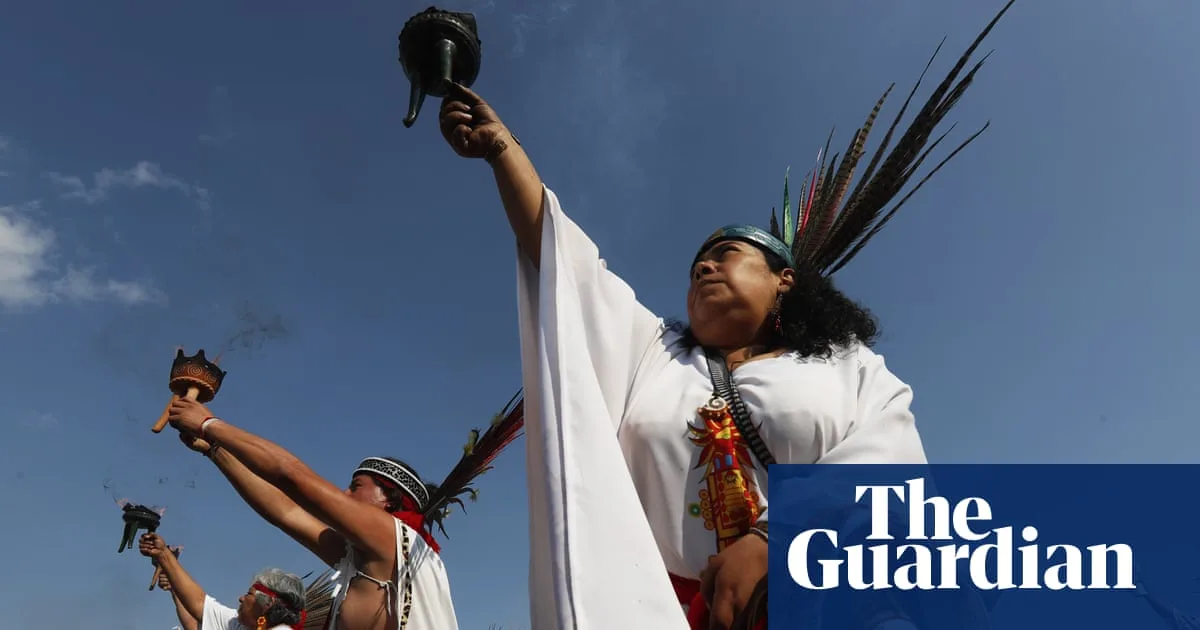
Spain has formally acknowledged and expressed regret over the “pain and injustice” suffered by Indigenous people in Mexico during the colonial conquest, marking a significant shift in tone after years of diplomatic tension. Spanish Foreign Minister José Manuel Albares made the remarks on Friday at the opening of an exhibition in Madrid dedicated to Indigenous women of Mexico.
“It’s a very human history and, like every human history, it’s had its light and its shadows,” Albares said. “And there has also been pain – pain and injustice towards the Indigenous people to whom this exhibition is dedicated. There was injustice and it’s right to recognise that today and to be sorry for that, because it is also part of our shared history, and we can neither deny nor forget it.”
The comments come after years of strained relations over the colonial legacy. In March 2019, Mexico’s then-president Andrés Manuel López Obrador wrote to King Felipe VI and Pope Francis, calling for apologies for the “massacres and oppression” of colonialism. Spain’s government at the time responded angrily, stating that historical actions could not be judged “in the light of contemporary considerations”.
Mexico’s current president, Claudia Sheinbaum, had renewed calls for an apology just four days before Albares’s statement. She welcomed the Spanish minister’s words as “a first step” that demonstrates how “apologies ennoble governments and peoples”. She added: “It’s not humiliating, it’s just the opposite. Congratulations to the foreign minister of the Spanish government, particularly in this Year of the Indigenous Woman.”
The conquest of Mexico began in 1519 when Hernán Cortés led Spanish forces to Tenochtitlán, aided by rival Indigenous groups and diseases such as smallpox. The city was sacked in 1521, and Indigenous populations were forcibly converted to Catholicism.




