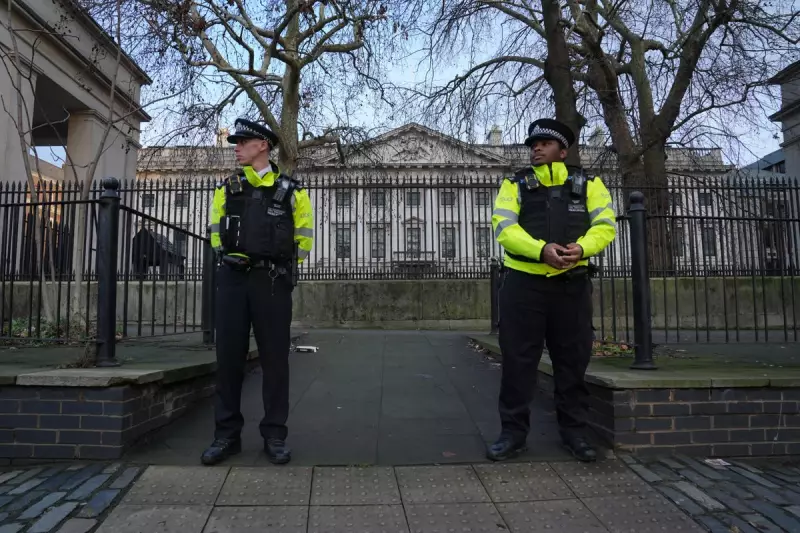
Security Fears Mount Over China's New London Embassy Amid Espionage Concerns
The United Kingdom has granted approval for China's vast new embassy complex in London, despite significant warnings from security experts and politicians about potential national security risks. The decision comes after intense scrutiny from intelligence agencies, with MI5 acknowledging that while complete risk elimination is impossible, they believe the proposed security measures provide acceptable protection.
Critical Infrastructure Vulnerabilities
The proposed site at Royal Mint Court, located near the Tower of London, sits alarmingly close to fibre-optic cables that transmit sensitive financial data to the City of London. This proximity has raised serious concerns that Beijing could potentially intercept or monitor this critical information flow. According to detailed reports, the embassy plans include 208 secret rooms and a concealed chamber positioned directly alongside these vital internet cables.
Security analysts have noted that the chamber's design includes hot-air extraction systems, suggesting the potential installation of advanced computing equipment suitable for sophisticated espionage operations. The proposals also involve demolishing and reconstructing a wall situated between data cables, further heightening security apprehensions.

Opposition figures have voiced strong objections, with Conservative shadow minister Alicia Kearns warning that the embassy could provide China with a "launch pad for economic warfare" against British interests. Labour's Sarah Champion, who has personally experienced Chinese spyware attacks on her parliamentary computer, highlighted recent infrastructure hacks in both the US and UK as evidence of growing threats.
Intelligence Community Assessment
Security Minister Dan Jarvis informed Parliament that "an extensive range of measures have been developed to protect national security" regarding the embassy project. He emphasised that authorities have implemented numerous safeguards to increase the resilience of cables in the area and protect sensitive data transmissions.
In a joint letter to senior ministers, MI5 director general Sir Ken McCallum and GCHQ director Anne Keast-Butler stated that the security mitigation package "deals acceptably with a wide range of sensitive national security issues, including cabling." They noted that MI5 brings over a century of experience managing risks associated with foreign diplomatic premises in London, while acknowledging that complete risk elimination remains unrealistic.
Personnel and Surveillance Concerns
Critics have raised alarms about the expected 200-strong workforce of Chinese nationals who would operate from the new embassy, warning that undeclared officers from China's Ministry of State Security and military intelligence could be embedded among them. Tory shadow foreign secretary Dame Priti Patel accused the government of "giving Xi Jinping what he wants – a colossal spy hub in the heart of our capital."
However, Minister Jarvis argued that consolidating China's current seven different diplomatic sites across London into a single location actually brings security advantages. With plans requiring all Chinese diplomats to reside on the premises, UK security services would be better positioned to monitor their activities and movements.
Transnational Repression Fears
Hong Kong pro-democracy activists who have sought refuge in the UK have expressed genuine fears that the new embassy could enhance China's ability to conduct transnational repression on British soil. Chloe Cheung, a 20-year-old activist who faces a substantial bounty from Hong Kong authorities, voiced concerns that the embassy could facilitate surveillance operations against dissidents.
These concerns follow the 2022 incident where a Hong Kong protester was dragged into China's Manchester consulate grounds and assaulted before being rescued by British police. In response to these fears, the government has secured agreement from Beijing that the embassy's publicly-accessible forecourt will not enjoy diplomatic immunity, allowing normal policing and preventing similar incidents.

Secret Rooms and Safeguards
Additional concerns have emerged regarding the purpose of numerous unidentified rooms in the embassy plans, with some suggesting they could potentially be used for detaining or mistreating individuals. Downing Street has confirmed that ministers have reviewed unredacted plans and are satisfied that risks associated with these secret rooms "are being appropriately managed." Government sources indicate authorities understand the intended uses of these spaces and have established safeguards to prevent misuse.
Local Community Opposition
Residents living near the proposed embassy site have vowed to continue challenging the government's approval, citing both privacy concerns and potential security risks to their neighbourhood. They worry about possible attacks targeting the embassy and the large-scale demonstrations that have already occurred at the location.
The government's decision letter addressed these concerns by noting a "lack of evidence of a specific identified terrorist threat" to the site and asserting that any large protests could be safely managed by police. Despite these assurances, the controversy surrounding China's new diplomatic compound continues to generate significant debate about balancing diplomatic relations with national security priorities.