
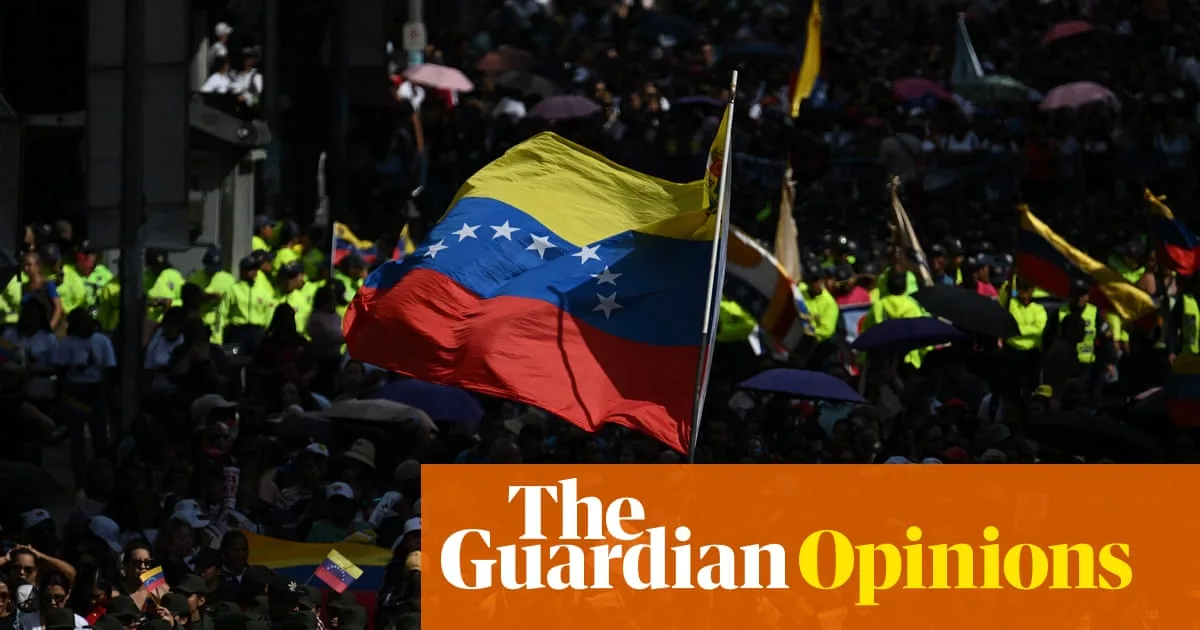
In the early fray of foreign interventions, evidence is largely circumstantial. But the circumstances surrounding the US raid on Venezuela tell a powerful story. As late as Saturday afternoon, fires continued to smolder in parts of Caracas. Residents, stunned and anxious, filled grocery stores and gas stations, stocking up before a future unknown. Everywhere the question hung in the air like the smoke still clouding Venezuela’s capital: what next?
After months of military buildup, deadly strikes at sea and a looming ground war, the United States made good on its threats to attack Venezuela in a dramatic overnight raid that ended with Nicolás Maduro in a New York City jail cell. Yet 48 hours later, little else appeared different in Caracas: Maduro’s inner circle remained in place; state institutions remained in their control; streets were calm, if tense, while authorities called on people to return to their daily lives. If this is regime change, it seems a strange sort, one that leaves the regime otherwise intact.
Information available suggests that after over a decade of tight cohesion around Maduro, his inner circle calculated they were better off without him and struck a deal with the Trump administration: Maduro in exchange for staying in power. The absence of even minimal organized resistance to a raid that involved multiple low-flying, slow-moving aircraft traversing densely populated and otherwise heavily defended Venezuelan airspace for more than two hours invites speculation about prior knowledge of the attack by Venezuela’s military and about stand-down orders for the bulk of the country’s armed forces.
Donald Trump’s press conference further hinted at a deal. He flatly stated the US intended to take control of Venezuela’s vast oil reserves and “run” the country. Most stunning was Trump’s assertion that Maduro’s vice-president – Delcy Rodríguez – would remain in place if she “does what we want”. Summarily sidelined after years of building a government-in-waiting was Venezuela’s expatriate opposition, led by the Nobel laureate María Corina Machado. Trump dismissed her, saying she “doesn’t have the respect” of the country.
Delcy Rodríguez’s own statements over the weekend were key. Though initially striking a defiant tone on Saturday, calling for Maduro’s immediate return, by Sunday she declared her desire to cooperate with the US. By Monday morning, after a ruling by Venezuela’s supreme court declaring Rodríguez next in line after Maduro’s kidnapping, and surrounded by Maduro’s erstwhile inner circle, she took the oath of office to become Venezuela’s president. The speed and seamlessness of the transition seems calculated, with key players in Maduro’s government having just one card to play: only they can ensure stability in any transitional context.




