Saudi Arabia Could Gain Uranium Enrichment Capabilities Under Proposed US Nuclear Agreement
Arms control experts are raising alarm over a proposed nuclear cooperation agreement between the United States and Saudi Arabia that could allow the kingdom to conduct uranium enrichment activities within its borders. Congressional documents and nonproliferation analysts suggest this development could significantly heighten proliferation risks in the Middle East, particularly as tensions continue between Iran and the United States.
Details of the Proposed Nuclear Cooperation Framework
The congressional document, which has been reviewed by The Associated Press, outlines the Trump administration's ambitious plan to establish twenty nuclear business deals with nations worldwide, including Saudi Arabia. This specific agreement with the kingdom is projected to be worth billions of dollars and is framed as advancing American national security interests by countering international competitors in the nuclear technology sector.
Under the draft agreement, both nations would enter into safeguard arrangements with the International Atomic Energy Agency, the United Nations' nuclear watchdog organization based in Vienna. These safeguards would cover what the document describes as "the most proliferation-sensitive areas of potential nuclear cooperation," explicitly listing uranium enrichment, fuel fabrication, and reprocessing as possible collaborative domains.

Nonproliferation Concerns and Regional Implications
Kelsey Davenport, director for nonproliferation policy at the Washington-based Arms Control Association, expressed significant concerns about the proposal. "Nuclear cooperation can be a positive mechanism for upholding nonproliferation norms and increasing transparency, but the devil is in the details," Davenport wrote. She warned that the agreement appears to create a pathway for Saudi Arabia to acquire uranium enrichment technology or capabilities, potentially even from the United States itself.
These concerns are amplified by recent regional developments. Last year, Saudi Arabia and nuclear-armed Pakistan signed a mutual defense pact following Israeli military actions against Hamas officials in Qatar. Pakistan's defense minister subsequently stated that his nation's nuclear program "will be made available" to Saudi Arabia if needed, a declaration widely interpreted as a warning to Israel, which is believed to be the Middle East's only nuclear-armed state.
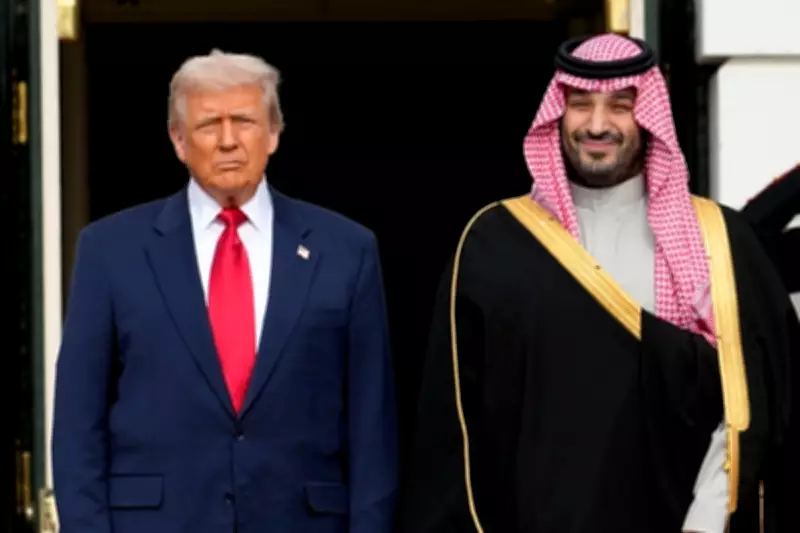
Saudi Crown Prince Mohammed bin Salman, the kingdom's day-to-day ruler, has previously stated that if Iran obtains a nuclear bomb, "we will have to get one." This declaration, combined with the proposed agreement's enrichment provisions, has intensified nonproliferation anxieties among experts who warn that any operational centrifuges within Saudi Arabia could potentially facilitate weapons development.
Context of Regional Nuclear Dynamics
The push for a Saudi-American nuclear agreement occurs against a backdrop of heightened tensions with Iran. The Trump administration has threatened military action against Iran if it fails to reach an agreement regarding its nuclear program, following nationwide protests in Iran that resulted in a violent government crackdown.
Iran has consistently maintained that its nuclear enrichment activities are peaceful, though Western nations and the IAEA assert that Iran maintained an organized military nuclear program until 2003. Notably, Iran has enriched uranium to 60% purity, just a technical step away from weapons-grade levels of 90%, making it the only country globally to achieve such enrichment without an acknowledged weapons program.
Experts point to the United Arab Emirates as an alternative model for nuclear cooperation. The UAE signed what is known as a "123 agreement" with the United States to construct its Barakah nuclear power plant with South Korean assistance, explicitly foregoing uranium enrichment capabilities. Nonproliferation specialists have hailed this approach as the "gold standard" for nations seeking civilian nuclear power without raising proliferation concerns.

Technical Considerations and International Response
While uranium enrichment does not automatically lead to nuclear weapon development, as nations must also master additional technical steps including synchronized high explosives, it does create a pathway toward potential weaponization. This reality has fueled Western concerns about Iran's program and now raises similar questions about Saudi Arabia's intentions.
The International Atomic Energy Agency, which promotes peaceful nuclear applications while inspecting nations to prevent clandestine weapons programs, has not yet responded to inquiries about the proposed Saudi-American agreement. Saudi Arabia is currently a member state of the IAEA.
The congressional document argues that reaching a nuclear agreement with Saudi Arabia will break with what it describes as "failed policies of inaction and indecision that our competitors have capitalized on to disadvantage American industry and diminish the United States standing globally in this critical sector." China, France, Russia, and South Korea are among the leading nations currently exporting nuclear power plant technology internationally.
Saudi Arabian officials did not immediately respond to questions from The Associated Press regarding the proposed agreement and its potential enrichment provisions.