Satellite Images Reveal Scale of Damage to Iran's Nuclear Facilities
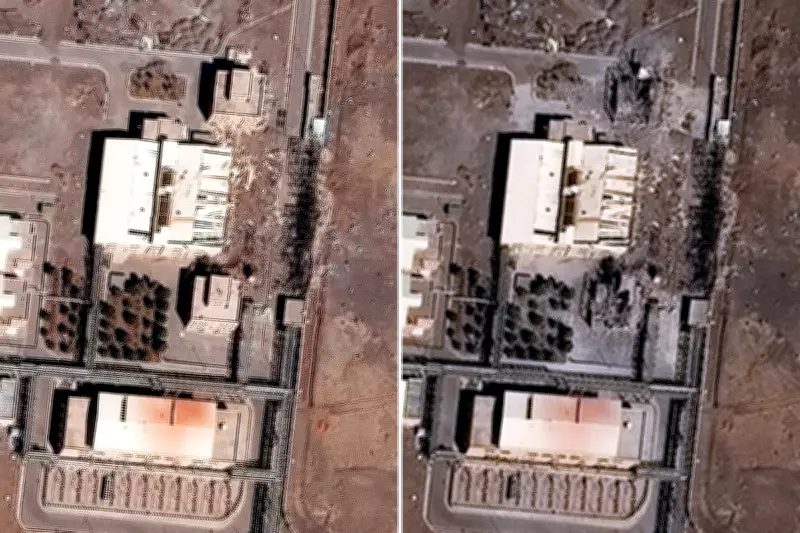
Recent satellite imagery has exposed the significant damage inflicted upon Iran's nuclear facilities following coordinated strikes by the United States and Israel. The attacks, which targeted key enrichment sites, have intensified fears about Tehran's nuclear ambitions and the potential for broader regional conflict.
Trump's Claims and the Reality on the Ground
President Donald Trump asserted that the strikes were necessary to eliminate Iran's capacity to develop nuclear weapons, claiming the country would have possessed a nuclear device within two weeks. He previously declared he had "obliterated" Iran's nuclear program in June. However, these statements have been contradicted by the latest military actions and expert analysis.
Iran's Ambassador to the International Atomic Energy Agency (IAEA) confirmed that the Natanz enrichment facility was attacked over the weekend, indicating that Tehran's nuclear infrastructure remains operational. A preliminary US Defence Intelligence Agency report acknowledged that June strikes caused substantial damage to sites including Fordo, Natanz, and Isfahan but did not completely destroy them.

How Close Is Iran to a Nuclear Weapon?
Under the 2015 nuclear agreement, Iran was permitted to enrich uranium to 3.67% purity and maintain a stockpile of 300kg. Prior to the Israel-Iran conflict escalation in June, the IAEA reported Iran's stockpile had ballooned to 9,874.9 kilograms, with 440.9kg enriched to 60% purity. This level is just a short step from weapons-grade material.
Darya Dolzikova, a senior research fellow at RUSI's proliferation and nuclear policy programme, explained that Iran possesses sufficient material to potentially produce up to five nuclear weapons within a week if it decides to further enrich its uranium. However, since the June attacks, the IAEA has been denied access to the bombed facilities, creating a critical intelligence gap.
"Since the attacks in June, the situation on the ground will have changed quite significantly, but we don't actually have visibility of what it looks like, because the IAEA has not had access," Ms Dolzikova stated. Key uncertainties include whether enriched uranium and centrifuges survived the strikes, and if Iran has the capability to weaponize its materials.
Assessing the Damage from US-Israeli Strikes
Ms Dolzikova noted that the majority of damage to Iran's nuclear program likely occurred during the June offensive, with recent attacks causing "limited" additional destruction. Dr Manuel Herrera, a senior policy fellow at BASIC, attributed this to Iran's strategic relocation of production to underground facilities.
"In this year's offensive, there have been several attacks on Iranian nuclear facilities, but they have not been severe, as Iran has moved almost all of its enriched uranium production to underground facilities that are difficult to access," Dr Herrera explained.
The Natanz facility, Iran's primary enrichment site located 220km southeast of Tehran, had been enriching uranium to 60% purity before Israel destroyed its aboveground structures in June. An underground section, housing multiple centrifuge cascades, was reportedly damaged by an Israeli strike that cut power, followed by US bunker-busting bombs. The Fordo and Isfahan sites also faced bombardment.
The Push Underground and Future Implications
Experts warn that the conflict is driving Iran's nuclear program further underground, complicating monitoring efforts. Ms Dolzikova observed, "The state of the Iranian system at the moment is such that I expect they would probably struggle to advance very quickly towards a nuclear weapon, but in the longer term, definitely, they have every incentive to put the programme underground now and to hide it."
This lack of oversight poses significant challenges for both Israel and the Trump administration. Analysts suggest Washington may pursue a new agreement to impose limits on Iran's nuclear activities, as regional tensions continue to escalate with retaliatory attacks across the Middle East.