
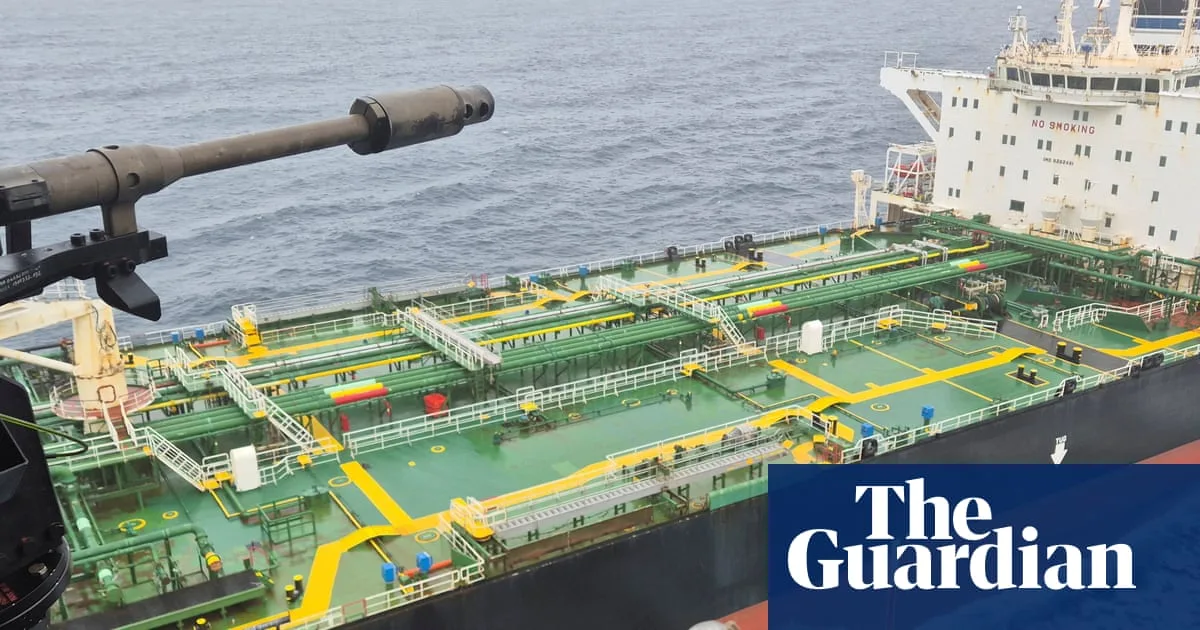
The French navy has detained a suspected Russian oil tanker in international waters west of Brittany, with support from the United Kingdom and other partners, President Emmanuel Macron announced. The vessel, identified as the Tagor, was seized on Sunday while en route from Murmansk, north-west Russia, more than 400 nautical miles off the French coast.
Macron posted video of the operation, showing commandos descending from a helicopter onto the ship, and stated that the vessel was subject to international sanctions. He declared it unacceptable for ships to circumvent sanctions, violate maritime law, and finance Russia's war in Ukraine.
The Kremlin spokesperson, Dmitry Peskov, condemned the seizure as illegal, bordering on international piracy, and said Russia is taking measures to protect its cargo. The Tagor was sailing under a false Cameroonian flag, heading for Limbe, Cameroon, according to the French maritime prefecture.
French authorities confirmed the tanker was crewed by 23 people and was being escorted to an anchorage for further checks. The vessel, which has frequently changed flags, was almost empty at the time of boarding. Russia's embassy in Paris has requested information about any Russian citizens onboard.
This seizure is part of ongoing efforts by France and the UK to disrupt Russia's shadow fleet, which uses flag-hopping and false registrations to evade sanctions. Since September, France has boarded three other such ships, which were released after their owners paid fines.




