A group of British parliamentarians sanctioned by China have issued a forceful warning to Prime Minister Sir Keir Starmer, urging him not to use their status as a "bargaining chip" in ongoing diplomatic negotiations with Beijing. The cross-party group, which includes prominent figures like former Conservative leader Sir Iain Duncan Smith, has made clear they would prefer to remain under sanction indefinitely rather than see their personal situation leveraged to ease restrictions on Chinese officials implicated in human rights abuses.
Parliamentarians Take a Principled Stand
The joint statement comes amid reports that Beijing is considering lifting sanctions on these UK lawmakers in exchange for diplomatic and economic concessions from the British government. The sanctioned individuals have responded with unequivocal clarity, stating their position should not be traded against justice for the Uighur people in Xinjiang province.
Background of Reciprocal Sanctions
The current situation stems from reciprocal sanctions imposed between the UK and China. In 2021, the United Kingdom imposed sanctions on four Chinese officials and a state-run organisation involved in human rights abuses in Xinjiang province, particularly targeting the Uighur Muslim minority. Beijing responded by sanctioning several senior British politicians, creating a diplomatic impasse that has persisted for years.

The Chinese-sanctioned group includes notable figures such as former security minister Tom Tugendhat, Commons deputy speaker Nus Ghani, Conservative MP Neil O'Brien, former MP Tim Loughton, and peers Lord Alton of Liverpool and Baroness Kennedy of the Shaws. These individuals have now united across party lines to send a clear message to the Prime Minister about the principles at stake.
Diplomatic Developments and Parliamentary Concerns
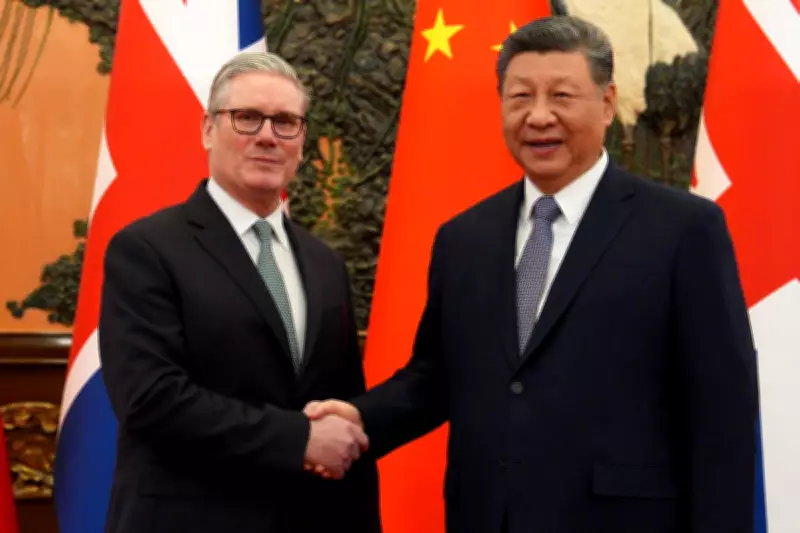
The warning follows recent diplomatic engagement between Sir Keir Starmer and Chinese President Xi Jinping during talks in Beijing. According to the Chinese foreign ministry, these discussions resulted in an agreement to "resume normal exchanges" between the legislatures of both countries. Beijing has expressed willingness to welcome British parliamentarians who wish to visit China and "experience the real China."
A Matter of Principle Over Convenience
In their strongly worded statement, the sanctioned parliamentarians declared: "We would reject any deal that prioritises our personal convenience over the pursuit of justice for the Uighur people." They emphasized their solidarity with families, former colleagues, and civil society organisations who remain targeted by Chinese sanctions, making clear they would not accept any reprieve that applied only to sitting lawmakers while others continued to face restrictions.
The group's position creates a significant challenge for the Prime Minister's diplomatic efforts. While Downing Street has stated that Sir Keir and President Xi agreed to "enhance co-operation on areas of mutual interest" while maintaining "frank and open dialogue on areas of disagreement," the sanctioned parliamentarians have drawn a clear ethical line in the sand.
The Broader Implications for UK-China Relations
This development highlights the complex balancing act facing the British government as it navigates relations with China. On one hand, there are clear economic and diplomatic interests in maintaining functional relations with one of the world's largest economies. On the other, there are fundamental principles of human rights and parliamentary sovereignty at stake.
The sanctioned parliamentarians have effectively placed human rights concerns at the centre of the diplomatic equation, challenging the government to maintain its commitment to justice for the Uighur people even as it seeks to normalise parliamentary exchanges with Beijing. Their collective stance represents a significant moment in the ongoing evolution of UK-China relations, demonstrating that some British lawmakers are willing to endure personal inconvenience for what they see as matters of fundamental principle.