Russia's Four-Year War in Ukraine Yields Only Pain and Stalemate
When Vladimir Putin launched his so-called "special military operation" against Ukraine four years ago, the Kremlin anticipated a swift victory within a week. The plan envisioned Volodymyr Zelensky—a Jewish leader absurdly labeled a "Nazi"—fleeing Kyiv for refuge in the West. Instead, the conflict has devolved into a protracted and bloody stalemate, with Russia achieving minimal territorial gains at catastrophic human cost.
Ukraine's Extraordinary Resilience Versus Russian Failures
Ukrainian forces have demonstrated remarkable bravery and resilience, successfully reclaiming some occupied territory through counteroffensives. Today, Russia controls marginally more land than in 2024—a mere 1 percent increase—despite pouring vast resources into the war. This nominal superpower, with an economy comparable to Italy's, now relies heavily on support from China, North Korea, and Iran, a stark national humiliation.
Russia's military has been exposed as poorly trained, badly led, and ill-equipped. The rebellion led by Wagner mercenary leader Yevgeny Prigozhin in 2023 nearly toppled Putin himself, revealing deep internal disloyalty. Nuclear threats against the West have proven ineffective, and sanctions have crippled the Russian economy.

The Human Toll and Strategic Impasse
Putin's forces have secured incremental gains at enormous expense, with estimates suggesting 1.3 million casualties. Monthly losses exceeding 30,000 troops strain Russia's capacity to sustain what has been termed a "meat grinder," especially as conscription is avoided in politically sensitive cities like Moscow and St Petersburg.
Far from achieving his goal to "Russify" Ukraine, Putin has only strengthened Ukrainian aspirations for freedom and European integration. NATO has expanded with Sweden and Finland joining, bolstering defences on Russia's western flank and in the Arctic. European NATO members have grown more united in recognising Putin's ambitions to restore post-1945 dominance in Eastern Europe.
Western Weakness and European Disarray
The Western response to Putin's aggression has been tragically weak. Had the West demonstrated even a fraction of Ukraine's sustained resolve, Russia might have been sufficiently weakened to seek peace. Instead, the return of Donald Trump to the White House has introduced a perilous dynamic. Trump's "peace plan"—effectively a demand for Ukrainian surrender on Russian terms—threatens to dismember Ukraine and leave it vulnerable to future attacks.
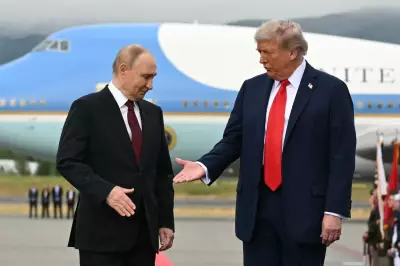
Trump's alignment with Putin, including deriding European democracies for "civilisational erasure," has created a moral vacuum. Europe has failed to fill this void with a unified response. The European Union, not a defence union, has been unable to overcome vetoes from Russia-friendly states like Hungary and Slovakia to increase funding for Ukraine.
Poland, one of the few nations meeting defence spending targets, cannot spare troops to safeguard a ceasefire in Ukraine due to fears of Russian incursions. The Macron-Starmer "coalition of the willing" increasingly resembles a pact of the reluctant, highlighting Europe's dreadful feebleness.
The Path Forward: A Decisive Next Phase
If President Zelensky is correct that Putin has already initiated a third world war, the current verdict is that Ukraine has survived the first phase while Russia has not prevailed. However, with US detachment and European disarray, the next phase—potentially lasting another year or two—will prove even more decisive.
There is little evidence that Europe's leaders fully grasp the catastrophe their peoples face. The war's continuation hinges on whether Western solidarity can be restored to match Ukraine's indomitable spirit. The stakes could not be higher for European security and global stability.