Russian Tanker Captain 'Whisked Away' from Scotland on US Coast Guard Vessel
The captain of a captured Russian-flagged oil tanker was reportedly 'whisked away under the cover of darkness' from Scotland aboard a United States Coast Guard ship, bringing a sudden end to a court fight initiated by his wife to secure his release from what she described as a 'legal limbo'.
Court Battle Cut Short as Captain Departs UK Waters
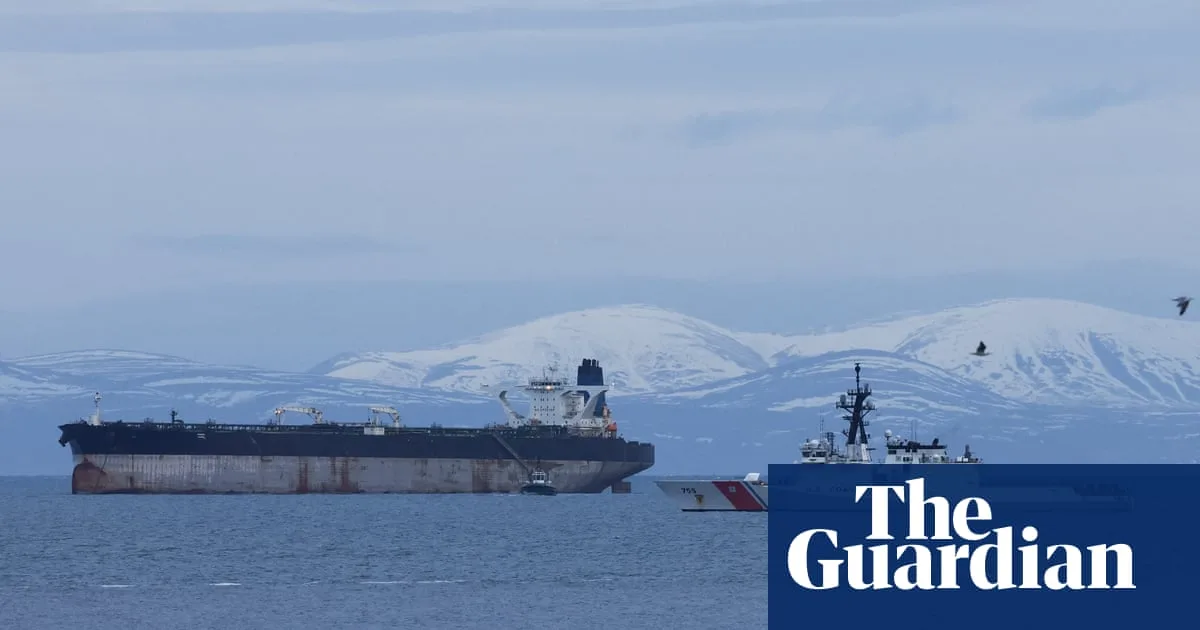
Avtandil Kalandadze, the captain of the vessel Marinera, had been detained aboard the ship in the Moray Firth for nearly three weeks. This detention prompted his wife, Natia, to launch legal proceedings in an effort to free him. However, the battle proved short-lived when it emerged that Captain Kalandadze and his first officer had already set sail on the US Coast Guard vessel Munro, having departed United Kingdom territorial waters.
Details of the complex case came to light during a Court of Session hearing convened to consider an interim interdict—a court order—granted on Monday night. This order aimed to prevent the captain from being taken to the United States, based on arguments that his fundamental human rights had been breached.
Legal Proceedings and Governmental Roles
Lawyer Aamer Anwar, representing Captain Kalandadze's wife Natia, expressed profound concern over the circumstances. 'We have no idea what role our own governments played in that,' he stated, referring to the captain's removal. Mr Anwar further accused the UK authorities of being 'complicit in the US's total disregard for the rule of law and international obligations' with its closest ally. He highlighted a 'shameful silence from our Prime Minister' and asserted that basic human rights had been denied 'right under our noses', while the UK knowingly assisted in what he termed the US 'abduction' of two men from Scotland.
The legal team acting for the captain's wife had lodged a petition with the Court of Session, seeking an emergency order to prevent the ship and those on board from being removed from the jurisdiction of the Scottish court. In a late-night hearing on Monday, Lord Young granted an interim interdict. This order prohibited the Advocate General for Scotland, the Lord Advocate, Scottish ministers, or anyone acting on their behalf from removing the Marinera's captain and crew from the territorial jurisdiction of the court.
Order Revoked After Confirmation of Departure
At a subsequent hearing yesterday, Lord Young revoked the order after receiving confirmation that the captain and first officer had left UK waters. Solicitor General Ruth Charteris, KC, representing the Lord Advocate and Scottish ministers, informed the court: 'The captain and first officer are now aboard the US Coast Guard vessel Munro and have departed the UK's territorial sea. This was thought to be the position last night [Monday] although the information before your Lordship was not certain. However, we received an email from the Department of Justice at 3.04am this morning confirming that is the position, so they are no longer within the territorial jurisdiction of this court.'
Background of the Seizure and Crew Disposition
The US Navy had targeted the Marinera, previously known as the Bella 1, between Iceland and Scotland as it was heading towards Russia. This action followed the US military's removal of Venezuelan leader Nicolas Maduro from power and his transfer to New York for trial. The vessel's seizure was the culmination of a pursuit lasting more than two weeks across the Atlantic Ocean, as part of Washington's broader efforts to block Venezuelan oil exports.
The court also heard that the remaining 26 crew members had left the ship. None were claiming asylum; five expressed a wish to travel to the United States, while 21 desired to return to their home countries or elsewhere. Chris Pirie, KC, representing the Advocate General, stated that the UK Government does not oppose the recall of the interim interdict and clarified that the order should not prevent crew members from leaving voluntarily.
Unresolved Concerns and Legal Dissatisfaction
Clare Mitchell, KC, representing the captain's wife, remarked that 'the very thing we were concerned about' had indeed transpired. She described the overall situation as 'highly unsatisfactory', underscoring the unresolved legal and ethical questions surrounding the case. The incident raises significant issues regarding international law, human rights protections, and the extent of governmental cooperation in such maritime seizures.






