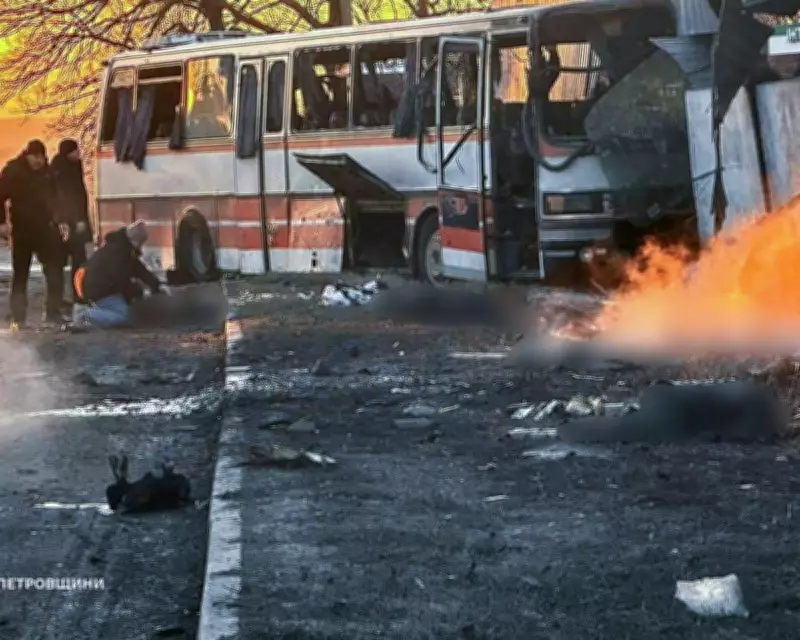
A devastating Russian drone strike has claimed the lives of at least twelve individuals and left seven others wounded after targeting a civilian bus transporting miners in the Dnipropetrovsk region of Ukraine. The assault occurred as the vehicle was travelling approximately forty miles from the frontline, highlighting the ongoing peril faced by non-combatants in the conflict-ridden area.
Details of the Attack on Mine Workers
According to regional authorities, the bus was struck in the Pavlograd district, with preliminary reports indicating a direct hit from an enemy drone. Oleksandr Ganzha, the head of the regional military administration, confirmed the casualty figures via Telegram, stating that the victims were employees of DTEK, Ukraine's largest private energy company. These workers had just completed their shifts at a mining facility and were on their way home when the attack unfolded.
Images released by Ukraine's State Emergency Service depict the aftermath, showing an empty bus with shattered side windows and a windscreen hanging precariously from the front. This visual evidence underscores the brutal impact of the strike on what was a routine commute for the miners.

Escalating Violence Amid Diplomatic Efforts
This incident is part of a broader pattern of escalating violence in Ukraine. In a separate overnight drone attack in the Dnipropetrovsk region, a man and a woman were killed in the central city of Dnipro. Additionally, on Sunday, a drone struck a maternity hospital in the southern Zaporizhzhia region, injuring at least seven people, including two women undergoing medical examinations.
These attacks coincide with the conclusion of a unilateral reduction in Russian strikes announced by US President Donald Trump, which was due to end on the same day. Trump had claimed that Russian President Vladimir Putin agreed to halt strikes on Kyiv and various towns during cold weather, though the Kremlin did not confirm this linkage to meteorological conditions.
Stalled Peace Talks and Territorial Disputes
Amid the violence, diplomatic efforts to end the nearly four-year war remain fraught with challenges. Ukrainian President Volodymyr Zelenskyy announced that a second round of talks involving Russian, Ukrainian, and US officials on a US-drafted peace plan is scheduled for Wednesday. This follows surprise talks in Florida between Russian envoy Kirill Dmitriev and US officials, including Trump's envoy Steve Witkoff and others, though neither the Kremlin nor the US have confirmed new dates for negotiations set in Abu Dhabi.
The US asserts it is nearing a deal to conclude Europe's deadliest conflict since World War II, but key issues persist. Russia, which occupies about twenty percent of Ukrainian territory, is demanding full control of the eastern Donetsk region as part of any agreement, threatening force if talks fail. Conversely, Ukraine warns that ceding ground would embolden Moscow and refuses to sign a deal that does not deter future invasions, with many Ukrainians viewing territorial surrender as unconscionable after years of defence.
The first round of talks in Abu Dhabi failed to yield a breakthrough, leaving the path to peace uncertain as attacks like the one on the miners' bus continue to devastate communities.