Russia has publicly endorsed Prime Minister Keir Starmer's contentious decision to transfer sovereignty of the Chagos Islands to Mauritius, a move described by critics as a 'surrender'. Irada Zeynalova, Moscow's ambassador to Mauritius, has lauded the African country's longstanding struggle for control over the strategically vital Indian Ocean archipelago.
Russia's Diplomatic Support for Mauritius
In a message commemorating Mauritius's national day, Ambassador Zeynalova emphasised Russia's historical and ongoing backing for Mauritius since its independence from Britain in 1968. She highlighted that Mauritius has 'always been a part of a big strategic game' due to its geographical position, affirming that Moscow 'supported Mauritius back in 1968 and we are ready to do it now'.
These remarks are likely to raise concerns in Western capitals about Russia cultivating closer ties with Mauritius, which is also seen as an ally of China, coinciding with Britain's planned handover of the Chagos Islands.

Ambassador's Detailed Justification
Writing in the local newspaper L'Express, Zeynalova elaborated on Russia's stance. She praised Mauritius for evolving into a regional hub for education, textiles, tourism, and finance over the past 58 years, while persistently advocating for justice to complete its decolonisation process.
'Mauritius has been continuously negotiating the Chagos deal with previous masters who made this archipelago the very condition for Mauritian sovereignty and independence,' Zeynalova stated. She criticised the forced displacement of Chagossians from Diego Garcia to accommodate a military base, underscoring Russia's opposition to colonialism.
'The Soviet Union and Russia as its successor have always been supporting Mauritius,' she declared, noting assistance in healthcare, education, and nation-building. Russia backed Mauritius in a UN General Assembly vote on Chagos, prioritising African sovereignty as a founding UN member.
Zeynalova concluded by endorsing Mauritius's ambitions to become a digital and infrastructural bridge between Africa and Asia, reinforcing Russia's commitment to justice and human rights.
Background of the Chagos Islands Deal
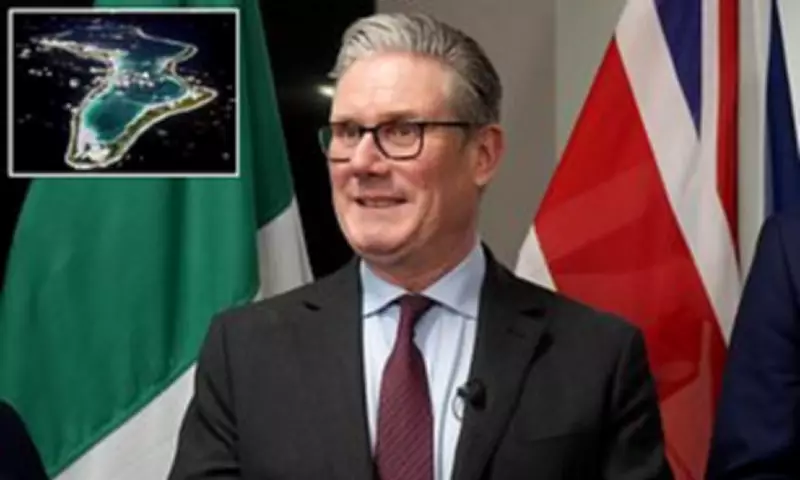
The Chagos archipelago, a British overseas territory for over two centuries, became the centre of a shocking announcement in October 2024 when the Labour Government revealed plans to cede sovereignty to Mauritius. This decision followed an international court ruling that deemed the UK's administration of the islands 'unlawful'.
Under the terms of the £35 billion agreement, the joint UK-US military base on Diego Garcia, the largest island, will be leased back to Britain for a minimum of 99 years. The Government argued that this deal was necessary to protect the vital base, but it has faced fierce opposition.
Political and International Reactions
Prime Minister Starmer is under immense pressure to abandon the agreement after repeated criticism from US President Donald Trump in recent weeks. Trump has condemned the deal, particularly after initial tensions over the use of Diego Garcia for strikes on Iran, though Starmer later permitted 'defensive' actions from the base.
Senior Tory MP Dame Priti Patel, the shadow foreign secretary, warned that the deal 'seriously undermines our national security and that of our allies'. She pointed out that Russia, along with Iran and China, welcomes the arrangement, suggesting these nations seek to harm British interests by influencing Mauritius.
'These countries wish harm on us, and that is why they want Britain to hand over sovereign territory and £35billion of taxpayers' money to Mauritius, where their axis of authoritarianism holds influence,' Patel asserted.
Uncertain Future for the Agreement
The fate of the Chagos deal remains precarious amid Trump's vocal disapproval and ongoing parliamentary processes. Legislation to enact the handover has yet to receive final approval from Parliament, leaving the agreement in a state of limbo as geopolitical tensions escalate.
This development underscores the complex interplay of decolonisation, strategic military interests, and global diplomacy, with Russia's endorsement adding a new layer of controversy to an already heated debate.