Russia Launches Major Drone Assault Despite Trump's Claim of Attack Pause
Russia has launched a significant overnight assault on Ukraine, deploying over 100 strike drones and a ballistic missile, just one day after US President Donald Trump announced that Moscow had agreed to a temporary ceasefire. This development raises serious questions about the nature and implementation of any supposed pause in hostilities.
Details of the Latest Attack
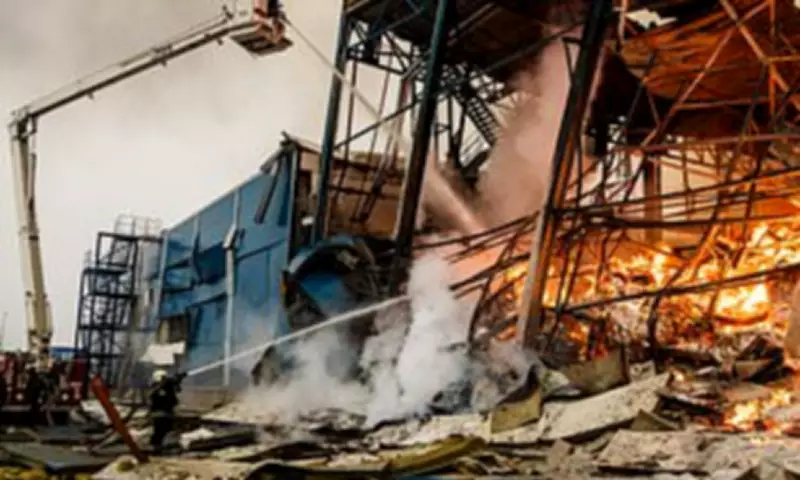
According to Ukraine's air force, the attack occurred on the night of January 30, with the enemy launching an Iskander-M ballistic missile from the Voronezh region alongside 111 strike drones. The governor of Ukraine's southern Zaporizhzhia region reported that Russia had targeted a residential building, resulting in one person being wounded.
This aggressive military action directly contradicts statements made by President Trump, who claimed to have personally requested Russian counterpart Vladimir Putin to halt strikes due to extreme cold temperatures, suggesting the pause would last for one week.

Conflicting Interpretations of the Pause
Speaking at a cabinet meeting in Washington on Thursday, President Trump described his conversation with Putin as productive, stating: 'It was very nice. A lot of people said, "Don't waste the call, you're not going to get that." And he [Putin] did it.' Trump added that Ukrainian officials 'almost didn't believe it, but they were very happy about it because they are struggling badly.'
However, Ukrainian President Volodymyr Zelensky offered a different interpretation, suggesting that any pause might apply specifically to Russian strikes on Ukraine's energy infrastructure rather than constituting a comprehensive ceasefire. In a social media post, Zelensky described Trump's statement as important regarding 'the possibility of providing security for Kyiv and other Ukrainian cities during this extreme winter period.'
Broader Diplomatic Context and Territorial Disputes
The military developments occur against a complex diplomatic backdrop. Zelensky revealed on Friday that negotiating teams have so far failed to find compromise on the critical issue of control over Ukraine's Donetsk region, stating: 'So far, we have been unable to find a compromise on the territorial issue, specifically regarding part of eastern Ukraine.'
According to reports, the Trump administration has indicated to Ukraine that any US security guarantees would be contingent on Kyiv first agreeing to a peace plan involving territorial concessions to Russia. The United States is reportedly calling on Ukraine to relinquish the Donbas region, which comprises the industrial heartland of Luhansk and Donetsk.
Security Guarantees and European Integration
The White House has suggested it would promise Kyiv additional weaponry to reinforce its peacetime military, but only on condition that Ukraine agrees to withdraw forces from eastern regions it currently holds. Despite Zelensky's assertion that security guarantee texts discussed with President Trump at Davos were '100 per cent ready,' Washington has yet to give final approval.
Zelensky has indicated for the first time that as a potential compromise, Ukraine might forgo ambitions to join NATO in exchange for strong security guarantees. However, Ukrainian officials insist they want US security commitments confirmed before considering any territorial concessions.
In a separate development, Zelensky announced on Friday that Ukraine will be 'technically' ready to join the European Union by 2027, with the country expected to implement main membership requirements by the end of 2026. The Ukrainian leader emphasized that securing fast-track accession to the bloc represents an important component of post-war security guarantees.
As winter conditions worsen across Ukraine, with recent Russian strikes on power infrastructure cutting electricity and heating to millions, the diplomatic and military situation remains highly volatile, with conflicting narratives emerging about the reality of any ceasefire agreement.