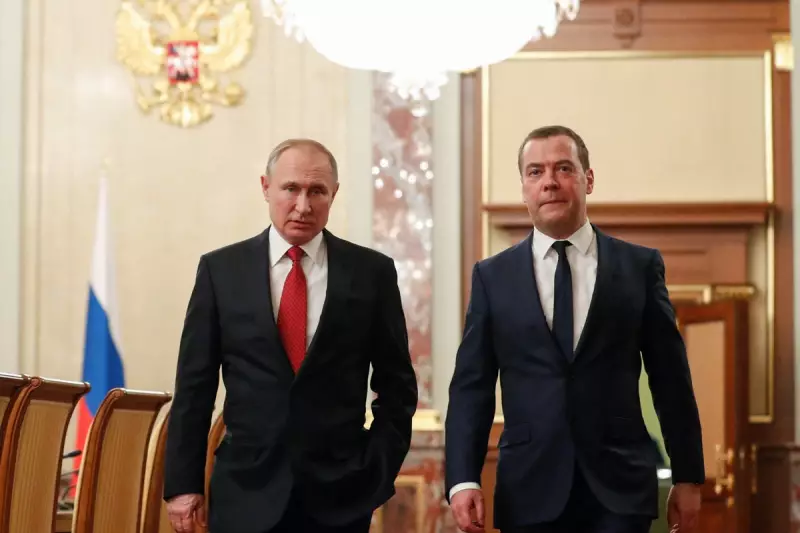
Russia has issued a stark warning to the European Union, declaring that any move to use frozen Russian state assets to fund Ukraine would be considered an "act of war". The threat was delivered by former Russian president Dmitry Medvedev, who now serves as deputy chairman of Russia's Security Council.
Medvedev's Sabre-Rattling Warning
Medvedev's incendiary statement was a direct response to a proposal unveiled by European Commission President Ursula von der Leyen on Wednesday, 3 December 2025. The plan involves using approximately €90 billion (£79 billion) of frozen Russian assets, held largely in Belgium, to create a "reparations loan" for Kyiv.
"If the crazy European Union does, after all, try to steal Russian assets frozen in Belgium under the guise of a so-called 'reparations loan', Russia may well view this move as tantamount to a casus belli (an act that justifies war) with all the relevant implications for Brussels and individual EU countries," Medvedev wrote on social media platform X.
Medvedev, known for his aggressive rhetoric towards the West, argued the funds would allow Ukraine to "defend [itself] and take forward peace negotiations from a position of strength," a characterisation he fiercely opposes.
The EU's High-Stakes Proposal
Ursula von der Leyen has positioned the controversial plan as a crucial step to sustain Ukraine's war effort, stating it would cover two-thirds of the required funding, with international partners financing the remainder. The proposal targets around £123 billion in Russian state assets held by the Brussels-based financial institution Euroclear.
"Since pressure is the only language the Kremlin responds to, we can also dial it up," von der Leyen stated. "We have to increase the costs of war for Putin's aggression and today's proposal gives us the means to do this."
The EU insists the scheme does not constitute outright confiscation, as the money would be structured as a loan. Crucially, Ukraine would only be required to repay it if Russia pays war reparations in the future.
Legal Hurdles and International Diplomacy
The plan faces significant obstacles, not least from Belgium, where the bulk of the assets are held. Belgian officials have voiced serious legal concerns, with a senior figure telling Reuters the country "cannot accept being asked to bear the risks of such an operation alone."
Von der Leyen claims to have addressed most of Belgium's worries and has asserted that the plan received a positive reception from US Treasury Secretary Scott Bessent. However, the move has sparked fears it could complicate separate American efforts to broker a peace deal between Kyiv and Moscow.
For the proposal to proceed, it requires the support of 15 out of the EU's 27 member states, representing at least 65% of the bloc's population. The escalating war of words between Moscow and Brussels adds a new layer of tension to an already volatile geopolitical landscape, testing the limits of economic statecraft.