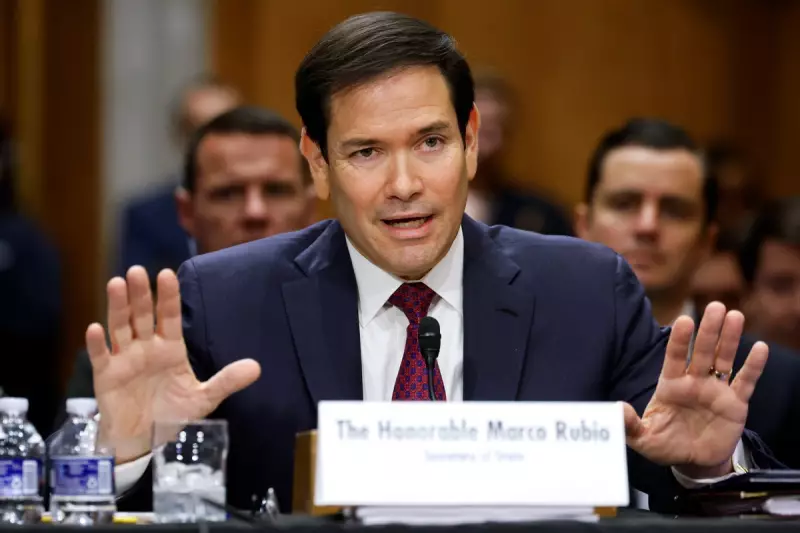
In a significant clarification of American foreign policy, Secretary of State Marco Rubio has explicitly stated that the United States does not anticipate taking military action in Venezuela at any point in the foreseeable future. This declaration came during recent congressional testimony, where Rubio sought to walk back earlier, more bellicose statements that had threatened the use of force to ensure maximum cooperation from the South American nation.
Rubio Testifies on US Posture and Embassy Presence
Testifying before senators, Secretary Rubio emphasised that the US is not currently "postured" for any military engagement in Venezuela. He clarified that the only planned US military presence in the country would be limited to Marine guards stationed at an American embassy, should diplomatic relations be fully restored. Rubio further indicated that he does not foresee needing to seek congressional authorisation for any sustained US involvement in Venezuelan affairs, suggesting a preference for diplomatic and economic measures over armed intervention.
Context of Maduro Capture and Drug Charges
This testimony follows the high-profile capture of former Venezuelan president Nicolas Maduro, who along with his wife has pleaded not guilty to US drug trafficking charges. The legal proceedings against Maduro have intensified scrutiny on US actions in the region. Additionally, US military strikes on alleged drug-running boats in Venezuelan waters, which resulted in over 120 fatalities, have raised serious questions about the legality and proportionality of American operations.

Senatorial Criticism and Oil Infrastructure Plans
The administration's approach has faced pointed criticism from key senators. Chris Murphy accused the US of effectively "taking their oil at gunpoint," while Tim Kaine challenged the legal rationale behind the deadly boat strikes. These criticisms intersect with plans previously indicated by President Trump, who suggested that US oil companies would "run" Venezuela's oil infrastructure and sell its oil on the global market.
Secretary Rubio acknowledged these plans through the mechanism of "no-bid licenses," describing them as a "short-term fix" to address economic and energy concerns. This acknowledgment highlights the complex interplay between geopolitical strategy, economic interests, and human rights considerations in US policy toward Venezuela.
Broader Implications for US Foreign Policy
The walk-back from earlier threats of force underscores ongoing debates within the US government about the appropriate use of military power, the pursuit of legal accountability for foreign leaders, and the ethical dimensions of resource extraction in conflict zones. As Venezuela remains a flashpoint in international relations, Rubio's clarifications attempt to chart a course that balances assertive American interests with the realities of diplomatic engagement and regional stability.