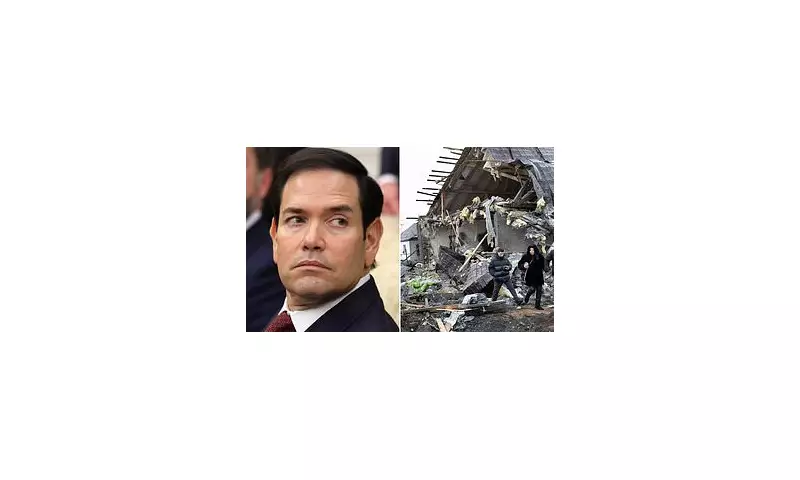
A significant diplomatic controversy has erupted after a bipartisan group of US senators alleged that Secretary of State Marco Rubio told them the American peace proposal for Ukraine was actually authored by Russia, forcing the top diplomat into a defensive position.
Senators' Explosive Claims
The political storm began when veteran legislators from both parties came forward with claims that Rubio had described the widely leaked 28-point peace plan as a "wish list of the Russians" rather than an American initiative. The bipartisan group, which includes some of Washington's most experienced foreign relations experts, stood together at a press conference to relay what they described as Rubio's own words.
Independent Maine Senator Angus King stated that Rubio explicitly told them the plan "was not the administration's plan" during conversations that occurred while the secretary was en route to Geneva for talks. Republican Mike Rounds from South Dakota went even further, remarking at a security conference in Canada that "it looked more like it was written in Russian to begin with."
Administration's Forceful Denial
The State Department responded with vigorous denials, with spokesman Tommy Pigott labelling the senators' account as "blatantly false." Rubio took the extraordinary step of addressing the controversy directly on social media platform X, insisting that "the peace proposal was authored by the U.S. It is offered as a strong framework for ongoing negotiations."
A senior Trump administration official, speaking anonymously to discuss internal matters, reinforced that the White House has consistently maintained the plan was American-authored but included input from both Russian and Ukrainian sources. The official noted that the proposal resulted from a month of work between Rubio and Trump envoy Steve Witkoff, with contributions from what the administration described as both Ukrainians and Russians.
International Reactions and Implications
The leaked peace proposal has faced significant pushback in Europe for being excessively favourable to Moscow, accepting many Russian demands that Ukrainian President Volodymyr Zelenskyy has repeatedly rejected. These concessions include surrendering substantial Ukrainian territory, which Zelenskyy has categorically opposed on dozens of occasions.
British Prime Minister Keir Starmer, among Ukraine's strongest allies, commented that the leaked plan 'will require work' while President Zelenskyy, in a recent address, did not outright reject the proposal but insisted on fair treatment. The Ukrainian leader pledged to "work calmly" with Washington during what he described as "truly one of the most difficult moments in our history."
Meanwhile, Russian President Vladimir Putin welcomed the proposal late Friday, suggesting it "could form the basis of a final peace settlement" if the US can secure agreement from Ukraine and its European allies.
The controversy emerged during the Halifax International Security Forum in Canada, where Senator King warned that the plan would only reward Moscow for its aggression, stating: "It rewards aggression. This is pure and simple. There's no ethical, legal, moral, political justification for Russia claiming eastern Ukraine."
President Trump has set a tight deadline, demanding Ukraine accept the plan by late next week, while the administration describes it as merely a starting point for continued negotiations toward a more lasting peace settlement.