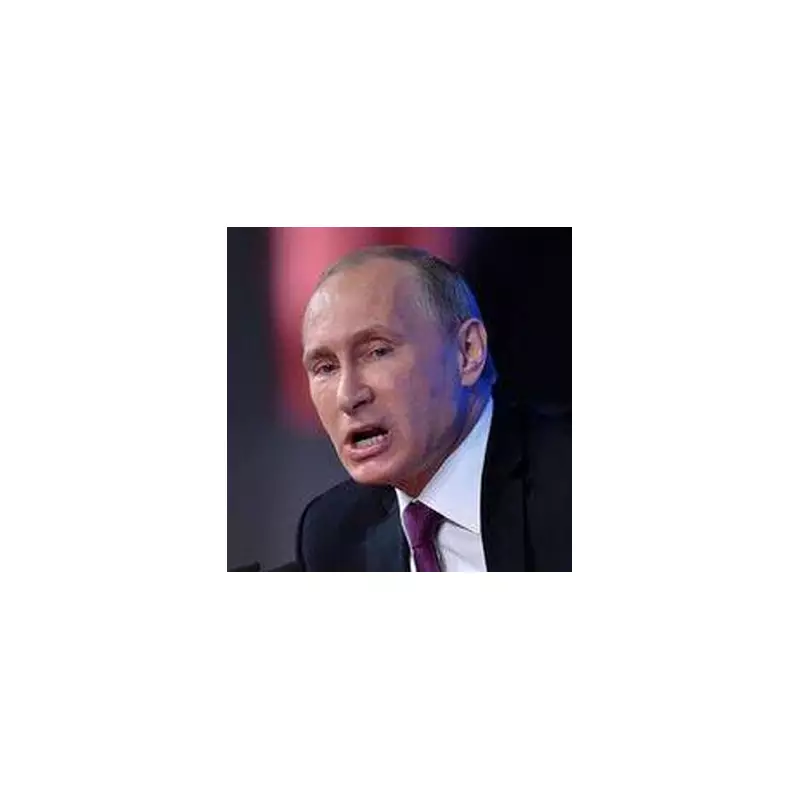
In a fiery and highly charged annual television address, Russian President Vladimir Putin has launched a scathing attack on European Union leadership, accusing them of outright "burglary." The extraordinary outburst was directly linked to the EU's decision to utilise frozen Russian state assets to financially support Ukraine's military efforts against the ongoing invasion.
The Core of the Accusation: "Theft in the Open"
The Russian leader's comments, delivered on 19 December 2025, marked a significant escalation in the war of words between Moscow and Brussels. Putin did not mince his words, drawing a stark contrast between clandestine criminal acts and the actions of Western nations. "Theft is [in] secret...here it is done in the open," he stated, condemning the policy as a brazen violation of legal norms.
He went further, explicitly labelling the move as "burglary" and issuing a stark warning to those behind the decision. "The consequences are very serious for the burglars," Putin declared, though he did not elaborate on the specific nature of these potential repercussions. This rhetoric underscores the deepening rift and the Kremlin's view of the asset seizure as a hostile and illegitimate act.
Context and Diplomatic Fallout
The EU, alongside other G7 nations, froze hundreds of billions of dollars in Russian central bank assets following the full-scale invasion of Ukraine in February 2022. The subsequent debate on how to legally use the interest generated from these funds, or the assets themselves, to aid Kyiv's defence has been a major point of contention. Putin's latest tirade frames this economic measure not as a sanction or a tool of international law, but as simple criminal appropriation.
This verbal assault from the Kremlin is likely to further poison diplomatic channels and complicate any potential future negotiations. By employing such incendiary language—equating democratically elected European leaders with common thieves—Putin has signalled a hardening of Russia's position and a refusal to acknowledge the legitimacy of Western countermeasures.
Implications for EU-Russia Relations
The immediate consequence is a new layer of tension in an already fractured relationship. The EU's funding for Ukraine, partially sourced from these frozen assets, is a cornerstone of its support strategy. Putin's response indicates Moscow will continue to use aggressive rhetoric to challenge the legality and morality of this support, potentially aiming to sow discord within European political circles.
Analysts suggest the "burglars" comment is designed for both a domestic and international audience. Domestically, it reinforces the narrative of a corrupt and lawless West besieging Russia. Internationally, it serves as a blunt threat and an attempt to frame the conflict in stark, adversarial terms. The long-term consequences of this diplomatic rupture remain deeply uncertain, with the war in Ukraine showing no signs of abating.
As this story develops, the international community will be watching closely to see if this rhetorical escalation is followed by any tangible actions from the Kremlin, and how European capitals choose to respond to being publicly branded as criminals by the Russian president.