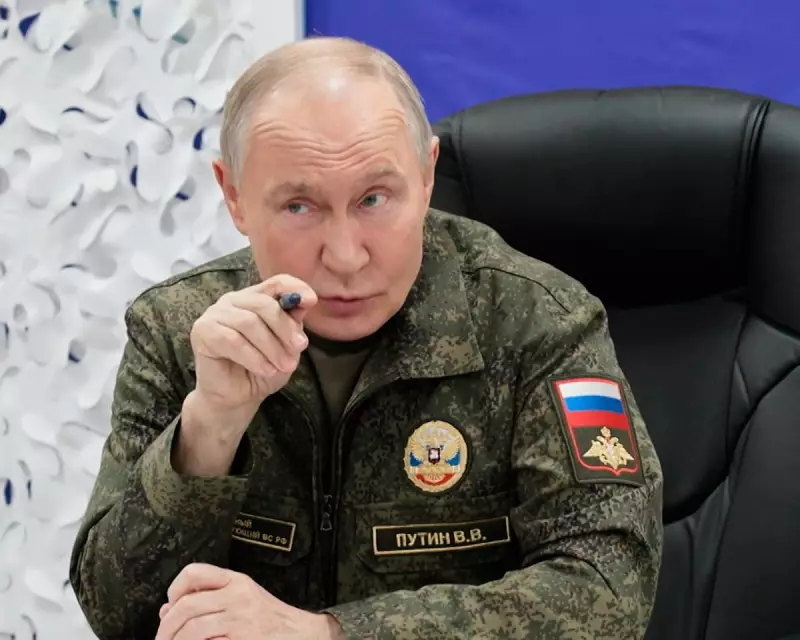
Russian President Vladimir Putin has signalled his approval for a US-devised plan to resolve the ongoing war in Ukraine, a move that has amplified concerns in European capitals about a one-sided settlement. The Russian leader, who has remained steadfast in his maximalist territorial and security demands, stated the American proposal could form the foundation for a final peace agreement.
A Plan for Peace or Capitulation?
In a address to Russia's national security council, Putin characterised the 28-point US plan as a “new version” of discussions held prior to his summit with Donald Trump. He declared that Ukraine was being unrealistic for not accepting the terms, suggesting that Kyiv and its European allies are still under the “illusion” of defeating Russia militarily.
This positive reception from the Kremlin has given weight to the fears of Ukrainian and European officials, who view the proposed deal as amounting to a de facto capitulation for Ukraine. The plan would reportedly force Ukraine to cede occupied territory and make other significant concessions.
Zelenskyy's Sombre Warning and European Support
Ukrainian President Volodymyr Zelenskyy delivered a grave ten-minute speech outside the presidential palace, acknowledging that his country faces one of its most difficult moments in history. He warned that agreeing to the US-Russian plan could leave Ukraine “without freedom, dignity and justice.”
The pressure on Kyiv intensified as Donald Trump publicly demanded that Zelenskyy accept the deal by Thursday, a deadline the former US president called “appropriate.” In response, Zelenskyy has been actively sounding out international support, holding calls with the leaders of Germany, France, and the UK.
A statement from German Chancellor Friedrich Merz's office confirmed that Olaf Scholz, Emmanuel Macron, and Keir Starmer assured Zelenskyy of their unchanged and full support for a “lasting and just peace.” They emphasised that any agreement must be genuinely fair and respect Ukraine's own red lines.
International Reactions and Strained Diplomacy
The Trump administration has taken a hardline stance in diplomatic talks. During a meeting described by the Financial Times as “volatile,” US Army Secretary Daniel Driscoll told European ambassadors there was little room to negotiate on the plan's details, a approach one senior European official found “nauseating.”
EU foreign policy chief Kaja Kallas reinforced the European position, stating that “how it [the war] ends matters.” She firmly asserted that Russia has no legal right to concessions from Ukraine and that the ultimate terms of any peace agreement are for Kyiv alone to decide.
Meanwhile, Poland's ambassador to South Korea, Bartosz Wisniewski, voiced great concerns over North Korea's involvement in the conflict, noting that security from the Korean Peninsula to central Europe has become intertwined. This follows reports that hundreds of North Korean troops have been killed fighting for Russia.
As the war enters its 1,368th day, the world watches to see if diplomatic pressure will force a settlement that reshapes the security landscape of Europe.