
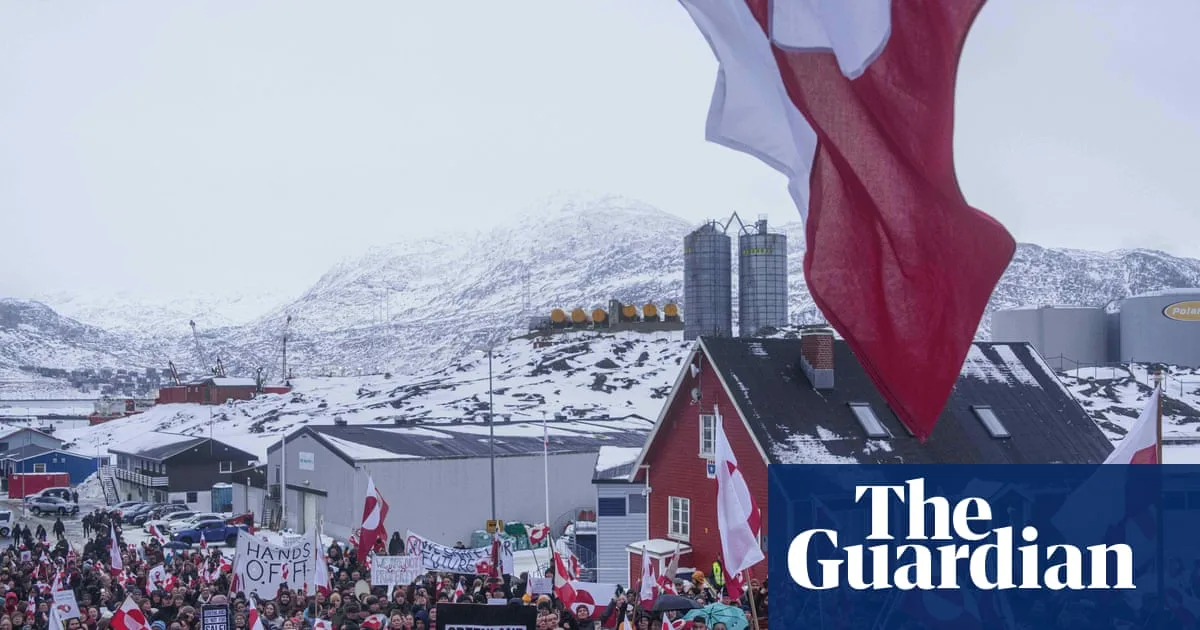
Donald Trump's threat to impose 10% tariffs on eight Nato states for sending troops to support Greenland's sovereignty has triggered a forceful response from European leaders, with many describing the move as blackmail and intimidation. The conflict over the Arctic territory, home to fewer than 57,000 people, has become a flashpoint that could determine the future of the transatlantic relationship.
Denmark's defence committee chair, Rasmus Jarlov, captured the mood, declaring: "Every insult, threat, tariff and lie that we receive strengthens our resolve. The answer from Denmark and Greenland is final: We will never hand over Greenland." He added that Denmark prays its true allies will stand with it. All eight targeted countries have indicated they will support Denmark, with Italy's prime minister, Giorgia Meloni, calling the decision a mistake.
The eight nations have so far avoided threatening reprisals, but warned of a dangerous downward spiral and a potential trade war. France's president, Emmanuel Macron, is exploring the activation of the EU's anti-coercion instrument and plans to raise the question of the validity of the EU-US tariff agreement concluded in 2025.
For the UK, the crisis has exposed the fragility of its post-Brexit trade strategy. Keir Starmer's trade deal with the US, announced with fanfare last year, remains unsigned, and the indefinite postponement weakens his position. The argument that joining a customs union would undermine a UK-US trade deal now looks threadbare with 10% blanket tariffs looming.
The wider implications are stark. Bronwen Maddox, director of Chatham House, has declared the western alliance over, while Denmark's prime minister, Mette Frederiksen, warned that a US military attack on a Nato country would bring an end to the alliance itself. "There's no way back, when one ally turns against another militarily, that's the end of the alliance," said former UK permanent secretary Simon McDonald.
The Greenland dispute has thus become a clarifying moment for Europe, forcing leaders to confront the possibility that the post-war security order may be unravelling. As the crisis deepens, the unity of Europe in the face of coercion will be tested as never before.




