Pope Leo's Diplomatic Dilemma: Trump's Peace Board Invitation Tests Vatican Neutrality
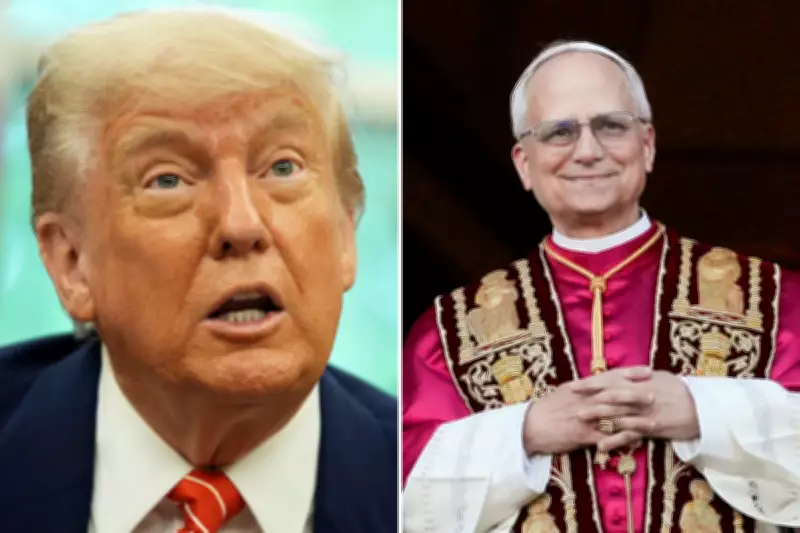
The Vatican finds itself navigating treacherous diplomatic waters following an invitation from former US President Donald Trump to join his newly proposed Board of Peace. Pope Leo XIV, the first American pontiff in history, must now weigh whether participation in this state-sponsored initiative aligns with the Holy See's longstanding commitment to positive neutrality in international affairs.
The Invitation That Changes Everything
Donald Trump has extended invitations to numerous world leaders to participate in what he describes as a Board of Peace, initially focused on resolving the Gaza conflict but with ambitions to address global disputes. The former president has declared this board will possess significant authority, stating it can "do pretty much whatever we want" in pursuit of peace objectives. The Vatican's secretary of state has confirmed receipt of the invitation, indicating Pope Leo requires time for careful consideration before responding.
This invitation arrives at a particularly sensitive moment for papal diplomacy. Pope Leo has been notably outspoken regarding the humanitarian crisis in Gaza, delivering forceful condemnations of conditions there during his Christmas Eve address. The pontiff has publicly stated his belief that the only viable solution to the conflict involves establishing a Palestinian state, positioning him clearly on one side of this deeply polarised issue.

The Vatican's Historical Approach to Peacemaking
For nearly two millennia, popes have engaged in peace efforts through mediation, negotiation facilitation, humanitarian corridor establishment, and moral pressure application to restrain violence. However, the Holy See has traditionally maintained a careful distance from formal state-sponsored commissions, preferring to operate from the diplomatic sidelines where credibility with all parties can be preserved.
The Vatican's foreign policy has long been described as "positive neutrality" - a practical diplomatic asset painstakingly cultivated over centuries and easily compromised. This approach has enabled popes to communicate with all parties, including those rejecting established political orders, without appearing aligned with specific national interests.
Papal Peacemaking Through the Ages
The Holy See's influence has historically derived not from military might or economic coercion, but from moral authority, diplomatic reach, and access to transnational networks crossing borders, ideologies, and regimes. From Pope Leo I's legendary encounter with Attila the Hun in 452 AD to medieval peace movements establishing protections for vulnerable populations, papal diplomacy has relied on persuasion, reputation, and claims to higher moral authority.
During the medieval period, popes increasingly served as mediators between rulers, functioning as neutral brokers precisely because they represented no competing territorial power. This allowed rulers to frame concessions as obedience to moral authority rather than weakness before enemies, lowering the political cost of compromise.
The Modern Evolution of Vatican Diplomacy
The loss of the Papal States in 1870 paradoxically strengthened the Holy See's diplomatic position, transforming neutrality from a defensive posture into an active diplomatic resource. The Vatican aligned itself with emerging legal approaches to peace, endorsing arbitration mechanisms and international adjudication processes that restrained unilateral force.
Throughout the twentieth century's global conflicts, successive popes developed the Holy See's role as a humanitarian actor supporting prisoners of war, refugees, and civilian relief efforts. Pope Paul VI's landmark 1965 address to the United Nations General Assembly crystallised this approach, framing peace as a universal moral obligation rather than a diplomatic bargain.
Contemporary Challenges to Papal Neutrality
Recent decades have seen the Vatican engage in hands-on mediation when circumstances permitted, most notably in the 1978 Beagle Channel dispute between Argentina and Chile and the 2014 restoration of US-Cuba diplomatic relations. These successes relied on consent from all parties, trust in papal neutrality, and willingness to frame compromise as honourable rather than humiliating.

However, Trump's Board of Peace invitation represents a fundamentally different proposition. This is not an ad hoc mediation effort requested by conflicting parties, but a formally constituted, state-led body with clear political ownership and governance ambitions. Membership would signal alignment with a specific national framework rather than independent moral authority.
The High-Stakes Decision Facing Pope Leo
Accepting a seat on this board could offer the Vatican influence over humanitarian access, reconstruction priorities, and civilian protection measures in conflict zones. It might provide the Holy See with a voice inside processes that will shape lives on the ground in Gaza and potentially other global hotspots.
Yet the risks are substantial and potentially irreversible. Formal participation could narrow the pope's diplomatic room to manoeuvre, making engagement with actors distrustful of the board's sponsor increasingly difficult. It might blur the crucial distinction between moral authority and political endorsement that has defined papal diplomacy for centuries.
Joining a state-led peace initiative could enhance short-term influence at the possible expense of long-term credibility. Once neutrality is perceived as compromised, restoration becomes exceptionally challenging. The Vatican must now determine whether this unprecedented invitation represents an opportunity to advance peace or a threat to its hard-won diplomatic position in an increasingly polarised world.