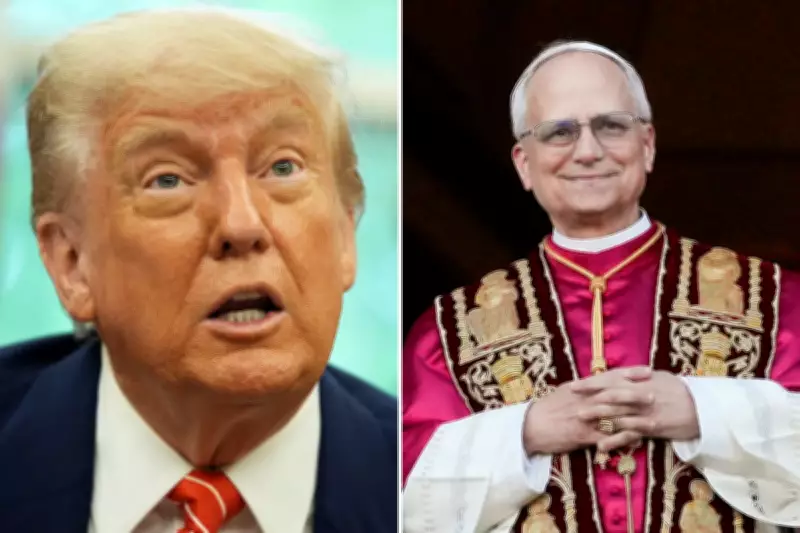
The invitation extended by former US President Donald Trump to Pope Leo XIV to join his newly proposed Board of Peace has placed the Vatican in a delicate diplomatic position, forcing a careful examination of its long-standing foreign policy principles. The board, initially conceived to address the ongoing conflict in Gaza but with ambitions to resolve global disputes, presents both opportunities and significant risks for the Holy See's traditional approach to international mediation.
The Vatican's Neutrality Doctrine Under Scrutiny
Pope Leo, the first pontiff from the United States, has been notably vocal about the humanitarian situation in Gaza, using his Christmas Eve address to forcefully decry conditions there and telling journalists that establishing a Palestinian state represents the only viable solution to the conflict. Despite these strong personal convictions, the Vatican's official foreign policy remains firmly anchored in the concept of "positive neutrality" – a position that allows the Holy See to engage with all parties while avoiding formal alignment with specific political agendas.
The Vatican's Secretary of State has indicated that Pope Leo requires time to carefully consider whether to accept Trump's invitation, reflecting the complexity of this decision. The Holy See, which maintains diplomatic relations with 184 countries plus the European Union and holds permanent observer status at the United Nations, has historically avoided formal membership in state-sponsored commissions, preferring to maintain its unique position as a moral authority rather than a political participant.

Historical Precedents of Papal Peacemaking
Across nearly two millennia, popes have played significant roles in peace efforts through mediation, negotiation facilitation, humanitarian corridor establishment, and moral pressure application to restrain violence. However, they have almost always operated from the sidelines – positioned close enough to influence outcomes while maintaining sufficient distance to preserve credibility with all conflicting parties.
This approach dates back to late antiquity, exemplified by Pope Leo I's legendary encounter with Attila the Hun in 452 AD near Mantua, where the pontiff's message of peace persuaded the Hun leader to spare Rome from destruction. This episode established a durable pattern of papal influence working through persuasion, reputation, and claims to represent a higher moral order rather than through military or economic coercion.
During the medieval period, the Peace of God and Truce of God movements between the 10th and 14th centuries demonstrated the Church's efforts to establish moral frameworks for conflict, protecting vulnerable populations and establishing rights to asylum. As diplomacy evolved, popes increasingly served as mediators between rulers, functioning as neutral brokers precisely because they represented no competing territorial power.
The Evolution of Papal Diplomacy
The early modern period witnessed both expanded ambitions and new limitations for papal peacemaking. Pope Alexander VI's 1493 demarcation of boundaries for Spanish and Portuguese colonization represented significant diplomatic influence, though European powers increasingly rejected papal authority in allocating sovereignty beyond Christendom. The Treaty of London in 1518, promoted by Pope Leo X, demonstrated continued papal involvement in European peace efforts, though the devastating Thirty Years' War that followed highlighted the limitations of such interventions when political incentives shifted.
The loss of the Papal States in 1870 paradoxically strengthened the Vatican's diplomatic position, freeing it from territorial concerns and allowing alignment with emerging international legal approaches to peace, including arbitration and adjudication mechanisms. Neutrality transformed from a defensive posture into an active diplomatic resource during this period.

Modern Challenges to Papal Neutrality
The First World War presented unprecedented challenges to papal peacemaking, with Pope Benedict XV's 1917 peace proposal – advocating disarmament, arbitration, freedom of the seas, and territorial restitution – largely rejected by warring governments despite its forward-looking principles. This intervention nevertheless reinforced the Vatican's vision of peace grounded in law and justice rather than domination, establishing the Holy See's enduring role as a humanitarian actor.
During the Second World War, Pope Pius XII maintained a similar posture, using discreet diplomacy and humanitarian networks despite constrained mediation capacity. The nuclear age saw successive popes addressing the ethical implications of weapons of mass destruction, shifting emphasis toward global norms and institutional prevention of catastrophe.
The United Nations era brought explicit articulation of this approach, with Pope Paul VI's 1965 address to the UN General Assembly framing peace as a universal moral obligation rather than a diplomatic bargain. Modern papal diplomacy has typically operated through agenda-setting, moral language, and support for multilateral norms rather than direct treaty production.
Contemporary Mediation Successes
Despite this preference for indirect influence, the papacy has occasionally returned to hands-on mediation with notable success. The resolution of the Beagle Channel dispute between Argentina and Chile in 1978-1984 demonstrated effective papal mediation when both parties accepted Vatican involvement, resulting in the Treaty of Peace and Friendship. More recently, Pope Francis played a significant role in facilitating the restoration of US-Cuba diplomatic relations in 2014 and used symbolic gestures, such as kneeling before South Sudan's rival leaders in 2019, to reinforce his position as a moral catalyst.
The Unique Challenge of Trump's Board
Trump's Board of Peace presents a fundamentally different proposition from these historical precedents. Unlike ad hoc mediation efforts or quiet facilitation roles requested by conflicting parties, this represents a formally constituted, state-led body with clear political ownership and governance ambitions. Membership would signal alignment with a specific national framework rather than maintaining the Vatican's traditional position above national interests.
Accepting a seat on the board could offer the Holy See influence over humanitarian access, reconstruction priorities, and civilian protection in conflict zones, potentially providing a voice within processes that directly affect vulnerable populations. However, formal participation risks narrowing the pope's diplomatic room to manoeuvre, potentially complicating engagement with actors who distrust the board's American sponsorship and blurring the crucial distinction between moral authority and political endorsement.
The fundamental question facing Pope Leo is whether short-term influence gained through board membership justifies potential long-term costs to the Vatican's credibility. Once neutrality is perceived as compromised, restoration becomes exceptionally difficult – a consideration that must be weighed against the immediate opportunities for conflict resolution that the board might provide.
As the Vatican deliberates its response, the decision will reveal much about how the papacy navigates its diplomatic role in an increasingly polarized global landscape, balancing moral conviction with practical diplomacy in pursuit of its peacemaking mission.