
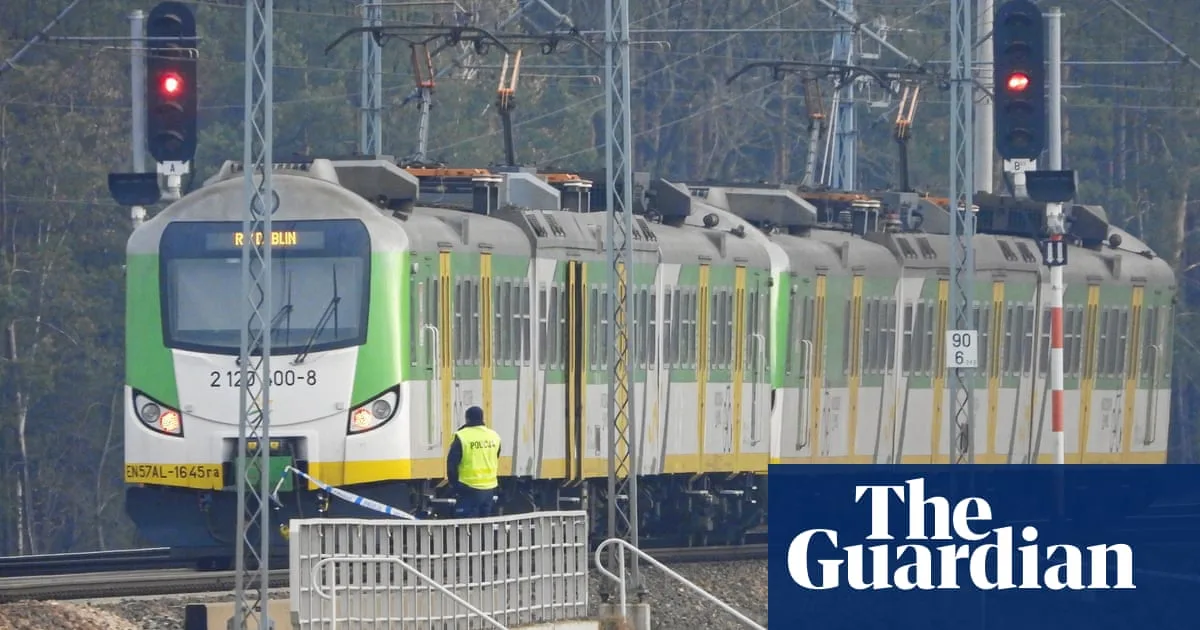
Poland's foreign minister, Radosław Sikorski, has ordered the closure of the last remaining Russian consulate in the country, in Gdańsk, following a sabotage attack on the Polish rail system that he described as 'an act of state terrorism' ordered by Russia. The attack, which occurred last weekend, involved explosive devices placed on rail tracks near the town of Mika, on a key logistics route towards the border with Ukraine.
Sikorski stated that the clear intention of the attack was to cause human casualties, though no injuries were reported as a regional train driver spotted the damaged tracks and alerted authorities. In a separate incident, power cables were destroyed along a nearby section of track. Polish security services have arrested four people in connection with the incident, with the spokesperson Jacek Dobrzyński confirming that authorities are pursuing the principals and perpetrators.
Prime Minister Donald Tusk previously identified two Ukrainian citizens involved in the attack, who arrived from Belarus and left Poland after placing the explosive devices. Tusk said Poland believes the men were cooperating with Russia's security services, and one had been arrested previously for sabotage in Ukraine. The pair are reportedly not among those arrested.
Sikorski said the closure of the Gdańsk consulate 'will not be our full response' to the attack, but did not specify further measures. Poland has closed two other Russian consulates in recent years, in Kraków and Poznań, while the embassy in Warsaw remains open. In response, Russia's foreign ministry said it would 'reduce Poland's diplomatic and consular presence in Russia', with Kremlin spokesperson Dmitry Peskov noting that relations have 'completely deteriorated'.
Russia has denied involvement in sabotage attacks in Europe, but Polish and other European intelligence services believe Moscow has launched a campaign of arson, explosions, and infrastructure attacks to test Europe's defences and weaken support for Ukraine. The attacks often use one-time operatives recruited via Telegram, frequently Ukrainian citizens. President Volodymyr Zelenskyy of Ukraine has promised to share all information with Poland, and the two countries will set up a bilateral working group to prevent further incidents.
Poland's chief of general staff, Wiesław Kukuła, warned that the long winter nights during the upcoming holiday season could be seen by Russia as an ideal time to increase sabotage activity, and the army is preparing for a wide range of potential incidents. Defence Minister Władysław Kosiniak-Kamysz announced Operation Horizon, a plan to deploy 10,000 soldiers to protect critical infrastructure across the country to counteract acts of diversion and enhance security for Polish citizens.




