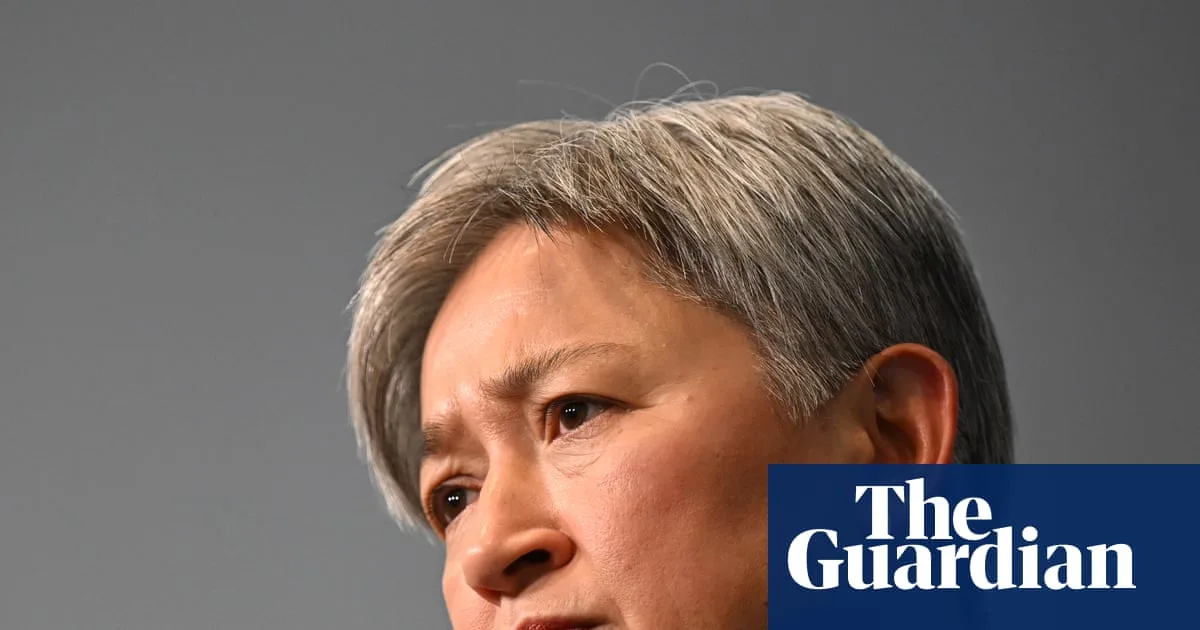
Penny Wong Backs US-Israel Strikes on Iran as Labor Group Condemns 'Militarism'
Penny Wong Supports US-Israel Iran Strikes Amid Labor Criticism

Penny Wong Endorses US and Israeli Military Action Against Iran

Australian Foreign Minister Penny Wong has expressed support for recent strikes by the United States and Israel on Iran, while calling on Tehran to halt its retaliatory attacks across the Middle East. The bombings reportedly resulted in the death of Iran's supreme leader, Ali Khamenei, and have escalated regional tensions.

Legal Basis and Intelligence Role Questioned

When questioned about the legality of the strikes, Wong stated that it was the responsibility of Australia's allies to clarify "the legal basis for the attacks." She emphasized, "I will leave it for the United States and Israel to speak of the legal basis for the attacks." Additionally, Wong refused to confirm whether Australian intelligence facilities, including the Pine Gap base, were utilized during the operations.

Wong highlighted Iran's long-standing role as a destabilizing force in the region, noting, "Iran has been a destabilising force in the region for decades. It has orchestrated attacks on Australia and I think we all understand this issue did not start yesterday." She affirmed Australia's stance in supporting actions to prevent Iran from acquiring nuclear weapons and threatening international security.

Government and Opposition Responses

The Australian government and opposition quickly aligned in backing US President Donald Trump and Israeli Prime Minister Benjamin Netanyahu following the strikes. Prime Minister Anthony Albanese issued a statement declaring, "Australia stands with the brave people of Iran in their struggle against oppression." However, the national security committee of cabinet convened and is expected to meet again in the coming days to assess the situation.

In response to Iran's retaliatory strikes on Israel and US bases, Australia has updated travel advisories for several countries, including Lebanon, Bahrain, Kuwait, Qatar, and the United Arab Emirates. Wong urged Australians in affected areas to register with the Department of Foreign Affairs and Trade and left open the possibility of government-sponsored repatriation flights, despite aviation disruptions.

Internal Criticism and Broader Implications

The government's position has faced sharp criticism from within the Labor Party and other political groups. The Labor Against War group condemned the support for Trump and Netanyahu, with patron Doug Cameron stating, "Albanese's backing of Israeli and US attacks on Iran shows that we are completely devoid of acting independently from Trump and Netanyahu. There was a time when Labor pursued peace not war. That time is long gone. Leadership needed not sycophantic capitulation to militarism."

Greens leader Larissa Waters labeled the government's stance as "disgraceful" and warned against Australia being drawn into another US-led conflict. She argued, "Trump and Netanyahu's illegal attacks last night have unleashed chaos across the Middle East. This war will not bring safety to the brave Iranian people who are fighting for liberation from the brutal regime. We cannot bomb our way to peace."

Opposition frontbencher Andrew Hastie defended the bombings, asserting that Iran is an enemy of Australia and has engaged in terrorism and geopolitical aggression. He remarked, "Trump was setting the conditions for regime change in Iran," while expressing caution based on his military experience.

Casualties and Regional Impact

The strikes have led to significant casualties, including at least 100 children killed in an apparent attack on a girls' school in southern Iran, as reported by the Mizan news agency. In Tel Aviv, one person died and 22 were injured from an Iranian missile strike, while four were injured at Dubai International Airport, with additional strikes reported in upmarket areas.

Wong reiterated Australia's call for de-escalation, stating, "We need to avoid, if at all possible, a broader regional escalation." She confirmed that Australia is not involved in military operations and does not expect its forces to play a role, underscoring the nation's position as a non-central but engaged international actor.




