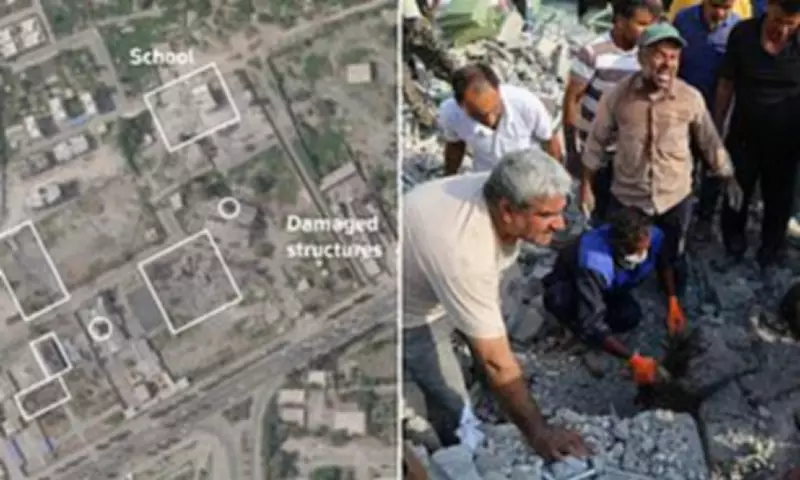
A preliminary military investigation has revealed that outdated targeting data may have led to a deadly US missile strike on an Iranian girls' school, resulting in the deaths of 175 people, predominantly children aged seven to twelve. The findings indicate the United States was likely responsible for the attack, which occurred on February 28 when a Tomahawk missile hit the Shajareh Tayyebeh primary school in the town of Minab.
Investigation Points to Major Intelligence Failure
Military investigators reported yesterday that the US was 'likely' accountable for the strike, noting that Israel participated in locating targets. Officials emphasized these are preliminary conclusions, with critical questions remaining about why the obsolete information was not verified before the attack. The school building had previously been part of a neighbouring Islamic Revolutionary Guard Navy compound but was converted into an educational institution a decade ago.
Political Reactions and Apologies
On Saturday, President Donald Trump attributed the strike to Iran, stating to reporters: 'In my opinion, based on what I've seen, that was done by Iran. They're very inaccurate, as you know, with their munitions. They have no accuracy whatsoever. It was done by Iran.' When confronted with the inquiry's initial findings yesterday, he responded: 'I don't know about that.'

Republican US Senator John Kennedy expressed remorse for what he termed a 'horrible mistake,' comparing it to actions typically associated with Russia. 'We're investigating, but I’m not going to hide behind that,' he said. 'I think that it was a terrible, terrible mistake. The kids are still dead, and I think it was a horrible, horrible mistake.'
Intelligence Community Weighs In
Beth Sanner, former Deputy Director of National Intelligence, described the incident as 'a major, major mistake.' She explained that 'target packages' containing imagery help the military assess whether a site warrants an attack, but these can become outdated. 'This school was around for 10 years, so this is a major, major mistake. It should have been caught, it should have been refreshed,' Sanner remarked.
She added that while the US military and intelligence community strive diligently to maintain updated data, errors occur with tragic consequences. 'Frankly, I feel terrible for the people who provided that information, but we need to learn from this and make sure we're using AI and all the tools to prevent it from happening again.'
Demands for Accountability and Transparency
Yesterday, forty-three Democrat senators wrote to the US Department of Defence, labelling the school attack 'horrific' and demanding answers. Senator Richard Blumental asserted: 'US responsibility for this tragedy is sickening and should prompt immediate release of the report, even if it's preliminary. The American people need and deserve to know what happened and who's accountable - including a public hearing.'
White House press secretary Karoline Leavitt stated that President Trump would accept the inquiry's final conclusion, noting the investigation remains ongoing. Social media footage captured the moment the school was struck, while rescue workers and residents searched through rubble in the aftermath. Protests emerged globally, including in Seoul where demonstrators carried anti-war placards featuring the faces of children killed in the strike.