
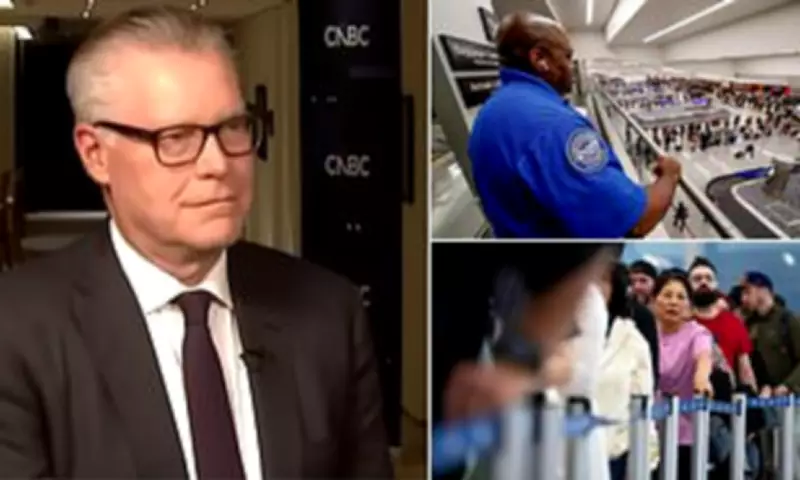
The chief executive of Delta Airlines has expressed profound outrage as Transportation Security Administration officers continue working without compensation, creating extensive security checkpoint queues and disrupting air travel throughout the United States. The airport turmoil continues to escalate with approximately 50,000 officers missing their initial paychecks last week while Congressional disputes over Department of Homeland Security funding remain unresolved.
Airline Executive Condemns Political Stalemate
Delta CEO Ed Bastian delivered scathing criticism during a CNBC interview on Tuesday, stating, "It's inexcusable that our security agents, our frontline agents that are essential to what we do, are not being paid - and it's ridiculous to see them being used as political chips." He emphasized, "We're outraged," noting that Delta is already experiencing tangible impacts from the partial government shutdown.
Operational Disruptions Intensify
Staffing deficiencies at security screening points have generated prolonged waiting times and operational delays at major transportation hubs, including Delta's primary base in Atlanta, Georgia. Numerous TSA employees face financial desperation, resorting to secondary employment opportunities and even blood plasma donation to sustain themselves, while significant numbers report sick leave or resign from their positions entirely.
Airlines have consequently been compelled to postpone flights for passengers struggling to navigate security procedures requiring multiple hours, with rebooking alternatives implemented where feasible. Flight tracking data from FlightAware indicated nearly 400 flight delays within, entering, or departing the United States by Friday morning.
Historical Precedent and Current Crisis
Bastian referenced a previous 43-day shutdown during autumn that resulted in substantial disruptions, delays, and approximately ten percent flight reductions at major airports coordinated by the Federal Aviation Administration. "These people missed paychecks just a few months ago," he observed. "They're missing paychecks again. It's outrageous." The executive underscored the urgency, declaring, "We got a war going on. Let's get our people who are essential to our security paid."
Industry Advocacy and Congressional Pressure
Bastian previously endorsed correspondence from the Airlines for America trade association urging Congressional resolution to the shutdown. The collective statement asserted, "Americans - who live in your districts and home states - are tired of long lines at airports, travel delays and flight cancellations caused by shutdown after shutdown. Yet, once again, air travel is the political football amid another government shutdown." The communication concluded, "This problem is solvable and there are solutions on the table."
Bastian and fellow airline chief executives subsequently petitioned Congress to enact three legislative measures ensuring worker compensation regardless of governmental operational status. Their warning highlighted projected air travel involving an estimated 171 million passengers between March 1 and April 30, representing a four percent increase compared to the corresponding period last year.
TSA Leadership Warns of Escalating Crisis
Acting Deputy TSA Administrator Adam Stahl cautioned during a NewsNation interview that circumstances will likely "get worse before it gets better" as personnel resources become increasingly strained. He indicated potential operational suspensions at smaller airports, explaining, "As this goes on without any sort of resolution from Congress, particularly from Senate Democrats, our folks will continue to call out. Small airports may be particularly impacted because they have fewer lanes and they have fewer people."
Stahl elaborated that temporary operational halts might become necessary if three or four employees out of ten are absent at specific locations to maintain security standards. He declined to specify potential airport quantities affected, noting determination factors vary significantly between facilities.
Congressional Criticism and Personnel Losses
The TSA official criticized Congressional funding disputes, arguing, "To hold an entire department hostage, particularly over policy concerns, is frankly reckless and it's, I really think... it threatens, really the foundational job of Congress at large to fund the appropriations process." Personnel statistics reveal more than 360 TSA officers have departed since the shutdown commenced in mid-February.
Cameron Cochems, a union steward and lead TSA officer in Boise, Idaho, echoed concerns regarding deteriorating morale. "The morale is getting worse by the day because no one knows when this is gonna end," he told CBS News, adding that passengers "are waiting on line because the government can't do their job, and it's ruining people's lives."
Statistical Evidence of Deterioration
Staffing shortages have already necessitated terminal checkpoint closures at major airports including Philadelphia International. Department of Homeland Security data indicates absenteeism rates exceeding fifty percent in Houston and surpassing thirty percent in metropolitan areas like New Orleans and Atlanta earlier this week. Nationwide, 9.88 percent of TSA personnel reported absences on Tuesday, increasing to 10.16 percent on Wednesday.
Political Deadlock and Potential Resolution
The situation threatens further deterioration as Congressional recess approaches at week's end. An aviation industry official told Politico, "It is not yet widespread... [but] keep this thing going for another week or two and there's a real good chance it is going to be widespread." The source warned, "There's a decent chance that this isn't going to get resolved before [Congress recesses] and it's going to take a giant meltdown to get it resolved."
Senate Majority Leader John Thune suggested potential cancellation of the Senate recess should the shutdown persist. Meanwhile, bipartisan senator groups including Appropriations Committee members and Democrats instrumental in resolving the previous shutdown conducted private discussions with former border security official Tom Homan.
White House officials engaged travel industry representatives during discussions this week as concerns intensify. An administration official admitted to Politico, "I'm extremely worried, not just short term, but throughout the summer. World Cup and America250 could be crippled if this isn't resolved ASAP."
In potential breakthrough developments, White House officials disclosed proposed modifications to immigration enforcement protocols on Thursday. Previous political accusations saw White House and Congressional Republicans blaming Democrats for the shutdown, while Republicans simultaneously obstructed Democratic attempts to secure funding votes for Department of Homeland Security agencies excluding Immigration and Customs Enforcement and Border Protection.




