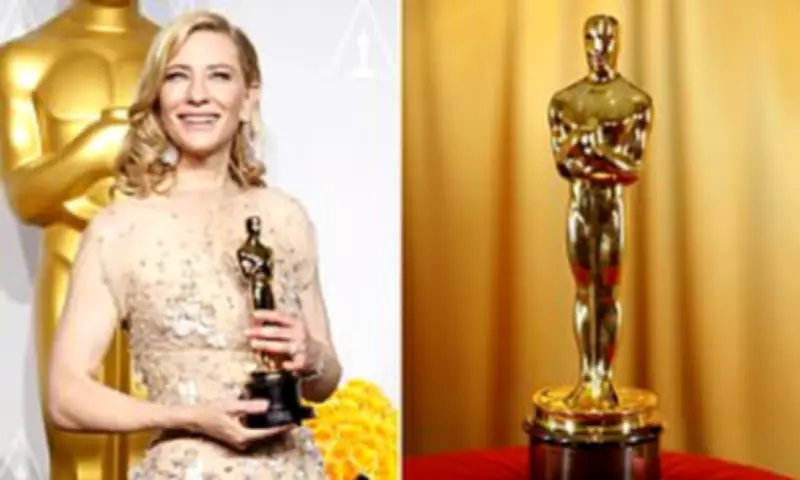
Securing a major Academy Award nomination can inject millions of dollars into a film's box office revenue, yet the highly sought-after Oscar statuette itself carries a nominal value of merely US$1.00, equivalent to approximately AUD$1.43. This surprising valuation stems from strict regulations imposed by the Academy of Motion Picture Arts and Sciences (AMPAS), which prohibit Oscar winners and their heirs from reselling the gold-plated trophy on the open market.
Academy's Resale Agreement and Historical Context
Members of the Academy are required to sign a binding agreement stipulating that if they ever wish to dispose of their award, they must first offer to sell it back to the Academy for the symbolic sum of one dollar. This rule was established in 1950 with the explicit aim of preserving the prestige and exclusivity of the prize, as reported by the entertainment website Just Jared. Despite costing an estimated AU$570 to manufacture, pre-1951 Oscars have commanded astronomical prices at auction due to their rarity and historical significance.
Notable Auction Sales and Legal Battles
In a high-profile transaction that captured global attention, Michael Jackson made headlines in 1999 by paying US$1.54 million, equivalent to AU$3.4 million, for the 1939 Best Picture Oscar statuette awarded to Gone With The Wind. Business journal Forbes previously highlighted that famed auction house Christie's sold four pre-1950 Oscars over two decades ago for a combined total of $2.7 million, or US$1.5 million.
The Academy has vigorously enforced its resale policy, as demonstrated in 2014 when it initiated legal proceedings against the nephew of Academy Award winner Joseph Wright. The lawsuit was filed after his 1942 Oscar for Best Art Direction appeared for sale at a California auction house. AMPAS emerged victorious in the case and subsequently issued a statement reaffirming that Oscar statuettes are never intended as articles of trade.
Design and Box Office Impact of Oscar Nominations
Crafted from solid bronze and plated with layers of copper, nickel, and 24-carat gold, the Oscar statuette stands 34.3 centimetres tall, weighs 3.85 kilograms, and depicts a knight holding a sword. Beyond its physical attributes, it is widely acknowledged in Hollywood that Oscar nominations significantly enhance a film's audience appeal and financial performance.
In 2023, Moviemaker magazine cited analyst statistics clearly illustrating the box office boost associated with Oscar recognition. Examining the awards from 2007 to 2011, IBISWorld found that Best Picture nominees were produced at an average cost of AU$60 million, or US$42.1 million. These films went on to generate $148.4 million, equivalent to US$104.2 million, at the box office, yielding an impressive margin of 247.2 per cent.
Recent Academy Awards Highlights
The 98th Academy Awards also showcased notable moments, such as Australian actress Rose Byrne making a striking appearance on the red carpet. Nominated for Best Actress, the 46-year-old star of Bridesmaids exuded timeless glamour in an elegant black strapless Dior gown featuring intricate floral embroidery, accompanied by her husband, actor Bobby Cannavale. Fresh from her Golden Globes win, Byrne was recognised for Best Performance by an Actress in a Leading Role for If I Had Legs I'd Kick You, underscoring the ongoing allure and career-defining potential of Oscar accolades.