Oscars 2026: Stars Advocate for Gaza Ceasefire and Political Change
Oscars 2026: Stars Advocate for Gaza Ceasefire

Oscars 2026 Concludes with Strong Political Statements on Gaza and Immigration

The 98th Academy Awards, held on Sunday, marked the end of a politically charged awards season, with several artists using Hollywood's biggest night to advocate for peace in Gaza and protest immigration policies. While protest pins like "BE GOOD" and "ICE OUT" were less prominent than at last month's Grammys, attendees leveraged the red carpet to amplify calls for Palestinian liberation and a ceasefire amid the fragile situation in Gaza.

Celebrities Find Their Political Voices

As the Oscars wrapped up the awards season, political organizers noted that celebrities have become more vocal this cycle compared to recent years. Jess Morales Rocketto, Executive Director of Maremoto, a Latino advocacy group behind the immigration pins debuted at the Golden Globes, described this as a "return to form" for artists' political engagement. She credited actor Mark Ruffalo's comments on the Golden Globes red carpet in January, where he expressed difficulty pretending "like this crazy stuff isn't happening," for helping to tap into a sentiment that this is a time to take stands.

Advocacy on the Red Carpet and Onstage

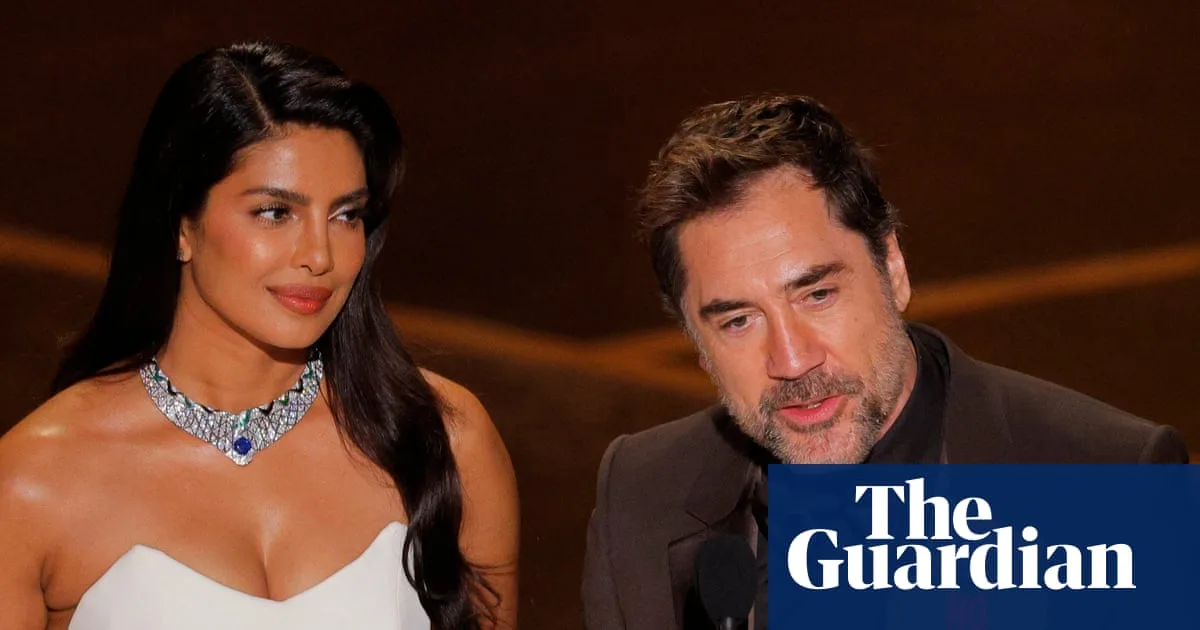
Actor Javier Bardem made a bold statement onstage before presenting the best international feature film award, declaring "No to war and free Palestine." He wore a patch reading "No a la Guerra," echoing his anti-war stance from the Iraq war protests over two decades ago. Attendees representing "The Voice of Hind Rajab," a docudrama nominated for best international feature film that follows efforts to rescue a Palestinian girl killed in Gaza, wore red "Artists4Ceasefire" pins. Saja Kilani, one of the film's stars, told The Associated Press, "Our struggles are connected. So is our liberation. And we're so, so honored to be here tonight."

Political Commentary in the Ceremony

The content of Sunday's ceremony proved more political than in previous years, even without direct references to global issues like the Iran war. Host Conan O'Brien cracked jokes at the expense of the U.S. health care system and Kid Rock, while in a rare moment of sincerity, he noted the Oscars' resonance in "moments like these," nodding at world crises. He paid tribute to "the ideals of global artistry, collaboration, patience, resilience and that rarest of qualities today: optimism."

Documentary Category Highlights Social Issues

The best documentary category, known for overt political messages, brought further social commentary. David Borenstein, co-director of "Mr. Nobody Against Putin," explained that the film is about "how you lose your country" through "countless small little acts of complicity," such as when governments commit violence or oligarchs control media. He emphasized, "We all face a moral choice, but luckily, even a nobody is more powerful than you think."

Broader Activism and Media Protests

Other advocacy groups used the Oscars' platform to draw attention to their causes. Free Press deployed a mobile billboard circling the Dolby Theater to protest Paramount Skydance's likely takeover of Warner Bros. Discovery, pushing against corporate media consolidation. Morales Rocketto acknowledged that individual actions, like wearing pins, are like "droplets" in a "giant ocean" of systemic change, but stressed their importance when stars decide to use their platforms for statements beyond fashion.

This year's Oscars underscored a growing trend of artist-driven activism in entertainment, with celebrities leveraging their influence to address pressing global and domestic issues, from the Gaza conflict to immigration reform.