North Korean leader Kim Jong Un has publicly dismissed a senior official, blaming him for significant failures in a major industrial project. The move is seen as a disciplinary action ahead of a crucial political gathering.
Senior Official Dismissed for Project Failures
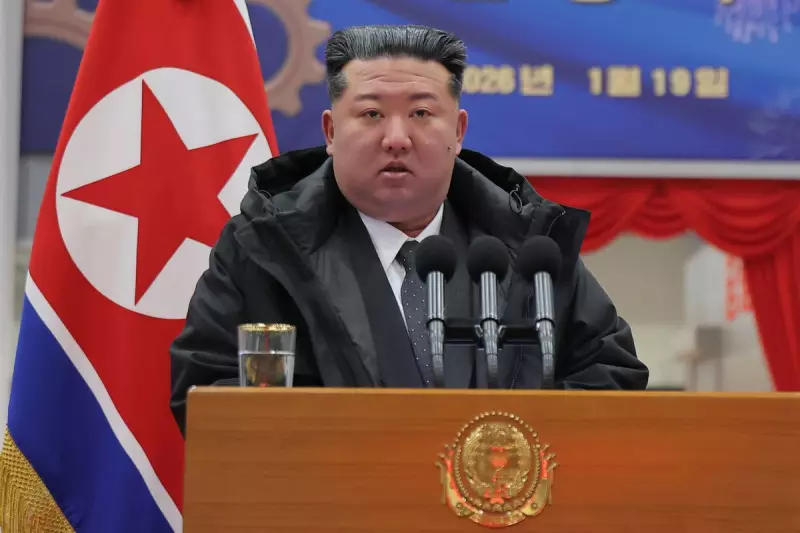
State media reported on Tuesday, 20 January 2026, that Kim Jong Un dismissed Vice Premier Yang Sung Ho, who was responsible for the machine-building industry. The dismissal was announced during a speech marking the completion of the first stage of a modernisation project at the Ryongsong Machine Complex in the country's northeast on Monday.
Kim Jong Un accused Yang of causing what he termed "unnecessary man-made confusion" in the project. According to the Korean Central News Agency (KCNA), the leader stated the endeavour suffered "not a small amount of economic loss" due to irresponsible and incompetent officials.

Economic Losses and a Heavier Burden
The project's mismanagement allegedly led to the waste of "large amounts of funds and labour". Kim further claimed that the failures placed a heavier subsequent burden on the nation's munitions industry sector, a critical priority for the isolated state.
KCNA detailed that Kim had initially criticised Yang during a party meeting in December and had been observing his conduct. The leader concluded that the vice premier "felt no sense of responsibility at all", leading to the decisive action. "As of today, I declare you dismissed, comrade vice premier," Kim declared.
A Pattern of Purges Ahead of Key Congress
This public rebuke and dismissal fit a recurring pattern under Kim Jong Un's leadership. In recent years, he has frequently moved to combat "defeatism, irresponsibility and passiveness" within economic sectors, aiming to tackle North Korea's chronic economic difficulties.
Senior officials are occasionally scapegoated for policy failures and economic hardships, a tactic used to reinforce discipline. This latest purge comes ahead of the upcoming Workers' Party congress, the first in five years, which is expected to set new economic and state objectives. South Korea's intelligence service suggests the congress will likely open in late January or February.
The North Korean economy, which suffered major setbacks during the COVID-19 pandemic, reportedly grew by 3.7% in 2024, according to South Korea's central bank. However, many analysts remain sceptical about prospects for rapid, sustained growth. They cite the nation's devotion of scarce resources to weapons programmes, its inefficient centralised economy, and persistent international sanctions as significant barriers to development.