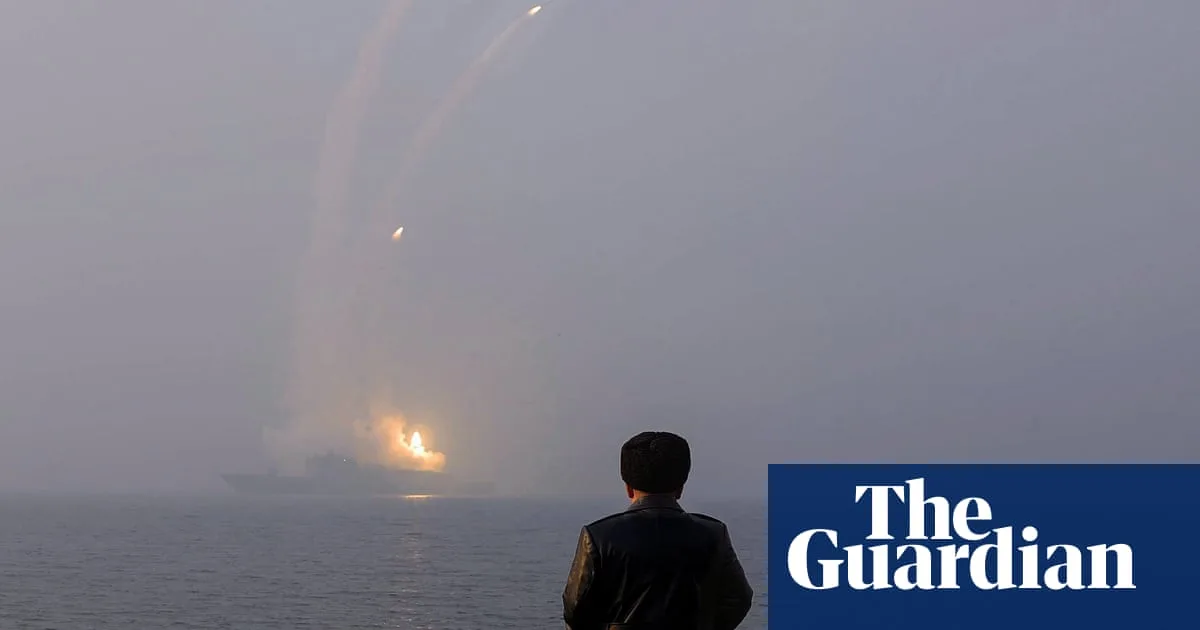
North Korea Fires Nuclear-Capable Missiles, Heightening Regional Tensions
North Korea Launches Nuclear-Capable Missiles Into Sea

North Korea has conducted a provocative missile test, launching a pair of short-range ballistic missiles into the Sea of Japan on Tuesday. This action has reignited serious concerns about the potential for a broader nuclear confrontation across the Asian region.

Details of the Missile Launch

South Korea's Joint Chiefs of Staff confirmed that the missiles were fired from a site near Pyongyang, the North Korean capital, at approximately 3:50 PM local time. Each projectile travelled an estimated distance of 217 miles before impacting the sea without causing any reported injuries or damage to neighbouring nations.

The launch is believed to have tested the regime's KN-25 short-range ballistic missiles. These weapons possess an estimated operational range of up to 250 miles, placing numerous targets within South Korea firmly within their strike capability. North Korea has previously asserted that this specific missile type is designed to carry a nuclear warhead.

International Response and Strategic Context

The United States government, alongside its key allies South Korea and Japan, is closely monitoring the situation. US Forces Korea issued a statement confirming the launch and subsequent consultations with regional partners, while also assessing that the event does not pose an immediate threat to American personnel, territory, or allies at this juncture.

This test occurs against a backdrop of heightened diplomatic and military posturing. It followed a speech by a senior Pentagon official in Seoul emphasising the necessity for a strong US-South Korea partnership to counter Chinese influence in the region. China remains a formal ally of North Korea, bound by a mutual defence treaty established in 1961, although the pact does not obligate China to support North Korea if it initiates an attack.

Assessing the Nuclear Threat

Analysts from the Federation of American Scientists have recently warned that North Korea is actively modernising and expanding its nuclear arsenal. Their 2024 assessment estimates the country has produced sufficient fissile material for up to 90 nuclear warheads, with approximately 50 believed to have been assembled. Many of these are thought to be fission-type weapons, comparable in yield to the atomic bombs used on Hiroshima and Nagasaki.

The shortest-range nuclear-capable missiles in North Korea's inventory could target locations throughout South Korea, including major population centres like Seoul and key US military installations. Conversely, its longest-range intercontinental ballistic missiles, such as the Hwasong-15, possess the theoretical capability to reach the continental United States.

Regional Reactions and Ongoing Tensions

Japanese officials confirmed the missiles landed just outside the nation's exclusive economic zone. Japan's Deputy Chief Cabinet Secretary, Kei Sato, condemned the launch, labelling North Korea's ongoing nuclear and missile development as an unacceptable threat to both Japanese and international peace and security.

Since Kim Jong-un assumed power in 2011, North Korea has persistently conducted missile tests and artillery drills, actions that consistently unsettle South Korea and Japan and violate multiple United Nations Security Council resolutions. The enduring military standoff, with thousands of US troops still stationed along the Korean border, underscores the persistent volatility of the situation. Experts caution that any actual nuclear strike by North Korea could trigger a catastrophic chain reaction, potentially drawing multiple global powers into a direct conflict.