North Korea has conducted one of its most significant missile launch events in years, firing a volley of approximately 10 ballistic missiles toward the eastern sea on Saturday. This major show of force comes as rival South Korea holds a joint military exercise with the United States, escalating regional tensions.
South Korean Military Confirms Launch Details
South Korea's Joint Chiefs of Staff confirmed the missile launches originated from an area near the North Korean capital of Pyongyang. While initial reports did not specify the exact flight distance, Japan's Defense Ministry indicated the weapons landed in waters outside the country's exclusive economic zone.
The South Korean military has significantly enhanced surveillance measures and maintains a state of high readiness against potential additional launches. Authorities are closely sharing intelligence information with both the United States and Japan to coordinate responses.

Timing Coincides with US-South Korea Military Exercises
The missile launches occurred during the annual springtime Freedom Shield exercises between US and South Korean militaries. These large-scale drills involve thousands of troops and are designed to test joint operational capabilities through computer-simulated scenarios and field training programs.
North Korea has consistently condemned these allied drills as invasion rehearsals, frequently using them as justification for its own military demonstrations and weapons testing programs. In previous years, Pyongyang has conducted numerous salvo launches while describing them as simulations of nuclear attacks against South Korean targets.
Regional Security Concerns Intensify
The situation has become more complex due to the Trump administration's escalating war in the Middle East, which has raised concerns about potential security gaps in South Korea. Local media reports, citing security camera footage and other evidence, have speculated that the US might be relocating some missile defense assets from South Korea to support operations against Iran.
When questioned by The Associated Press about whether US Forces Korea was moving interceptor missiles from its Terminal High Altitude Area Defense (THAAD) system in Seongju to the Middle East, President Lee Jae Myung's office declined to confirm details about US military operations. The office maintained that any potential relocation of US military assets would not affect the allies' defense posture against nuclear-armed North Korea, while also highlighting South Korea's conventional military strength.
North Korean Leadership Issues Stern Warnings
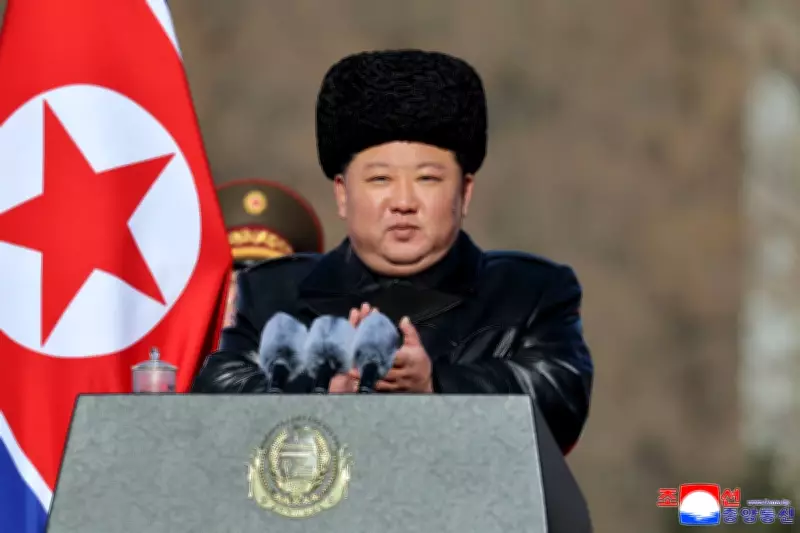
Days before the missile launches, Kim Yo Jong, the powerful sister of North Korean leader Kim Jong Un, issued strong criticism of Washington and Seoul for proceeding with their drills during what she described as a perilous moment for global security. She warned that any challenge to North Korea's safety would bring "terrible consequences."
Without directly referencing the Iran conflict, Kim Yo Jong asserted that the US-South Korea drills undermine regional stability at a time when global security structures are "collapsing rapidly" due to what she termed "reckless acts of outrageous international rogues."
North Korea's Foreign Ministry has released separate statements denouncing joint US-Israeli attacks on Iran while expressing support for Tehran's new supreme leader, Mojtaba Khamenei.
Diplomatic Stalemate Continues
North Korea has repeatedly rejected calls from Washington and Seoul to resume diplomacy aimed at winding down its nuclear program. Talks between the nations derailed in 2019 following the collapse of Kim Jong Un's second summit with then-US President Donald Trump.
In recent years, Kim Jong Un has made Russia the priority of his foreign policy, sending thousands of troops and substantial military equipment to support Moscow's war in Ukraine. Analysts suggest this support may be provided in exchange for crucial aid and military technology from Russia.
The 11-day Freedom Shield exercise continues through March 19, accompanied by the Warrior Shield field training program, as regional tensions remain elevated following North Korea's significant missile demonstration.