Niger's military leader has made explosive accusations against the presidents of France, Benin, and Ivory Coast, claiming they supported armed groups responsible for a significant attack on an Air Force base in the capital city of Niamey. The assault occurred overnight into Thursday morning, resulting in four soldiers wounded and damage to at least one aircraft.
Military Response and Accusations
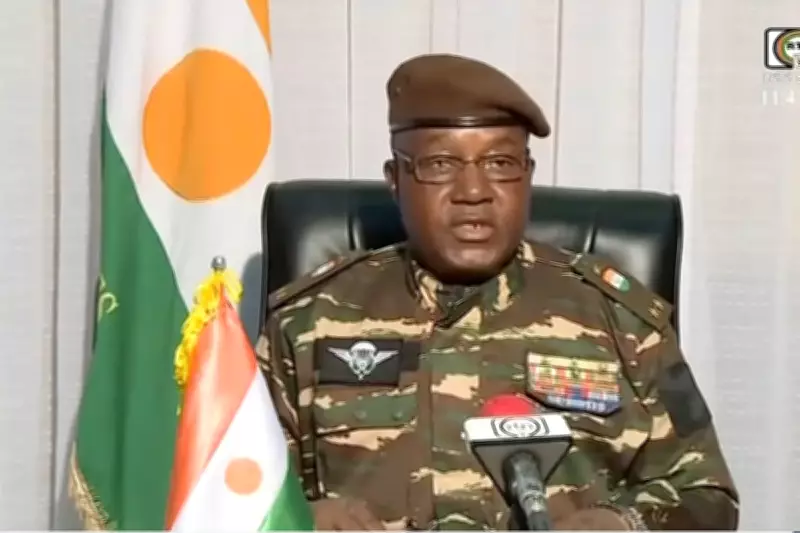
According to state television reports, Nigerien forces responded swiftly to the attack, killing twenty of the assailants and arresting eleven others. General Abdourahamane Tchiani, the country's military leader, delivered a fiery address on state television late Thursday, directly naming French President Emmanuel Macron, Beninese President Patrice Talon, and Ivorian President Alassane Ouattara as sponsors of what he called "mercenaries."
"We remind the sponsors of those mercenaries, who are Emmanuel Macron, Patrice Talon and Alassane Ouattara, we have sufficiently heard them bark, and they should now in turn be prepared to hear us roar," Tchiani declared. The general did not provide any concrete evidence to substantiate these serious allegations.

Attack Details and Strategic Significance
The armed assault targeted a Nigerien Air Force base in the capital, with videos from the scene capturing loud explosions and a glowing sky that began around midnight and continued for approximately two hours. The attack occurred in the vicinity of Diori Hamani International Airport, a crucial strategic hub that hosts multiple military bases, the headquarters of the Niger-Burkina Faso-Mali Joint Force, and a substantial uranium stockpile at the centre of an ongoing dispute with French nuclear company Orano.
West African airline Air Côte d'Ivoire confirmed that one of its aircraft, parked on the Niamey airport tarmac, sustained damage during the gunfire, with impacts recorded on the fuselage and right wing. Niger state television further reported that one of the killed assailants was a French national, showing footage of several bloodied bodies on the ground, though again without providing supporting evidence.
Regional Context and Security Challenges
No armed group has yet claimed responsibility for the attack, which occurs against a backdrop of escalating security challenges across Africa's Sahel region. Niger has been struggling to contain deadly jihadi violence that has battered parts of the Sahel, where neighbouring Burkina Faso and Mali are also governed by military juntas.
In 2025, al-Qaida and Islamic State group-backed militants intensified their campaigns across the Sahel, further threatening regional stability and particularly endangering Niger, which served as a key Western security ally in the region until the 2023 military coup.
Shifting Alliances and Diplomatic Tensions
Since seizing power, Niger's military rulers—alongside their counterparts in Mali and Burkina Faso—have severed ties with France and other Western powers, instead turning to Russia for military support in combating insurgencies. The juntas regularly accuse the presidents of Benin and Ivory Coast, two West African nations maintaining close relations with France, of acting as proxies for Paris.
Security experts note that under military rule, Niger, Mali, and Burkina Faso have experienced a surge in attacks and have become increasingly vulnerable to armed groups. This latest incident and the subsequent accusations highlight the deepening diplomatic fractures and security crises affecting the volatile Sahel region.