UK Government Approves New Chinese Embassy Despite Unresolved Security Concerns
New Chinese Embassy Approved Despite Security Risks

UK Government Approves New Chinese Embassy Despite Unresolved Security Concerns

Ministers have given the green light to a new Chinese embassy in London, even after intelligence agencies explicitly stated they cannot completely eliminate the associated national security risks. The controversial decision was announced on Tuesday by Local Government Secretary Steve Reed, who approved plans for the substantial diplomatic building at Royal Mint Court, situated near the historic Tower of London.

Security Assurances Amidst Acknowledged Threats

Security Minister Dan Jarvis addressed MPs, asserting he was "assured that the UK national security is protected" and that any potential risks from the new embassy were being "appropriately managed." This position received partial backing from the heads of MI5 and GCHQ, who confirmed that intelligence agencies had developed a comprehensive "package of national security mitigations" specifically for this embassy site.

However, in a revealing letter to the Foreign Secretary and Home Secretary, the intelligence chiefs conceded a significant limitation. They acknowledged it was "not realistic to expect to be able wholly to eliminate" the national security threats posed by foreign embassies, including this new Chinese mission. This admission underscores the persistent and inherent challenges in securing such diplomatic premises.

Wide Pickt banner — collaborative shopping lists app for Telegram, phone mockup with grocery list

Fierce Opposition and Political Criticism

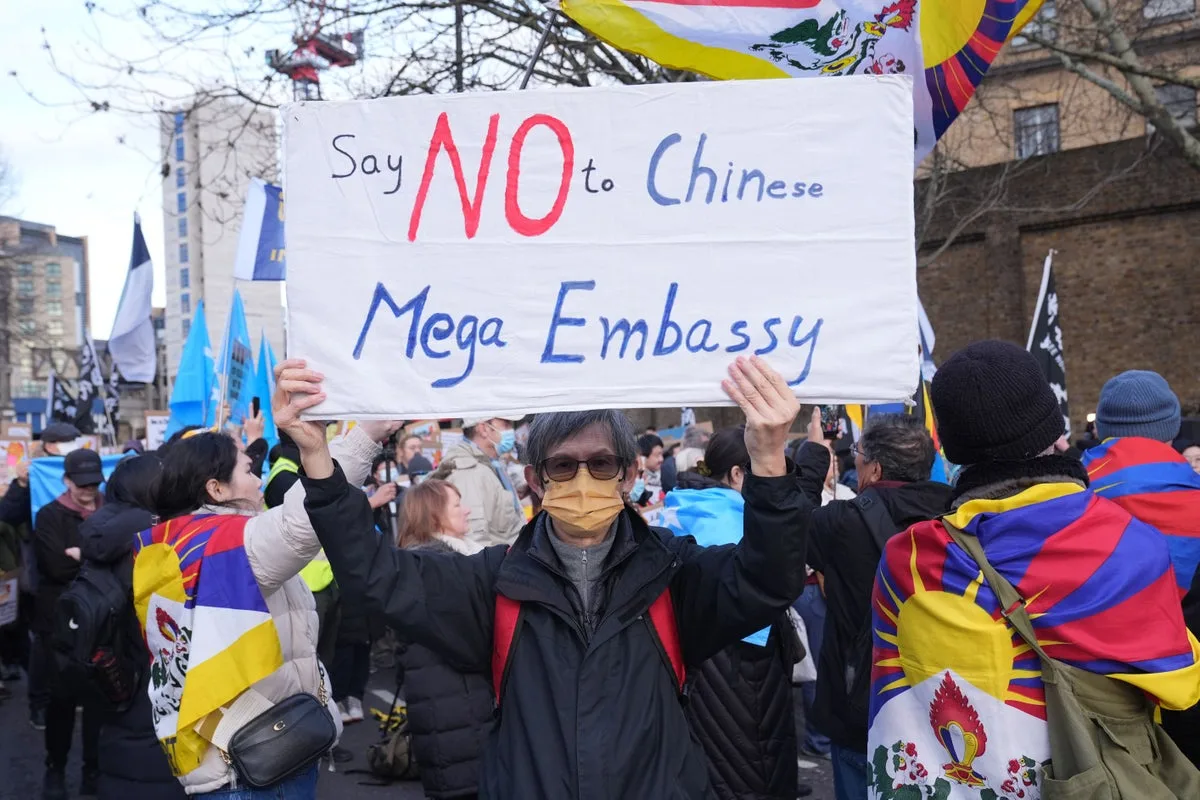
The approval marks the culmination of a protracted campaign against the proposals. Campaigners and numerous MPs have consistently argued that the embassy, which will be the largest Chinese diplomatic mission in Europe, would effectively create a hub for expanded intelligence-gathering and intimidation operations.

Sir Iain Duncan Smith, a Conservative MP who has personally been sanctioned by China, voiced strong disapproval. He stated, "At a time when the Chinese Communist Party is intensifying its intimidation of Britain, this decision sends entirely the wrong message."

Further criticism came from Christopher Mung, a former Hong Kong district councillor now living in Britain, who told the Press Association he felt "betrayed by the UK Government." He warned the decision would "enable" Chinese efforts to repress Hongkongers and others living abroad.

Government Justification and Oversight Scrutiny

Despite these concerns, the Government maintained that the identified risks were manageable. Mr. Jarvis told MPs there were actually "national security advantages" to the plans, which involve consolidating seven existing Chinese diplomatic buildings across London into a single, more monitorable site.

Parliament's Intelligence and Security Committee (ISC), which oversees the UK's spy agencies, issued a statement saying security concerns "can be satisfactorily mitigated." However, the committee also delivered a stark warning, noting that China continues to target the UK and its interests "prolifically and aggressively." The ISC further criticised the Government's internal process for evaluating the security concerns during the approval deliberations.

High-Profile Skepticism and Legal Challenges

Lord David Alton, a member of the Interparliamentary Alliance on China (Ipac), expressed deep skepticism at a Westminster press conference. "I am not persuaded that the risks could be managed," he said, questioning how authorities could effectively monitor espionage activities. He drew a pointed historical parallel, stating he could not believe any British government during the Cold War would have granted a "mega-embassy" in London to the Kremlin.

Opponents, backed by Ipac, have vowed to continue their fight through the legal system. Mark Nygate, treasurer of the Royal Mint Residents' Association, announced an expected judicial review in the coming days. The legal challenge, prepared by Lord Charlie Banner KC, is anticipated to focus on whether the decision was pre-determined, alongside issues of public access to historic ruins at the site and the redaction of rooms from published plans.

Pickt after-article banner — collaborative shopping lists app with family illustration

Diplomatic Implications and Core Values

The Prime Minister's official spokesman defended the decision, noting that classified facilities are "a standard part of any significant diplomatic presence" and that the Government was "content that any risks are being appropriately managed." Mr. Reed emphasised the decision followed "a quasi-judicial process" based on evidence and planning rules.

Approval of the embassy removes a significant diplomatic obstacle for the Government as it seeks to cultivate a warmer relationship with Beijing. It also paves the way for a widely-anticipated visit to China by Prime Minister Sir Keir Starmer, potentially within weeks.

Christopher Mung issued a direct plea regarding any such visit, urging the Prime Minister not to go unless China reinstates democracy and freedom in Hong Kong. He expressed concern that the trip might involve trading off freedom and human rights for trade and investment, compromising the core values British society upholds. A written statement from the Communities Secretary concluded that the decision is final unless successfully challenged in court.




