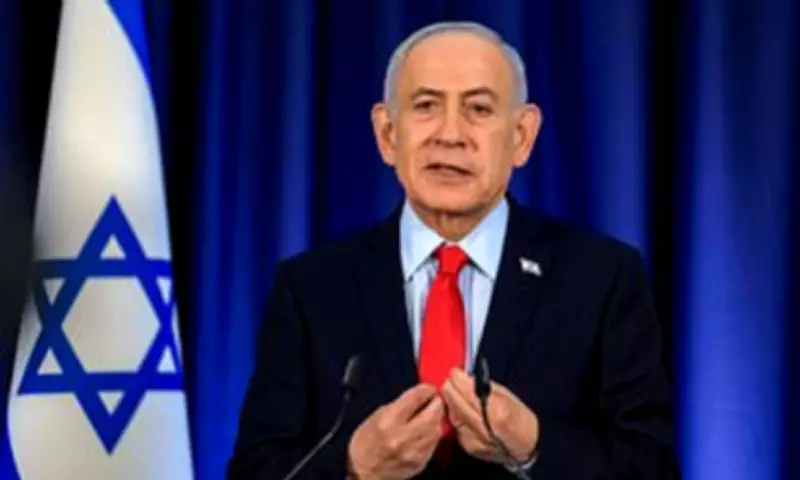
Israeli Prime Minister Benjamin Netanyahu disclosed on Monday that US Vice President JD Vance contacted him immediately after negotiations with Iran collapsed, as he issued a stark warning that former President Donald Trump's ceasefire agreement could unravel and potentially ignite an all-out war in the region.
High-Level Diplomatic Communication
Netanyahu revealed these details during a critical meeting with his top cabinet officials, where he provided an extensive briefing on how the United States' diplomatic efforts with Iran in Pakistan had abruptly disintegrated. The Israeli leader's comments emerged just hours before Trump's controversial naval blockade of the strategically vital Strait of Hormuz was scheduled to be implemented.
Direct Contact from Vance
'I spoke yesterday with Vice President JD Vance,' Netanyahu stated emphatically. 'He called me from his plane while returning from Islamabad.' The prime minister elaborated that Vance provided him with a comprehensive update, consistent with the administration's daily briefings, regarding the progression and sudden breakdown of the negotiations.

'He reported to me in detail, as this administration does every day, about the development of the negotiations,' Netanyahu continued. 'In this particular instance, it concerned the explosion in the negotiations.'
Causes of the Negotiation Breakdown
According to Netanyahu, the collapse was precipitated by the American side's inability to tolerate what they perceived as Iran's flagrant violation of the agreement to engage in the talks. The prime minister specified that Tehran had failed to reopen crucial access points within the vital oil passageway of the Strait of Hormuz and had refused to commit to halting its nuclear enrichment activities.
'The explosion came from the American side, which could not tolerate Iran's blatant violation of the agreement to enter the negotiations,' Netanyahu asserted, highlighting the diplomatic impasse.
Implications for Regional Stability
This revelation underscores the heightened tensions in the Middle East, with Netanyahu's warning about the fragility of Trump's ceasefire agreement pointing to significant risks of military escalation. The timing of Vance's call, coupled with the imminent enforcement of the naval blockade, suggests a rapidly deteriorating situation that could have profound implications for global energy markets and international security.
The Israeli prime minister's detailed account provides rare insight into the behind-the-scenes diplomatic communications between the two allied nations during a period of intense geopolitical strain.