Netanyahu's Defiance of Ceasefire Tests Trump's Authority in Middle East
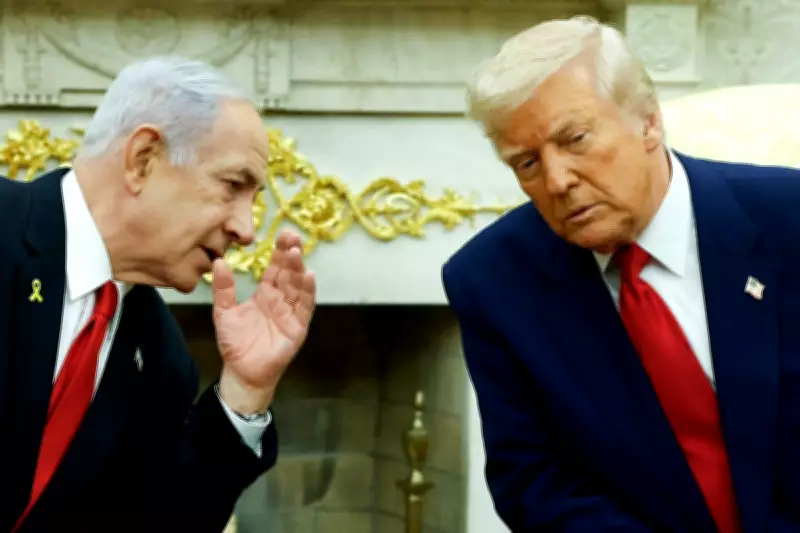
The Israeli Prime Minister Benjamin Netanyahu appears convinced that he can manipulate American foreign policy to serve his own objectives, a dangerous hubris that shows no signs of abating. This conviction was starkly demonstrated when Netanyahu publicly rejected a ceasefire in Lebanon, pledging instead to strike Hezbollah with full military force. This move directly challenges the authority of US President Donald Trump and threatens to derail fragile regional peace negotiations.
A History of Manipulating American Policy
Netanyahu's approach to US relations has been remarkably consistent throughout his political career. A quarter century ago, while visiting a Jewish settler family in the West Bank, Netanyahu was privately recorded boasting about his ability to thwart President Bill Clinton's efforts to advance the Oslo accords. "I know what America is," Netanyahu declared. "America is something that can be moved easily." This philosophy has guided Israel's longest-serving leader in his dealings with Washington ever since.
The February White House Meeting
Recent reporting by the New York Times has revealed the extent of Netanyahu's influence campaign. During a February 11 meeting at the White House, Netanyahu presented a detailed case for military action against Iran, which commenced just seventeen days later. The Israeli leader argued that Iran was ripe for regime change, that its ballistic missile program could be destroyed within weeks, and that the Tehran regime would be too weakened to retaliate effectively.

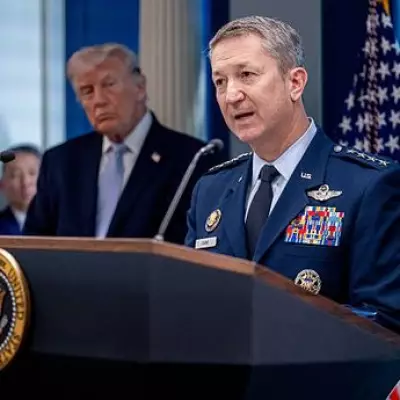
Several top US administration officials present at the meeting expressed serious reservations about Netanyahu's claims. CIA Director John Ratcliffe described the presentation as "farcical," while Secretary of State Marco Rubio used stronger language. General Dan Caine, chair of the Joint Chiefs of Staff, noted that "the Israelis oversell and their plans are not always well-developed. They know they need us, and that's why they're hard-selling." Despite these objections, Netanyahu's arguments resonated powerfully with President Trump, who ultimately authorized the military action.
Ceasefire Violations in Lebanon
The current crisis centers on Netanyahu's determination to continue military operations in Lebanon despite ceasefire calls. Israel recently struck approximately one hundred targets in heavily populated areas without warning, resulting in at least two hundred and fifty civilian deaths. This action occurred just one day after a ceasefire had been declared, representing what would be considered a major violation by any other US ally.
This is not the first time Netanyahu has tested ceasefire agreements. During last year's conflict, Israel continued attacks on Iran after a ceasefire was supposed to take effect, prompting President Trump to issue a public demand for Israel to cease hostilities immediately. That time, Netanyahu complied, allowing both leaders to claim victory.
The Current Standoff
The present situation differs significantly. While Trump has urged Netanyahu to "dial down" attacks on Lebanon, Israel continues to strike targets in its northern neighbor as it exchanges fire with Hezbollah. Netanyahu has agreed to hold talks with the Lebanese government next week, but military operations persist.
Confusion surrounds whether Lebanon was included in the original ceasefire agreement. Either President Trump is being untruthful about the terms, or the amateur negotiators he entrusted with the process demonstrated notable incompetence in leaving such a significant gap between Iranian perceptions, Pakistani mediation efforts, and Washington's position.
Regional Implications
The ongoing conflict in Lebanon threatens to derail planned peace talks scheduled for next weekend in Islamabad. Iranian negotiators may refuse to participate while Israeli strikes continue, which appears to be exactly what Netanyahu desires. Many observers believe the Israeli Prime Minister sees continued warfare as crucial to his political survival amid mounting domestic criticism for failing to achieve promised objectives in what many consider a pointless war.

For the approximately seven million Arabs living in Israel and occupied territories, true regional stability will only follow a just Israeli-Palestinian agreement that removes the excuses Israel's enemies use to threaten its security. Netanyahu has repeatedly demonstrated no interest in pursuing such an agreement.
Trump's Dilemma
The critical question is whether President Trump will break from the historical pattern of US subservience to Israeli demands. Previous American presidents have occasionally challenged Israeli positions: Dwight Eisenhower did so during the Suez Crisis in 1956, George W. Bush compelled Israeli participation in the Madrid summit of 1981, and Barack Obama signed the nuclear agreement with Iran in 2015.
Trump possesses significant leverage. He could issue a stronger demand similar to his tweet during last year's conflict, or he could withhold the billions of dollars in annual funding and weaponry the United States provides to Israel. His position is particularly strong given that Netanyahu's friendship represents the Israeli leader's most valuable asset during an American election year.
Prospects for Resolution
The omens for a peaceful resolution are not promising. Achieving progress would require Trump to defy precedent by behaving logically and consistently. However, there remains at least a possibility that the US President will finally lose patience with Netanyahu for seeking to prolong a war that Trump himself allowed Israel to drag America into.
As General Caine observed, the Israelis "know they need us." While Netanyahu may appear to be running the show, ultimately it is Trump who holds the cards. The question remains whether the American President can bring himself to play them effectively to restrain his Israeli counterpart and advance genuine peace in the region.