
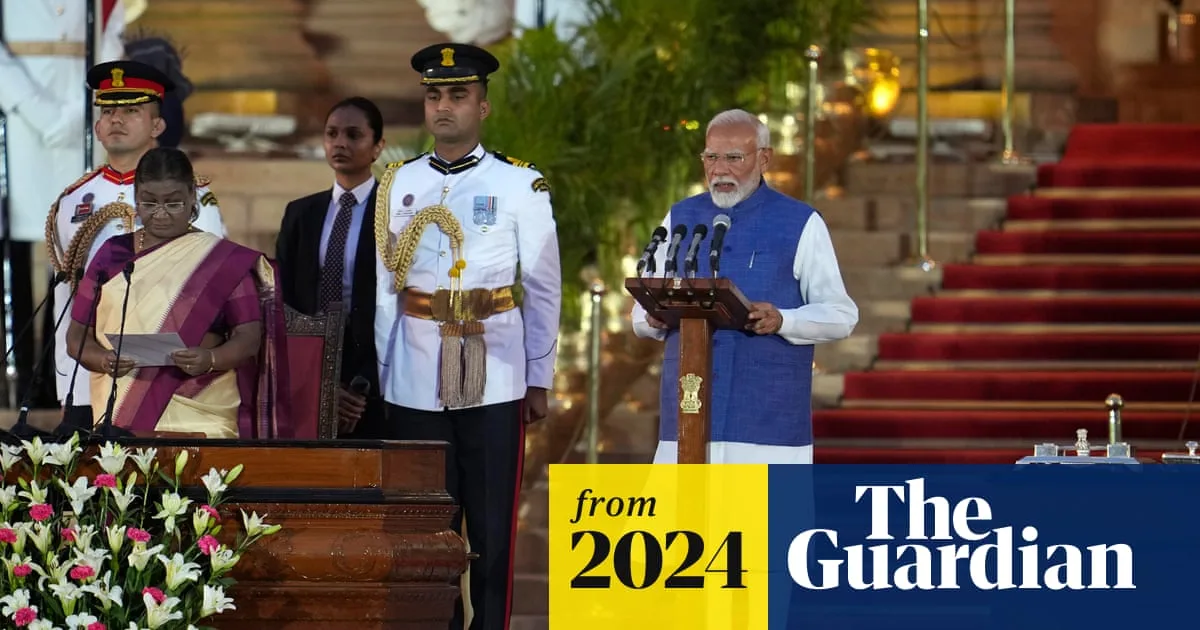
Narendra Modi has been sworn in as prime minister of India for a historic third term, becoming only the second leader in Indian history to win three consecutive terms. The ceremony took place at the presidential palace on Sunday evening, with Modi standing alongside senior BJP figures Rajnath Singh and Amit Shah, both confirmed to return as cabinet ministers.
Modi's third term is expected to differ significantly from his previous decade in power, as his BJP fell short of an absolute majority in the recent general election. The party won the most seats but was forced to rely on coalition partners, including smaller regional parties, to form a government. This marks the first time Modi has had to govern under a power-sharing arrangement, with coalition partners taking several cabinet and ministerial posts.
Analysts suggest the BJP's new dependence on secular coalition parties could curtail some of the more authoritarian tendencies of Modi's previous government, particularly its Hindu-first policies. Since coming to power in 2014, Modi has pursued an aggressive Hindu nationalist agenda, gaining support from India's 80% Hindu majority. However, issues such as chronic unemployment and concerns over democracy cost him votes in the election.
Speaking to coalition parties, Modi pushed back against opposition claims that the election was a defeat, stating, 'We did not lose,' but also struck a conciliatory note, adding, 'To run the government, a majority is necessary. But to run the nation, a consensus is necessary.' The opposition INDIA alliance performed better than expected, winning over 230 seats, more than double its previous tally.
Heads of state from neighbouring countries, including Bangladesh's Prime Minister Sheikh Hasina and Sri Lankan President Ranil Wickremesinghe, attended the ceremony. Also present were industrialists Gautam Adani and Mukesh Ambani, and Bollywood star Shah Rukh Khan. Opposition leaders largely boycotted the event, with only Congress party president Mallikarjun Kharge attending as a representative.




