An Italian amateur radio operator has sparked intrigue by suggesting that mysterious shortwave broadcasts in Persian could be coded instructions being transmitted to CIA agents operating within Iran. The discovery was made by 47-year-old Roberto from Milan, who monitors radio signals under the alias 'Shortwave Observer'.
Ghostly Voice Reciting Numbers in Persian
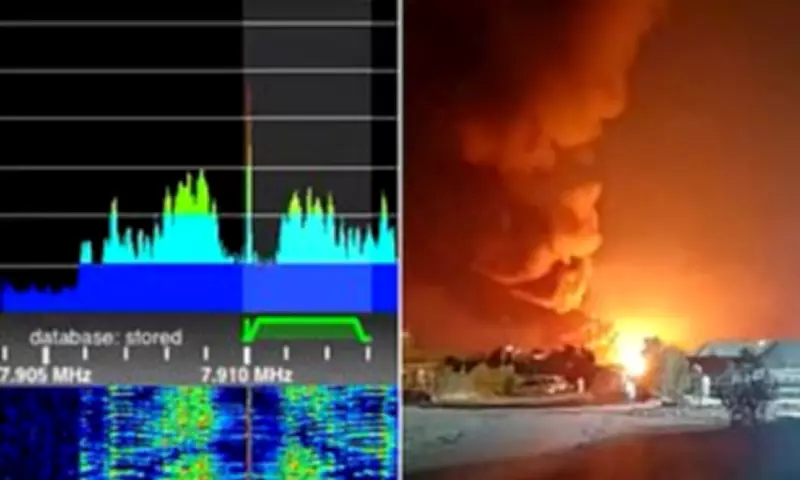
Roberto first detected the eerie transmission on Tuesday, shortly after the United States launched military strikes against Iranian targets. He described hearing a ghostly, disembodied voice methodically reciting a sequence of numbers in the Farsi language. This signal, he noted, had not been present prior to the escalation of hostilities, leading him to hypothesize a direct connection to covert intelligence activities.
A Relic of Espionage in the Digital Age
Roberto is part of a global community of thousands of shortwave enthusiasts who actively track so-called numbers stations. These broadcasts have a long historical association with spy agencies, dating back to the First World War and becoming particularly prevalent during the Cold War. Intelligence organizations used them to send encrypted messages to field operatives who possessed the corresponding codebooks.

In an era dominated by cyber espionage, burner phones, and pervasive digital surveillance, such analogue methods might seem antiquated. However, they retain a critical advantage: deniability and untraceability. While digital communications inevitably leave forensic trails, a physical codebook can be instantly destroyed. "There is no way of tracing the recipient of a signal," Roberto explained to The Times. "They could be anyone with a radio, anywhere in the world."
Patterns and Speculation on the Broadcasts
The specific Farsi-language transmission appears to originate from somewhere in the Middle East. It has been airing with remarkable regularity, broadcast daily at 6 p.m. and 2 a.m. UK time, with some sessions lasting up to an hour. The content of these messages remains a top secret, yet this has not deterred the amateur listening community from analyzing them.
Listeners are actively debating the broadcast's intent. One theory posits that the CIA is sending instructions to its agents within Iran, who may be at high risk of having their digital communications intercepted by Iranian security forces. A counter-theory suggests the broadcasts could originate from Iran itself, intended for its own intelligence operatives stationed overseas.
The Enduring Legacy of Numbers Stations
Numbers stations have employed various distinctive methods over the decades. Some broadcasts would open with repeated phrases like "Ready? Ready?", while others used electronic tones or brief snippets of music as identifiers before the numerical sequences began.
One of the most famous examples was the Lincolnshire Poacher station, widely attributed to British intelligence services. It would play the opening bars of the English folk song "The Lincolnshire Poacher" before commencing its number readings. This station remained active until 2008, ceasing operations two years after being deliberately jammed by North Korea's foreign-language service, Voice of Korea.
Even in the post-Cold War period, numbers stations have not vanished. The United States has previously alleged that Cuban intelligence agents arrested on American soil relied on coded broadcasts transmitted from Havana. The persistence of these signals underscores their continued value in the shadowy world of international espionage, where the oldest tricks sometimes remain the most secure.