
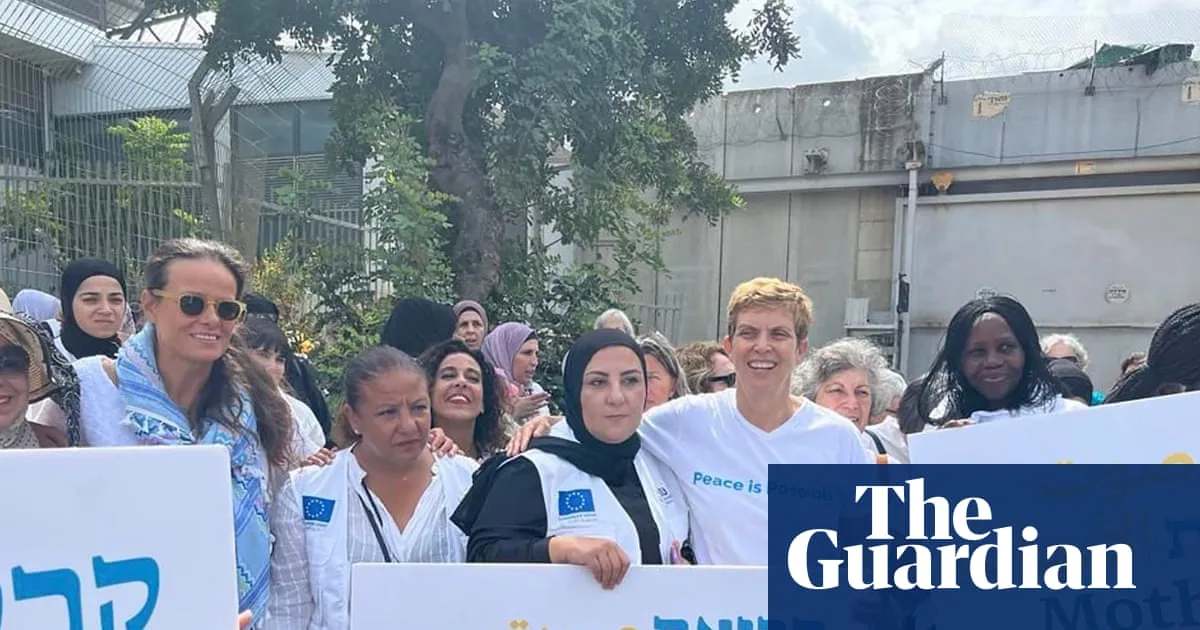
On the shores of the Dead Sea in October 2023, about 1,500 Israeli and Palestinian women gathered for a mass peace rally, organised jointly by the Israeli movement Women Wage Peace and the Palestinian group Women of the Sun. They held hands and called for an end to what they termed a “vicious cycle of bloodshed”. Three days later, Hamas launched a deadly attack on southern Israel, killing 1,200 people, followed by an Israeli war on Gaza that left more than 70,000 dead, most of them women and children. The fragile hope of the rally was overtaken by grief, fear and fury.
Two of the organisers, Yael Admi, 66, an Israeli mother of six, and Reem al-Hajajreh, 43, a Palestinian mother of four, have remained determined to continue their peace work despite intense criticism. “It was like a punch in the gut,” said Admi. Al-Hajajreh added, “People were opposed to my working with an Israeli after the 7 October attack. But here we are together, not only as Israeli and Palestinian, but as mothers wanting to protect our children.”
Al-Hajajreh lives in Bethlehem in the occupied West Bank, where life is shaped by checkpoints and military incursions. She described a 30-hour journey to attend a peace conference in The Hague in December, involving multiple checkpoints with unpredictable waits of six to seven hours. “This constant uncertainty is an emotional burden that Palestinians face regularly,” she said.
Both women have lost friends and fellow activists in the conflict, including Vivian Silver, 74, an Israeli-Canadian peace activist and founder of Women Wage Peace. “Vivian’s loss was devastating, as was the loss of three more activists and over 40 Palestinian women from Women of the Sun,” said Admi. Admi lost her eldest brother in the 1969 fighting between Egypt and Israel, which shaped her activism. “It’s our losses that have pushed us to choose this path of peace,” she said.
Despite their grief, the women urge global leaders to include women in peace negotiations. “When a mother wants to protect her child, no power in the world can stop her,” said Admi. Al-Hajajreh added, “As women, we are more than half of society, but no one takes into account if we want war or not. We want to watch our children grow up and have a bright future.”




