Iran's New Supreme Leader Mojtaba Khamenei Brings Mystery to Middle East Crisis
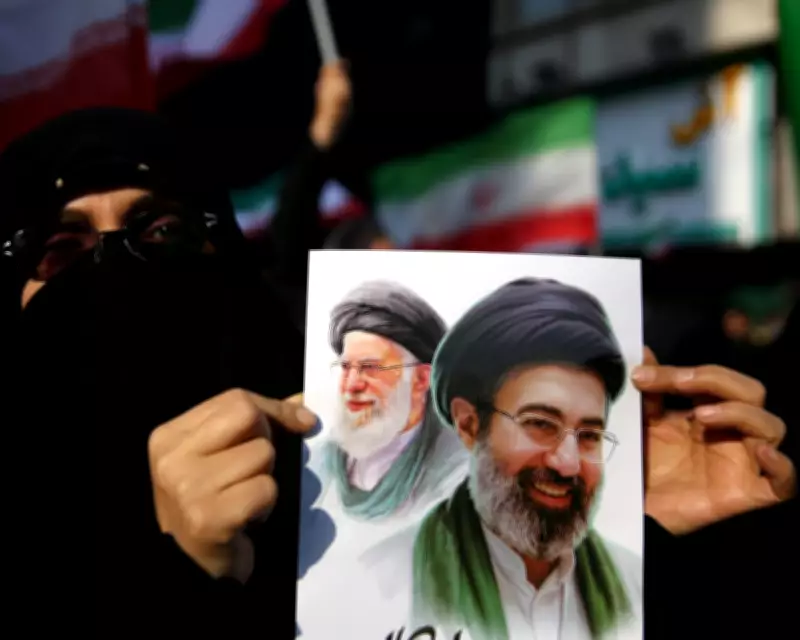
Crowds gathered in Tehran to support Iran's new supreme leader, Mojtaba Khamenei, chanting "God's hand is still upon us, Khamenei is still our leader." As the global economy slows, Iran presents his elevation as a sign of continuity, demonstrating defiance against Western pressures. However, in reality, he introduces a new unpredictable and mysterious element into the Middle East crisis, being largely unknown both to Washington and ordinary Iranians.
A Figure of Deep Obscurity
Unlike his predecessors, Mojtaba Khamenei has lived a life as a backroom bureaucrat, with only one public speaking video and no substantive interviews outlining his views. Before being catapulted to power following his father's assassination, he acted as "the path to access to his father," according to a 2007 US diplomatic cable. As the consummate insider, serving as deputy chief of staff in the supreme leader's office for two decades, he has long been the candidate of the Islamic Revolutionary Guards Corps (IRGC), the core of Iran's military-industrial complex.
One Western diplomat noted that his selection "shows Iran is doubling down on the security state. The new leader will be even more beholden to the IRGC." This is because the IRGC overcame significant obstacles to ensure his appointment, fending off attempts to delay it for a different political atmosphere, likely at the war's end.

Power Struggles and Obstacles
The evidence of a power struggle is fragmentary but involved figures like Ali Laijani, secretary of the Supreme National Council, who warned that an inexperienced leader during wartime was risky. Others in the supreme leader's office, such as Ali Asghar Hejazi, opposed Mojtaba's elevation but were killed in Israeli airstrikes. The IRGC also had to address doubts over his health, the hereditary principle, his religious qualifications, and the practicality of holding an Assembly of Experts meeting with Israeli warplanes overhead.
Primary uncertainties concerned Mojtaba's physical and emotional health, especially after the bombing of the supreme leader's compound on February 28, which killed his mother, wife, son, sister, brother-in-law, niece, and nephew. Taking high office after such personal loss is challenging, and he reportedly expressed reluctance, though this may have been performative.
Religious and Dynastic Challenges
Clerics had to overlook doubts about his religious knowledge, as until 2022, Mojtaba held the lower rank of Hojjat al-Islam. Under intense IRGC pressure, the 88-member Assembly of Experts fast-tracked his credentials, with some seminary media using the title "Ayatollah," similar to his father's elevation in 1989. The biggest obstacle was the hereditary principle, contradicting the republic's founding principles against dynastic rule. Khomeini famously deemed monarchy "abhorrent to Islam," and Khamenei himself described hereditary rule as un-Islamic.
Complex theological arguments were used to override objections, but doubts remained about how the assembly could safely reach consensus, highlighted by the bombing of its secretariat offices in Qom last week, killing several staff. Debate ensued over whether in-person meetings were required for consensus, with centrist former president Hassan Rouhani urging delay and political reform post-war.
IRGC Influence and Future Directions
IRGC media and hardline clerics emphasized filling the political vacuum, arguing temporary leadership couldn't govern indefinitely. US President Donald Trump's insistence on involvement only strengthened Iran's resolve to make sovereign leadership decisions. Mojtaba Khamenei's leadership raises key questions about his actions and relations with other power centers. His father transformed the supreme leader from a supervisory figure to the government's engine, often avoiding factional battles and shifting blame elsewhere.

Maryam Alemzadeh, associate professor in history and politics of Iran at St Antony's College, Oxford, noted that the older Khamenei gave the IRGC "near-monopoly control of the Iranian economy across all sectors," funding extraterritorial activities. His consistent ideology viewed America as untrustworthy and exploitative, so economic cooperation with the US, as Trump seeks with Venezuela, is unlikely. Instead, Mojtaba will likely look to China and Russia to prevent regime collapse and protect the IRGC's business and political empire, from which he has personally benefited and is under systematic US attack.
Initial Tests and Conservative Reactions
Key tests include whether he renews his father's fatwa against nuclear weapons and sets realistic preconditions for talks with the US or Gulf neighbors. Conservatives are delighted, with Ezzatollah Zarghami, a former culture minister who claims weekly meetings with Mojtaba, stating, "He is a proponent of dialogue and listening to others' voices. In personal interactions, he is excessively humble. Our young leader without even arriving has rubbed Trump's nose in the dirt."